


Table of Contents
- How Long Does Tub Reglazing Last? The Honest Answer
- What Factors Affect How Long Tub Reglazing Lasts
- Bathtub Reglazing Drying Time Requirements You Need to Know
- How to Clean a Reglazed Bathtub Without Damaging the Finish
- Bathtub Refinishing vs Replacement: Which Makes Sense for You?
- Tips to Make Your Reglazed Tub Last Longer
- Frequently Asked Questions
Last Updated: September 27, 2026
How Long Does Tub Reglazing Last? The Honest Answer
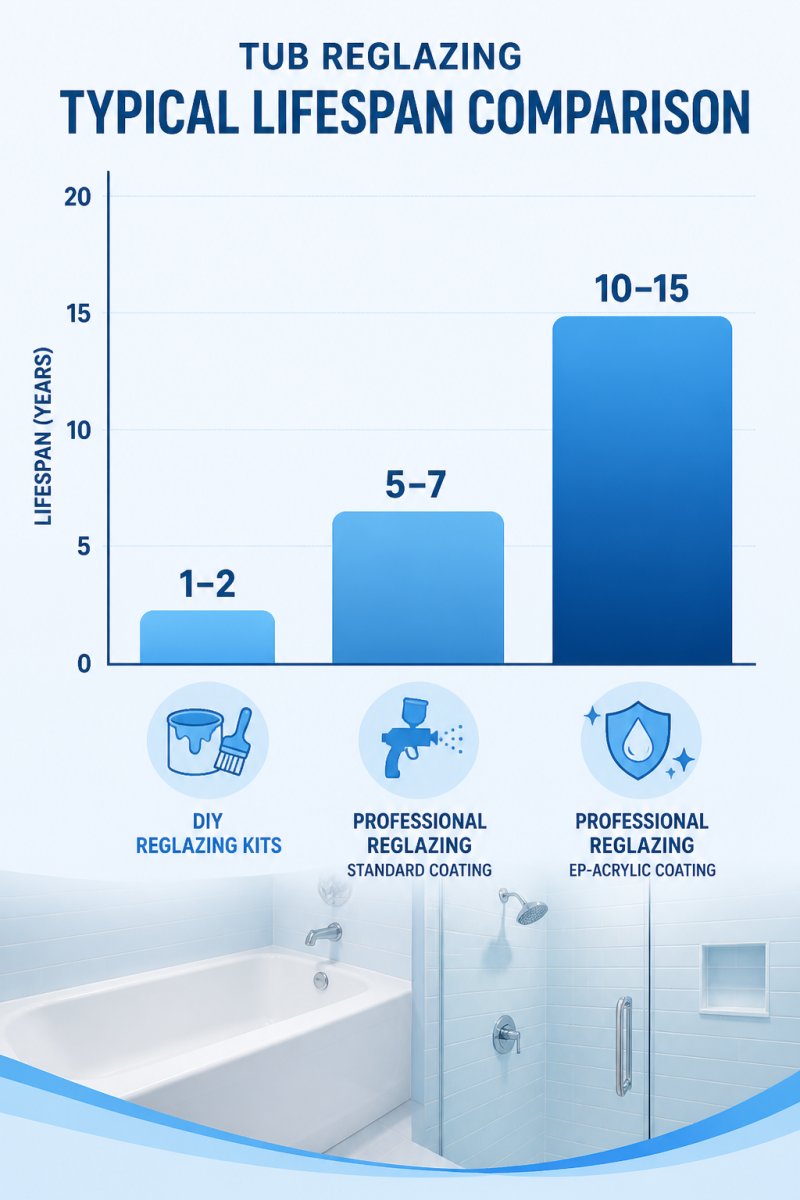
Most homeowners ask how long does tub reglazing last before they commit, and the honest answer depends on who does the work. A professionally applied coating over a properly prepared surface routinely holds up for 10 to 15 years. A DIY kit slapped onto a damp tub can start peeling within a year. This guide from Century BathTubs, which has refinished tubs and shower tiles across Toronto since 1995, breaks down the real lifespan numbers, the drying timeline, and the cleaning habits that decide whether your finish survives a decade or a single season.
The gap between those two outcomes is not luck. It comes down to surface prep, coating chemistry, and how you treat the surface afterward. Below, we’ll show you exactly what separates a finish that lasts from one that fails early, and what most guides get wrong about the drying window.
What Factors Affect How Long Tub Reglazing Lasts
Two variables dominate: how well the surface was prepared and what coating was applied. Get either one wrong and the finish fails early, no matter how careful you are afterward.
Surface Condition and Preparation Quality
Coating bonds to what’s underneath it, not to the tub itself. A common mistake is coating over soap scum, silicone residue, or a damp surface. The finish looks fine for a few months, then lifts at the edges.
Proper preparation means etching the old surface, repairing cracks and chips, and removing every trace of grease and old caulk. Deep cracks in an older cast iron tub are usually repairable, but they need filling and sanding before any coating goes on. A surface that isn’t fully dry before application traps moisture underneath, and that moisture finds its way out through the new finish.
Coating Type and Application Method
Coating chemistry separates a five-year finish from a fifteen-year one. Standard epoxy and acrylic coatings have their place, but they thin out and wear faster in high-traffic bathrooms. A two-component system like the EP-ACRYLIC coating used at Century BathTubs cures harder and resists chipping better than single-part DIY products.
Application method matters just as much. Spray application gives an even film thickness across the whole tub, including the curves and drain area where brush marks leave thin spots. Those thin spots are where wear starts first.
Coating over a wet or poorly etched surface is the single most common cause of early peeling. The finish may look perfect on day one and start lifting within months, and by then the cost of a redo is on you.
Bathtub Reglazing Drying Time Requirements You Need to Know
Bathtub reglazing drying time requirements are stricter than most people expect. The tub needs roughly 24 hours before light use and 48 to 72 hours before it’s fully cured and ready for normal showering.
That timeline breaks into two phases. The surface dries to the touch within hours, which is when it looks finished but is still soft underneath. Full cure takes longer, and using the tub too early is how homeowners create scratches and dull spots that never buff out.
A few practical rules for the drying window:
- Keep the bathroom ventilated and the humidity low; cool, dry air cures the coating faster than a steamy room
- Don’t run the shower in that bathroom during the cure period, since steam softens a finish that hasn’t hardened
- Wait the full recommended time before placing a bath mat or anything with suction cups on the surface
- Ask your installer for the exact cure window for your coating, since two-component systems and single-part products differ
The good news is the work itself is fast. A professional refinish is typically completed in a single visit, so the disruption is measured in hours of work plus the cure time, not days of a torn-apart bathroom.
If you’re refinishing a rental unit, schedule the work so the cure window falls while the unit is empty. Trying to rush a tenant back into a bathroom before the coating has cured is how you end up with a warranty claim instead of a durable finish.
How to Clean a Reglazed Bathtub Without Damaging the Finish
Knowing how to clean a reglazed bathtub matters more than most people realize, because the wrong product can dull or scratch a finish that would otherwise last years. The rule is simple: mild soap, a soft cloth, and no abrasives.
Here’s what to avoid:
- Abrasive powders and scouring pads. They scratch the coating and leave a dull, chalky surface that traps dirt.
- Bleach-based and acidic cleaners. Harsh chemicals break down the top layer over time, especially if left to sit.
- Drain cleaners splashed on the surface. These are among the most damaging products for a refinished tub, so rinse immediately if any splashes up.
For routine cleaning, warm water with a few drops of mild dish soap and a non-abrasive sponge handles almost everything. For stubborn soap scum, a soft cloth and a gentle bathroom cleaner labeled safe for acrylic or refinished surfaces works well. Rinse thoroughly and dry the surface after cleaning, since standing water left on the finish day after day does it no favors.
Bathtub Refinishing vs Replacement: Which Makes Sense for You?
Bathtub refinishing vs replacement comes down to the condition of the tub and how long you plan to stay. If the tub is structurally sound, refinishing restores it for a fraction of the cost and disruption of a full replacement.
Replacement makes sense when the tub itself is failing. A cracked, flexing base, a rusted-through floor, or a tub you want to remove entirely for a walk-in shower are all cases where replacement is the right call. Refinishing restores a worn surface; it doesn’t fix structural failure.
| Factor | Refinishing | Replacement |
|---|---|---|
| Typical lifespan | 10-15 years with professional coating | 15-30 years |
| Time to complete | Usually one visit plus cure time | Several days to weeks |
| Disruption | Minimal, tub stays in place | Tub removal, plumbing, tiling |
| Best for | Sound tub with worn surface | Structural damage or layout change |
| Old lead-glazed tubs | Seals the surface | Removes the fixture |
For most Toronto homeowners with a solid but tired tub, refinishing is the practical choice. It keeps the existing fixture, avoids the mess of demolition, and gets the bathroom back in use quickly.
If the tub is structurally sound, refinishing is almost always the smarter spend. Save replacement for genuine structural failure or a full layout change.
Tips to Make Your Reglazed Tub Last Longer
Small habits decide whether a refinished tub reaches the top of its lifespan range or the bottom. None of them are complicated.
- Skip suction-cup mats and decals. They trap moisture against the coating and pull at the surface when removed. Use a non-slip mat that rests on the floor of the tub instead.
- Rinse after every use. Soap residue left to sit is what dulls a finish over time.
- Fix drips early. A constantly dripping faucet wears a spot into the coating directly below it.
- Keep the bathroom ventilated. Lower humidity slows wear and prevents the surface from staying damp.
- Book a professional refinish rather than a DIY kit. The preparation and coating quality are what determine the lifespan, and that’s where professional work pays off.
For landlords managing multiple units, scheduling refinishing in batches keeps turnover predictable and avoids the weeks of downtime that replacement causes. Century BathTubs handles multiple bathrooms at once, which is why property managers across the GTA use us for turnover work. If you’re searching for tub reglazing near me in Toronto, look for a provider that’s licensed, insured, and willing to put its guarantee in writing.
Never use a suction-cup bath mat on a freshly refinished tub. The cups trap water against the coating and can pull the finish loose when removed, which isn’t covered under most guarantees.
Deciding whether to refinish or replace is the hard part. Once you’ve made that call, the rest is straightforward: proper preparation, a durable coating, and a little care afterward. Century BathTubs has been refinishing tubs and shower tiles in Toronto since 1995, using a durable EP-ACRYLIC coating system backed by a three-year hassle-free guarantee. Our licensed and insured technicians handle everything from worn cast iron tubs to full rental turnovers, with fast drying and minimal disruption.
Frequently Asked Questions
How many years does a reglazed bathtub last?
A professionally reglazed bathtub typically lasts between 5 and 15 years, depending on the coating system used and how well it is maintained. Lower-quality DIY kits may only last 1 to 2 years. Higher-grade coatings applied by trained technicians, such as the EP-ACRYLIC system, can reach the upper end of that range when the surface is properly prepared and cared for.
What factors affect the lifespan of bathtub refinishing?
The biggest factors are surface preparation, coating quality, and ongoing maintenance. If the old surface is not thoroughly cleaned, sanded, and primed, the new coating will not bond properly and may peel early. The type of coating matters too, as does how you clean the tub afterward. Harsh abrasives, bleach-based cleaners, and leaving standing water can all shorten the life of a refinish.
Is it better to reglaze or replace a bathtub in Toronto?
For most Toronto homeowners, reglazing is the more practical choice when the tub structure is sound. Replacement involves demolition, plumbing changes, tile repair, and days of disruption. Reglazing restores the visible surface in a fraction of the time and cost. If the tub has structural cracks, flexes under weight, or has serious rust damage, replacement may be the safer route.
Does Century BathTubs offer a warranty on reglazing services?
Yes. Century BathTubs provides a three-year hassle-free guarantee on all reglazing work. The company has been in business since 1995 and uses trained, licensed, and insured technicians. If the coating chips or peels within the warranty period under normal use, they will address it. This guarantee is one reason many property managers and landlords choose them over independent handymen.