
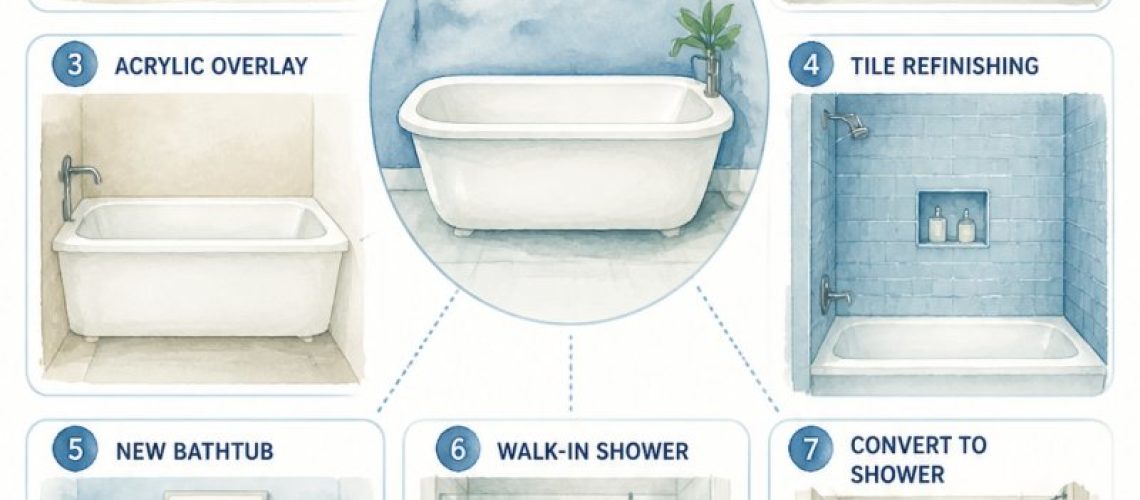

Table of Contents
- Why Homeowners Explore Alternatives to Bathtub Reglazing
- Bathtub Replacement Cost and Long-Term Value
- Bathtub Acrylic Liner Pros and Cons
- DIY Bathtub Refinishing Kits vs Professional Services
- Fiberglass and Porcelain Repair Options
- When Professional Reglazing Outperforms Alternatives
- Frequently Asked Questions
Last Updated: September 25, 2026
Why Homeowners Explore Alternatives to Bathtub Reglazing
Bathtub reglazing has long been a go-to solution for homeowners looking to refresh worn fixtures without full replacement. Yet many people in the Greater Toronto Area are discovering that alternatives to bathtub reglazing offer distinct advantages depending on their situation, budget, and timeline.
The decision to explore other options often comes down to specific concerns. Some homeowners worry about durability. Others face bathtubs with structural damage too severe for a simple refinish. Still others need their bathroom functional again within days, not weeks. Understanding your actual needs is the first step.
Understanding your actual needs is the first step. Reglazing works beautifully for surface wear and discoloration. But if your tub has deep cracks, significant rust, or you need a completely different aesthetic, the alternatives we’ll explore here may serve you far better.
Bathtub Replacement Cost and Long-Term Value
Full bathtub replacement is the nuclear option. You’re removing the entire fixture, dealing with potential plumbing adjustments, and installing something brand new. The appeal is obvious: you get exactly what you want, with modern features and a fresh warranty.
The trade-off is scope and disruption. Replacement typically means your bathroom is out of commission for several days. If you have multiple bathrooms, that’s manageable. If you have one, it’s a genuine inconvenience. Contractors need access to walls, plumbing, and sometimes the subfloor. Unexpected issues during removal can add time and cost.
For property managers and landlords managing multiple units, replacement becomes logistically complex. Coordinating multiple jobs, tenant disruptions, and disposal of old fixtures requires careful planning. Many choose alternatives to bathtub reglazing specifically because replacement feels like overkill for cosmetic updates.
The real question isn’t whether replacement is better, it’s whether the outcome justifies the disruption and expense. If your tub is structurally sound but visually tired, replacement is often unnecessary.
Bathtub Acrylic Liner Pros and Cons
Acrylic liners sit on top of your existing bathtub, covering the worn surface entirely. They’re installed in a single day and require no demolition. The transformation is dramatic: a tired, stained tub suddenly looks brand new.
Pros of acrylic liners:
- Installation takes one day with minimal disruption
- Covers deep stains, chips, and discoloration completely
- Provides a fresh, modern appearance instantly
- Adds a layer of insulation, making the tub warmer
- No plumbing work required
Cons of acrylic liners:
- Reduces bathtub depth slightly, which some find uncomfortable
- The seams where the liner meets walls can trap moisture if not sealed properly
- Liners can shift or settle over time, creating gaps
- Replacement of a liner is nearly as involved as the original installation
- Quality varies significantly between providers
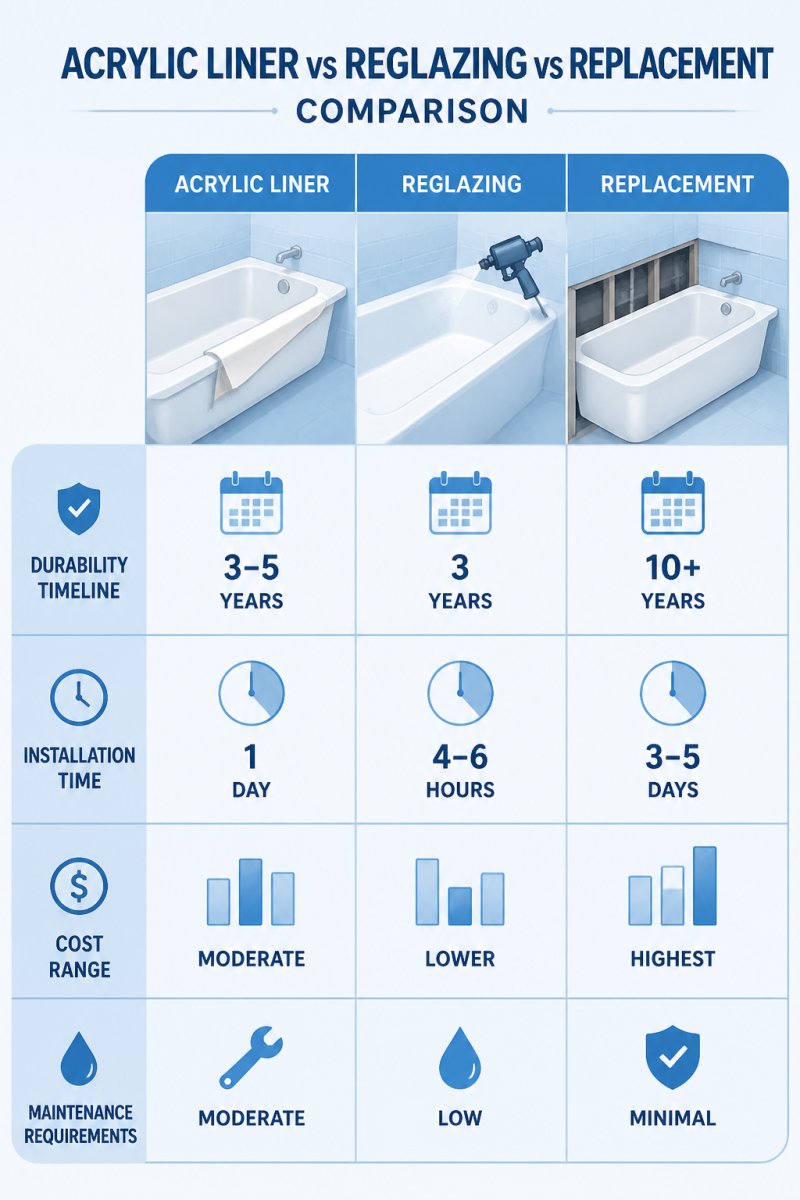
The decision often hinges on whether you value speed and drama over subtlety. If your bathroom needs to look completely refreshed and you can live with slightly reduced depth, liners deliver. If you prefer a more understated restoration, reglazing or professional refinishing might suit you better.
DIY Bathtub Refinishing Kits vs Professional Services
The DIY route has grown more accessible. Hardware stores now stock bathtub refinishing kits that promise professional results at a fraction of the cost. The appeal is understandable: you control the timeline, save money, and avoid scheduling contractors.
The reality is messier. These kits require meticulous surface preparation. Any dust, debris, or moisture trapped under the coating creates adhesion problems. The fumes are significant, proper ventilation is non-negotiable. Application demands a steady hand and consistent technique. Most homeowners find the process takes longer than expected and delivers inconsistent results.
Professional services, by contrast, bring equipment, expertise, and accountability. Technicians know how to handle edge cases: old cast iron with deep corrosion, porcelain with hairline cracks, or fixtures that have seen decades of wear. They apply coatings in controlled conditions with proper ventilation and curing time.
A common mistake is underestimating the skill gap. The difference between a DIY kit applied by an amateur and a professional finish is immediately visible. Drips, uneven coverage, and premature peeling are the typical outcomes when technique falters.
For most homeowners, professional services deliver better long-term value. For most homeowners, professional services deliver better long-term value.
Fiberglass and Porcelain Repair Options
Fiberglass tubs are common in older homes. They’re lightweight, affordable, and durable, until they crack. Porcelain tubs, often found in vintage fixtures, are beautiful but brittle. Both materials can be repaired without full replacement.
Fiberglass repairs involve filling cracks with specialized epoxy compounds, then sanding and coating the area. For small cracks, this works well. For large structural damage, the repair becomes visible and may not hold long-term stress.
Porcelain repairs are trickier. Chips expose the underlying material. Deep cracks can’t simply be filled, they reflect the structural integrity of the entire fixture. Surface repairs hide damage cosmetically but don’t restore structural strength.
These repair options work best as interim solutions. If your tub has minor damage and you’re planning to replace it in a few years, repairs buy time affordably. If you’re looking for a permanent solution, they’re usually a stopgap.
The key distinction: repairs address damage, not wear. If your tub is stained and faded but structurally sound, repairs won’t help. Reglazing or liners are better choices for that scenario.
When Professional Reglazing Outperforms Alternatives
Reglazing deserves its place as the most popular alternative. It works because it directly addresses the most common problem: surface wear.
Your bathtub is stained, faded, or scratched, but the structure is solid. Reglazing strips away the old finish and applies a fresh coating. The result looks like a new tub at a fraction of replacement cost. The process takes one day, and your bathroom is usable again within 24 hours in most cases.
The EP-ACRYLIC coating system used by Century BathTubs creates a durable surface that resists staining and wear. The three-year guarantee reflects confidence in the product’s longevity. For most homeowners, this is exactly the solution they need.
Reglazing also protects you in ways replacement doesn’t. Older cast iron tubs sometimes contain lead in the glaze. Refinishing seals that hazard under a new coating, eliminating the risk. This is particularly relevant for families with young children or pregnant women in older homes.
The speed factor matters too. Many homeowners can’t afford days without a functional bathroom. Reglazing delivers results quickly, with minimal disruption to daily life.
Reglazing falls short only when the underlying damage is too severe. Deep structural cracks, significant rust that has eaten through the material, or bathtubs that no longer hold water properly need replacement or liners. But for the majority of worn tubs, reglazing is the most practical solution available.
Choosing between alternatives to bathtub reglazing depends on what your tub actually needs. Surface wear calls for reglazing. Structural damage or dramatic aesthetic changes might demand liners or replacement. Whatever path you choose, the goal is the same: a functional, attractive bathroom without unnecessary expense or disruption.
If your bathtub is stained, faded, or showing age but remains structurally sound, professional reglazing delivers the fastest, most cost-effective result. Contact Century BathTubs for a free inquiry and discover how our licensed, insured technicians can restore your bathroom with our durable EP-ACRYLIC coating system and three-year guarantee.
Frequently Asked Questions
Is it better to reglaze or replace a bathtub?
The choice depends on your tub’s condition and budget. Reglazing restores worn surfaces and extends life at a fraction of replacement cost, making it ideal for structurally sound tubs with cosmetic damage. Replacement suits severely cracked or damaged tubs, or when you want a different style or size. For most homeowners, reglazing offers the best value when the underlying structure is intact.
What are the main pros and cons of bathtub acrylic liners?
Acrylic liners cover existing tubs without removal, offering quick installation and a fresh look. Pros include fast turnaround and lower upfront cost than replacement. Cons include reduced tub depth, potential water leakage behind the liner over time, and eventual replacement needs. They require proper sealing and maintenance to prevent mold growth.
How long does professional reglazing last compared to DIY kits?
Professional reglazing with quality coatings like EP-ACRYLIC systems typically lasts 3+ years with proper care, backed by guarantees. DIY kits vary widely in durability, often lasting 1-2 years before chipping or peeling, since they lack the surface preparation and application expertise professionals provide. Professional work also includes proper ventilation and curing conditions that DIY cannot replicate.
Can I paint my bathtub instead of reglazing it?
Bathtub paint is not recommended as a long-term solution. Standard paint cannot withstand constant water exposure, moisture, and cleaning chemicals, it chips and peels within months. Specialized bathtub coatings exist, but they require the same surface preparation as reglazing and often cost similarly. Professional reglazing is more durable and reliable than paint-based alternatives.