

Table of Contents
- What You’ll Need: Supplies for Cleaning a Reglazed Bathtub
- Step 1: Prep the Tub and Test Your Cleaner
- Step 2: Routine Cleaning Without Damaging the Finish
- Best Cleaners for Refinished Bathtubs (and What to Avoid)
- How to Remove Soap Scum From an Acrylic Tub Safely
- Bathtub Refinishing Maintenance Tips for Long-Term Results
- Common Mistakes That Damage a Reglazed Surface
- Conclusion
- Frequently Asked Questions
Last Updated: September 26, 2026
What You’ll Need: Supplies for Cleaning a Reglazed Bathtub
Learning how to clean reglazed bathtub surfaces starts with one rule: gentleness beats strength. A reglazed finish is a coating, not the original tub material, so it scratches and dulls far more easily than porcelain or acrylic.
At Century BathTubs, we’ve refinished tubs across Toronto and the GTA since 1995. Most coating damage we see comes from harsh cleaners, not from age. Keep the right supplies on hand and your finish will hold up for years.
Here’s what to gather:
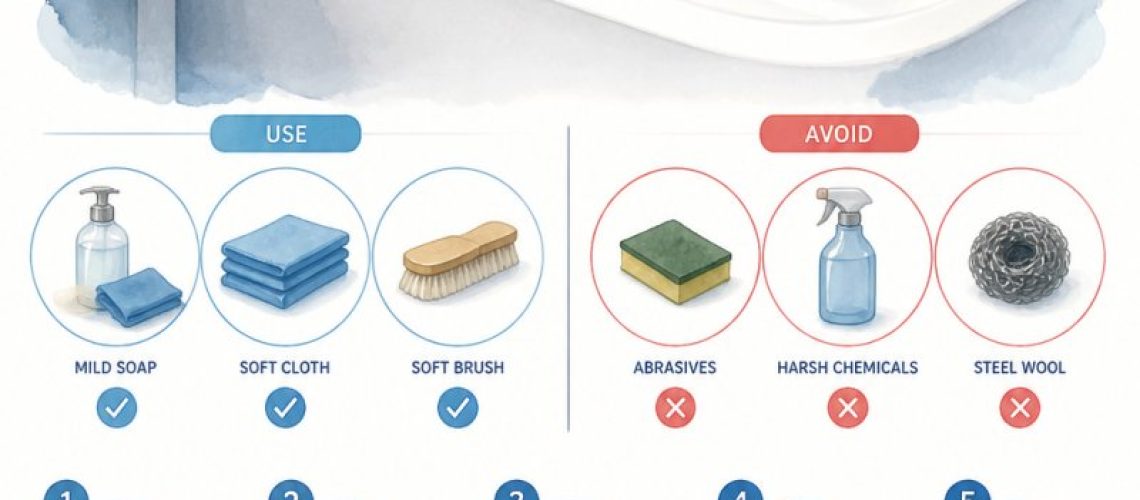
- Soft sponge or microfiber cloth
- Non-abrasive liquid bathroom cleaner
- Mild dish soap
- Baking soda
- White vinegar
- Spray bottle
- Warm water
- Rubber gloves
Skip anything labeled “abrasive,” “scrubbing,” or “heavy-duty.” Those words signal trouble for a refinished surface.
Step 1: Prep the Tub and Test Your Cleaner
Before you clean anything, rinse the tub with warm water and wipe away loose dirt with a soft cloth. This stops grit from grinding into the coating while you work.
Next, test your cleaner on a small, hidden spot. A corner near the drain works well.
Apply a little cleaner, wait a minute, then wipe it off. If the surface looks dull, chalky, or feels rough, stop and switch products. A spot test takes 30 seconds and can save your entire finish.
Never skip the spot test. Some cleaners react with a fresh or older reglaze coating and leave permanent cloudiness. Once that happens, only a professional recoat fixes it.
Step 2: Routine Cleaning Without Damaging the Finish
For weekly cleaning, use the gentlest method that gets the job done. Mix a few drops of mild dish soap into warm water, wipe the tub with a soft sponge, then rinse well.
For a deeper clean, apply a non-abrasive bathroom cleaner and let it sit for two to three minutes. Wipe with a microfiber cloth, then rinse until no residue remains.
Drying matters more than most people think. Leftover water leaves mineral spots that etch into the coating over time. A quick wipe with a dry cloth after every use keeps the surface clear.
- Clean weekly with soap and water
- Deep clean every two to four weeks
- Rinse and dry after every use
- Never scrub with brushes or scouring pads
Best Cleaners for Refinished Bathtubs (and What to Avoid)
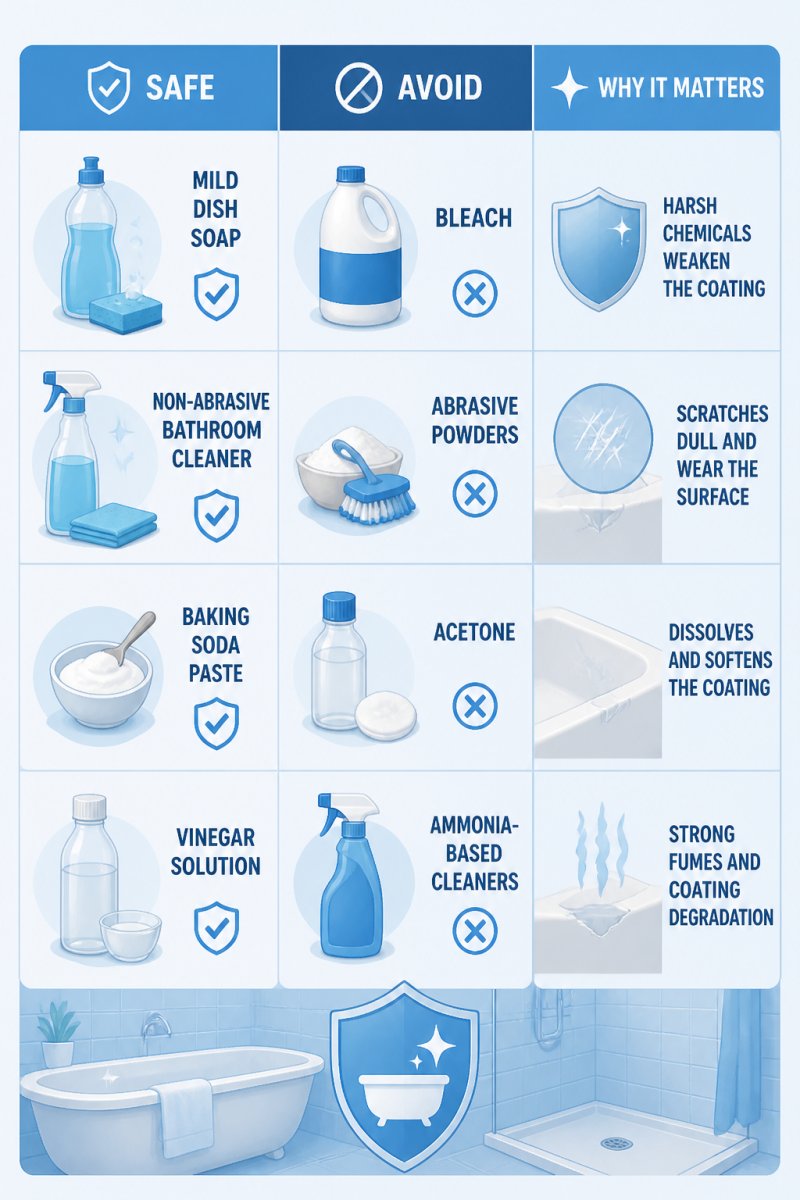
The best cleaners for refinished bathtubs are pH-neutral or mildly alkaline products with no abrasives. Mild dish soap, baking soda paste, and diluted white vinegar all fit that description.
What should you avoid? Bleach, ammonia, acetone, and powdered scouring cleaners. These strip the protective layer and leave the coating dull and prone to peeling.
| Cleaner | Safe for Reglazed Tubs? | Why |
|---|---|---|
| Mild dish soap | Yes | Gentle, no abrasives |
| Baking soda paste | Yes | Soft, mild stain lift |
| Diluted white vinegar | Yes | Cuts light mineral film |
| Non-abrasive bathroom spray | Yes | Made for delicate finishes |
| Bleach | No | Dulls and weakens coating |
| Ammonia cleaners | No | Breaks down the finish |
| Acetone | No | Dissolves the top layer |
| Abrasive powders | No | Scratch the surface |
How to Remove Soap Scum From an Acrylic Tub Safely
To remove soap scum from a reglazed tub, reach for vinegar before anything stronger. Mix equal parts white vinegar and warm water in a spray bottle, spray the scummed area, and let it sit for 10 to 15 minutes.
Wipe with a soft cloth, then rinse. For stubborn patches, make a paste from baking soda and water, apply it gently with your fingers, and rinse well.
Never use a razor blade, steel wool, or a stiff brush on reglazed surfaces. These tools gouge the coating and create spots where scum returns faster.
A squeegee after every shower removes most soap film before it sets. It’s the cheapest way to cut down on scrubbing.
Bathtub Refinishing Maintenance Tips for Long-Term Results
Good bathtub refinishing maintenance tips come down to three habits: clean gently, dry often, and avoid impact.
Use a bath mat that doesn’t trap water. Don’t drop heavy bottles on the tub floor. And keep the drain clear so standing water never sits on the coating.
If you notice a small chip or scratch, call a professional before it spreads. Water gets under the coating through tiny breaks and lifts larger sections over time.
Century BathTubs backs every job with a three-year hassle-free guarantee and our EP-ACRYLIC coating system, so small issues get handled before they become big ones.
Common Mistakes That Damage a Reglazed Surface
The biggest mistake is treating a reglazed tub like a porcelain one. It isn’t, and the cleaning methods that work on old porcelain will ruin a new coating.
Other common errors:
- Using abrasive pads or powders
- Leaving bleach-based cleaners to soak
- Skipping the rinse step
- Letting water pool after each use
- Ignoring small chips until they peel
Each of these shortens the life of the finish. Fix the habit, not just the stain.
Conclusion
Keeping a reglazed tub clean is simple once you know which products are safe and which ones quietly destroy the coating. Soft tools, mild cleaners, and a quick dry after every use will keep the surface looking new for years. If your tub has chips, dull patches, or peeling spots that cleaning can’t fix, Century BathTubs can help. Our licensed and insured team has served Toronto and the GTA since 1995, using our durable EP-ACRYLIC coating system and a three-year hassle-free guarantee on every refinish. Get started with Century BathTubs and restore your tub without the cost of replacement.
Frequently Asked Questions
Can I use bleach on a reglazed bathtub?
No. Bleach and bleach-based cleaners break down the top layer of a reglazed coating, causing it to dull, yellow, or peel over time. Even diluted bleach can weaken the bond between the finish and the tub beneath. For disinfecting a reglazed bathtub, use a mild non-abrasive bathroom cleaner or a baking soda paste instead. If you need to sanitize, a short contact time with a diluted mild cleaner is far safer than bleach. When in doubt, check with the company that did the reglazing before trying any new product.
What cleaning products are safe for refinished bathtubs?
Stick to mild, non-abrasive options: dish soap mixed with warm water, a baking soda and water paste, or a bathroom cleaner labeled safe for acrylic and fiberglass. Avoid anything with bleach, ammonia, acetone, or abrasive particles. Cream cleansers and scouring powders scratch the surface, which creates tiny grooves where soap scum and dirt collect. A soft sponge or microfiber cloth paired with a gentle cleaner handles most messes. If a product’s label does not mention acrylic or refinished surfaces, test it on a small hidden area first.
How often should I clean my reglazed tub to prevent damage?
Rinse and wipe the tub after every use, and do a full clean once a week with a mild cleaner and soft cloth. This routine stops soap scum and hard water minerals from building up, which is what usually forces people to scrub harder and damage the finish. If you have hard water in your area, a quick squeegee or towel dry after each bath makes a noticeable difference. Consistent light cleaning protects the coating far better than occasional deep scrubbing.
Will abrasive sponges scratch a reglazed bathtub surface?
Yes. Steel wool, scouring pads, and stiff-bristle brushes scratch the coating and leave dull patches that attract grime. Once scratched, the damage cannot be polished out the way you might buff a car. Use only soft sponges, microfiber cloths, or a soft-bristle brush for stubborn spots. If you are dealing with soap scum that will not budge, apply a baking soda paste, let it sit for 10 to 15 minutes, then wipe gently. Patience with the right product beats force every time.