

Table of Contents
- What You’ll Need Before You Start
- Method 1: DIY Epoxy Repair Kit for Small Bathtub Chips
- Method 2: Porcelain Touch-Up Paint for Surface Chips
- Method 3: Professional Bathtub Refinishing for Multiple Chips
- Method 4: Fiberglass and Acrylic Repair Paste
- Method 5: Colour-Matched Chip Repair for Invisible Fixes
- Method 6: How to Remove Stains from Tub Before Repairing Chips
- Method 7: When to Call a Professional for Bathtub Chip Repair
- Frequently Asked Questions
Last Updated: September 25, 2026
What You’ll Need Before You Start
A chipped tub is more than an eyesore. Water seeps into the crack, rust starts eating the metal underneath, and a small flaw becomes a full replacement job. Century BathTubs has repaired bathtub chips across Toronto and the GTA since 1995, and the pattern is always the same: the sooner you fix a chip, the cheaper it stays.
Bathtub chips are small breaks in the top layer of a tub’s surface, usually caused by dropped shampoo bottles, rings, or tools. Left alone, they spread.
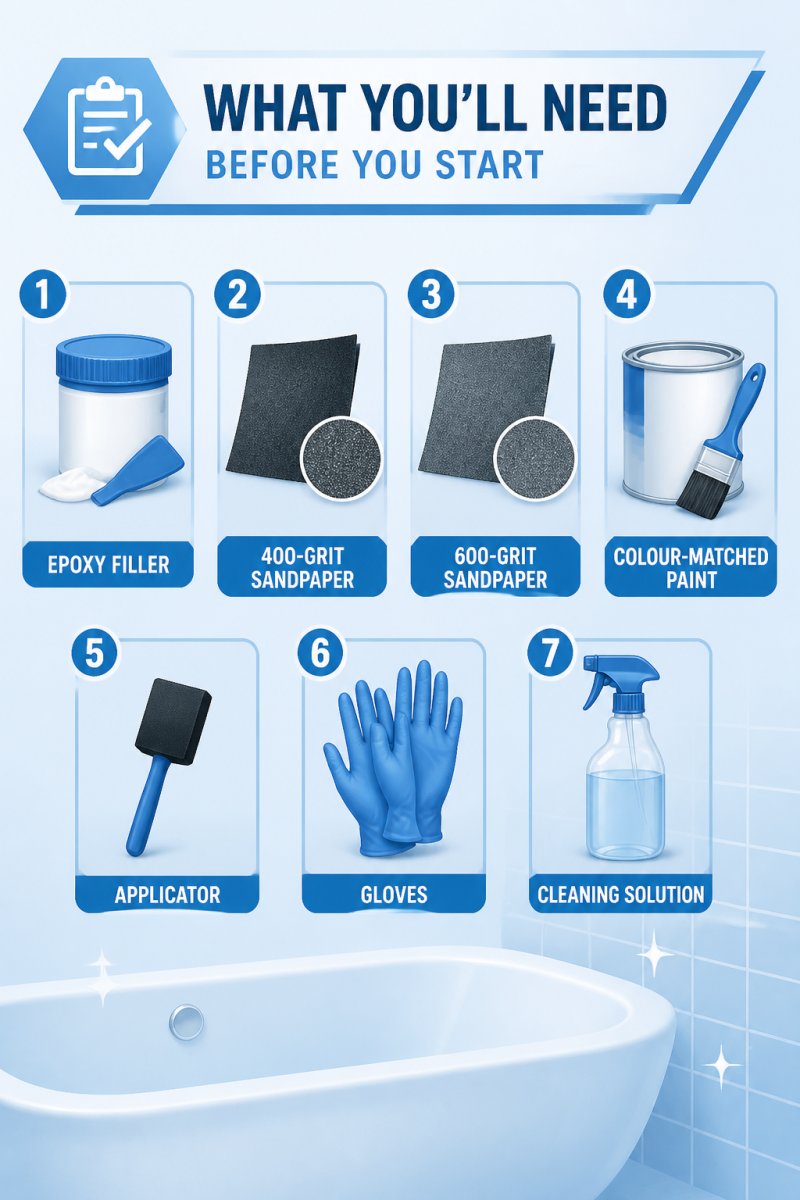
Gather these supplies before you touch the tub:
- Epoxy filler or repair paste
- 400 and 600-grit wet sandpaper
- Colour-matched touch-up paint
- Small applicator or toothpick
- Rubber gloves and a mask
- Rubbing alcohol or a mild cleaner
- Clean rags
Never start a repair on a wet or soapy surface. Filler will not bond, and the patch peels within weeks. Dry the area fully and wipe it with rubbing alcohol first.
Method 1: DIY Epoxy Repair Kit for Small Bathtub Chips
An epoxy repair kit is the best first fix for chips smaller than a coin. These kits are sold at most Canadian hardware stores and cost far less than a replacement tub.
Steps to Apply Epoxy Filler
- Clean the chip and let it dry completely.
- Mix the epoxy two-part filler as directed.
- Apply it with a toothpick, slightly above the surface.
- Let it cure, then wet sand it flush with 600-grit paper.
- Polish the area and apply touch-up paint if needed.
Common Mistakes with Epoxy Kits
The biggest mistake is overfilling. Epoxy shrinks as it dries, so a little extra helps, but too much means heavy sanding that can scratch the surrounding finish. Skipping the sanding step leaves a bump you will feel every shower.
Method 2: Porcelain Touch-Up Paint for Surface Chips
For shallow chips where the surface is scuffed but not broken, porcelain touch-up paint is the quickest fix. It is a small brush-on coating that hides the damage in minutes.
This method works best on colour and shine, not depth. If you can catch a fingernail in the chip, paint alone will not hold. Use it after epoxy to blend the patch into the tub’s colour. A common mistake is applying paint to a dirty surface, which causes it to flake.
Method 3: Professional Bathtub Refinishing for Multiple Chips
When a tub has several chips, cracks, or worn spots, spot repairs stop making sense. Professional bathtub refinishing in Toronto covers the whole surface in one durable coating, so every chip disappears at once.
Century BathTubs uses an EP-ACRYLIC coating system applied by trained, licensed, and insured technicians. The work is fast, the coating dries quickly, and it protects against lead in older tubs. Every job carries a three-year hassle-free guarantee.
One chip means a spot repair. Five chips, cracks, or heavy wear mean refinishing is the smarter spend, because it fixes everything in a single visit.
Method 4: Fiberglass and Acrylic Repair Paste
Fiberglass and acrylic tubs need a different filler than porcelain. Repair paste made for these materials flexes with the tub instead of cracking when the surface moves.
Clean the chip, apply the paste in thin layers, and sand between coats. The paste is usually white or clear, so you may need to tint it. A common mistake is using porcelain epoxy on a fiberglass tub, which cracks the first time someone steps in.
Method 5: Colour-Matched Chip Repair for Invisible Fixes
A repair only looks invisible if the colour matches. Tubs come in dozens of whites, creams, and greys, and a bright white patch on an off-white tub stands out.
Take a photo of the chip in daylight and bring it to the store, or ask a refinishing pro to colour-match the coating. Century BathTubs matches coatings to your tub’s exact shade, so the fix disappears rather than announcing itself.
Method 6: How to Remove Stains from Tub Before Repairing Chips
Filler will not stick to a stained or greasy surface. Learning how to remove stains from tub surfaces is the step most people skip, and it is why patches fail.
- Scrub with a non-abrasive cleaner and a soft pad.
- For rust, use a rust remover made for bathroom surfaces.
- Rinse fully and dry the area.
- Wipe with rubbing alcohol right before you apply filler.
Never use steel wool. It scratches the finish and creates new places for stains to settle.
Method 7: When to Call a Professional for Bathtub Chip Repair
Call a professional when a chip is deep, when cracks run through the tub, or when repairs keep failing. A deep crack in a cast iron tub can point to a bigger problem, and a bad patch can make it worse.
Century BathTubs handles bathtubs and shower tiles refinishing for homes and rental units across Toronto and the GTA. For landlords with several units, multiple bathrooms can be scheduled together to cut down on downtime.
A repair that keeps peeling usually means moisture is trapped under the surface. No filler will fix that. The tub needs a full refinish.
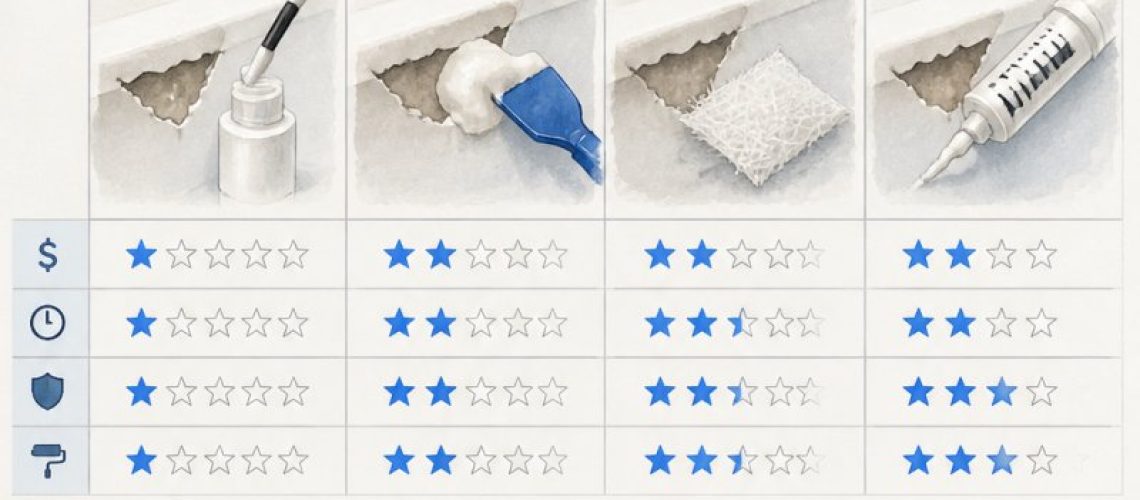
| Situation | Best Fix | Why |
|---|---|---|
| One chip under a coin | Epoxy kit | Cheap, fast, DIY-friendly |
| Shallow scuff | Touch-up paint | Hides colour loss in minutes |
| Several chips or cracks | Professional refinishing | Fixes the whole surface at once |
| Fiberglass or acrylic chip | Repair paste | Flexes with the tub |
| Failing repairs | Professional refinishing | Trapped moisture needs a full recoat |
Frequently Asked Questions
Can you repair a chip in a bathtub yourself?
Yes, small bathtub chips can be repaired with DIY epoxy kits or touch-up paint. These work well for shallow surface damage. However, deep chips or cracks that expose the underlying material may need professional refinishing to prevent water damage and further deterioration. Assess the damage first.
How much does professional bathtub chip repair cost in Toronto?
Pricing for bathtub chip repair in Toronto depends on the extent of damage, accessibility, and chosen method. For an accurate quote, contact a licensed refinishing company directly. They can assess your tub and provide a written estimate based on your specific situation.
Is it better to repair a chipped bathtub or refinish the whole tub?
If you have only one or two small chips and the rest of the tub is in good condition, spot repair is often sufficient. But if the tub has multiple chips, stains, or worn areas, full refinishing gives you a uniform finish and better long-term protection. A professional can help you decide.
What materials are best for repairing porcelain bathtub chips?
For porcelain, two-part epoxy fillers and porcelain touch-up paints work well. Look for kits specifically designed for porcelain or ceramic surfaces. These products bond strongly and resist water. Always follow the manufacturer’s instructions for mixing and curing to get a durable repair.
A chipped tub will not fix itself, and every week you wait lets water work deeper into the surface. Whether you patch a single chip or refinish the whole tub, Century BathTubs offers licensed, insured technicians, a durable EP-ACRYLIC coating, fast drying times, and a three-year hassle-free guarantee. Get started with Century BathTubs and bring your tub back to like-new condition.