

Table of Contents
- Why Porcelain Stains Set In (and What Actually Removes Them)
- Best Non-Abrasive Cleaners for Porcelain That Won’t Dull the Finish
- Step-by-Step: How to Clean a Stained Porcelain Bathtub Safely
- How to Remove Rust Stains From a Porcelain Tub Without Scratching It
- Common Mistakes That Scratch or Dull Porcelain
- When Cleaning Isn’t Enough: Porcelain Bathtub Refinishing in Toronto
- Frequently Asked Questions
Last Updated: September 23, 2026
Why Porcelain Stains Set In (and What Actually Removes Them)
Porcelain looks tough, but its surface is a glass-like glaze that stains can bond to over time, which is why you need to clean stained porcelain carefully. Learning how to clean stained porcelain bathtub surfaces safely starts with one rule: match the cleaner to the stain, not to the scrubbing power you can bring.
Stains set in for three main reasons:
- Soap scum traps dirt. Body oils and soap leave a film that grabs minerals and grime.
- Hard water leaves minerals behind. Toronto’s water carries calcium that builds up in rings and patches.
- Rust and organic marks bond fast. Metal cans, hair dyes, and mildew can stain within days.
The glaze itself is not the problem. The problem is what sits on top of it. That is why harsh scrubbing often fails. It scratches the surface without lifting the stain.
Never reach for steel wool or abrasive powder on porcelain. They grind away the glaze, and once the shine is gone, stains set in faster than before.
Best Non-Abrasive Cleaners for Porcelain That Won’t Dull the Finish
The best non-abrasive cleaners for porcelain are mild acids, gentle surfactants, and soft creams, not gritty powders. Each one targets a different stain, so keep two or three on hand rather than one all-purpose product.
Here is what works for each stain type:
| Stain Type | Best Cleaner | How to Apply | Dwell Time |
|---|---|---|---|
| Soap scum | Dish soap and warm water | Soft sponge, light circles | 5 minutes |
| Mineral and hard water | White vinegar or citric acid | Spray, cover, let sit | 10-15 minutes |
| Rust | Oxalic acid cleaner or lemon juice and salt paste | Spot treat only | 10 minutes |
| Organic and mildew | Oxygen bleach (not chlorine) | Paste, soft brush | 15 minutes |
| Light film | Baking soda and water paste | Soft cloth | 5 minutes |
A few ground rules apply to all of them. Test any new product on a hidden spot first. Use a soft sponge, microfiber cloth, or nylon brush only. Rinse fully so no residue dries on the glaze.
For heavier mineral buildup, a Health Canada guide to household chemical safety is worth a quick read before you mix anything.
Step-by-Step: How to Clean a Stained Porcelain Bathtub Safely
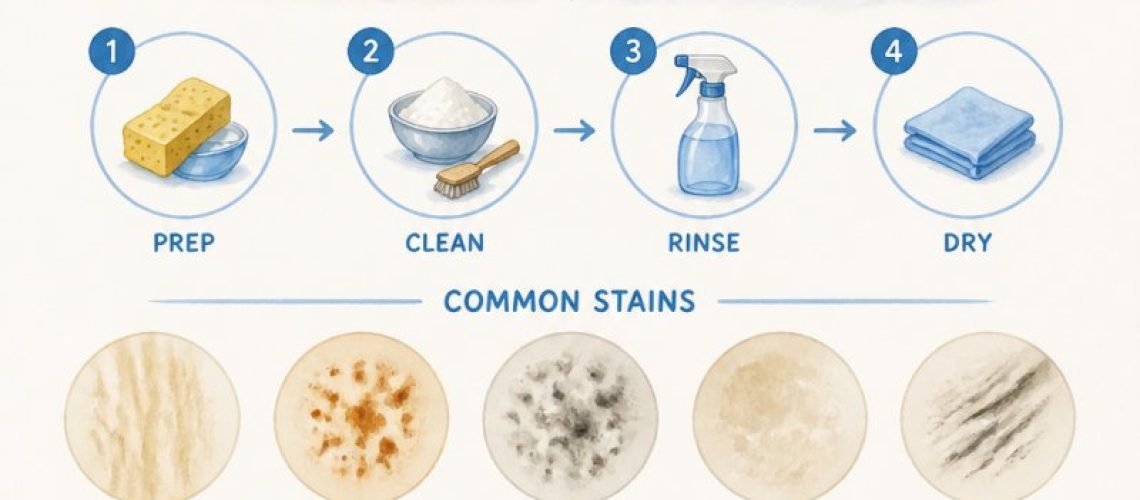
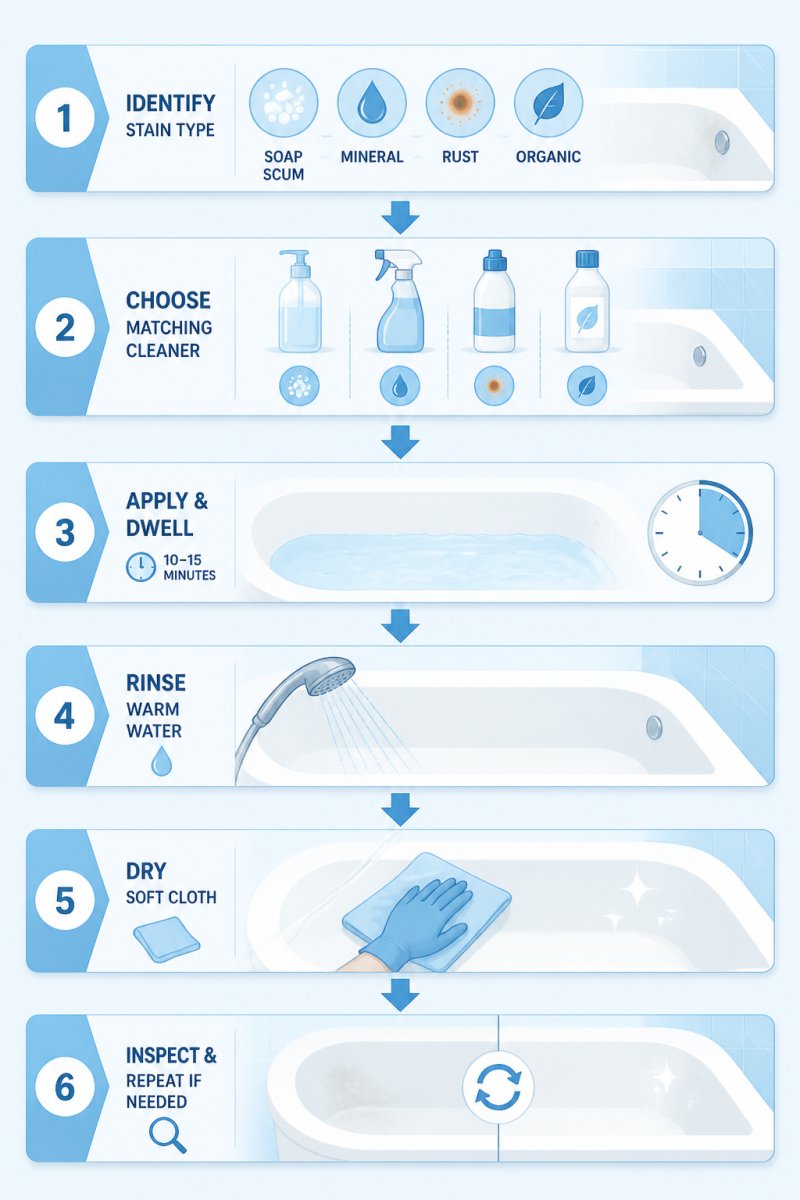
Safe cleaning follows one sequence: prep, apply, dwell, rinse, dry, inspect. Skipping the dwell time is the most common reason a stain survives the first attempt.
Step 1: Prep the Tub and Ventilate the Room
Open a window or run the exhaust fan before you start. Remove mats, bottles, and the drain cover. Rinse the tub with warm water to lift loose dirt, then wipe it dry so you can see the true stain.
Step 2: Apply the Right Cleaner and Let It Sit
Spread your chosen cleaner over the stain with a soft sponge. Let it sit for 10 to 15 minutes. This dwell time does the work, so you do not have to scrub hard.
Step 3: Rinse, Dry, and Check for Missed Spots
Rinse with warm water and wipe with a soft cloth. Check the tub under bright light. If a faint mark remains, repeat once rather than scrubbing harder.
How to Remove Rust Stains From a Porcelain Tub Without Scratching It
Rust needs a mild acid, not force. Learning how to remove rust stains from porcelain tub surfaces comes down to spot treating with oxalic acid cleaner or a lemon juice and salt paste, then rinsing fast.
Here is the safe method:
- Mix lemon juice with enough salt to form a paste.
- Dab it onto the rust spot only, not the whole tub.
- Let it sit for 10 minutes.
- Wipe with a soft cloth and rinse well.
- Repeat once if a light shadow remains.
Rust often comes from a dripping metal fixture or a can left on the ledge. Fix the source, or the stain returns. For stubborn rust that has bonded for years, a Canadian Centre for Occupational Health and Safety tips on safe chemical handling helps you work with acid cleaners carefully.
If rust keeps coming back in the same spot, check the faucet above it. A slow drip etches a rust ring into the glaze over time, and cleaning alone will not stop it.
Common Mistakes That Scratch or Dull Porcelain
The fastest way to ruin a porcelain tub is to scrub harder when a stain will not budge. Abrasion removes the glaze, and a dull surface stains again within weeks.
Watch for these mistakes:
- Using steel wool, scouring pads, or abrasive cleansers
- Mixing bleach and ammonia-based products, which creates toxic fumes
- Leaving acid cleaners on too long, which etches the glaze
- Skipping the rinse, letting residue dry into a film
- Scrubbing dry instead of letting the cleaner dwell
- Ignoring a cracked or chipped surface where stains dig in deep
If your tub is already dull, scratched, or chipped, cleaning will not bring the shine back. That is a surface problem, not a dirt problem.
When Cleaning Isn’t Enough: Porcelain Bathtub Refinishing in Toronto
Porcelain bathtub refinishing in Toronto restores a worn tub by bonding a new coating over the old surface. It costs less than a full replacement and takes far less time, which matters for landlords and busy households.
At Century BathTubs, we have handled this work across the GTA since 1995. Our licensed and insured technicians apply an EP-ACRYLIC coating system that bonds to the existing surface and dries fast. Every job carries a three-year hassle-free guarantee.
What makes refinishing a practical choice:
- More affordable than ripping out and replacing a tub
- Extends the life of cast iron and porcelain fixtures
- Covers chips, cracks, and stubborn stains in one job
- Seals old tubs that may hide lead in worn glaze
- Fast drying, so your bathroom is back in use quickly
For landlords with several units, the work can be scheduled in batches to cut downtime. If you are searching for bathtub refinishing near me in Toronto, a quick inquiry gets you a clear answer on scope and timing.
Cleaning removes what sits on the glaze. Refinishing rebuilds the glaze itself. If your tub is chipped, cracked, or permanently dull, no cleaner will fix it.
Stains that lift with a soft cloth and the right cleaner are a weekend task. Stains that survive, or a tub that stays dull and chipped no matter what you try, point to a worn surface that needs more than cleaning. Century BathTubs restores tubs and shower tiles with a durable EP-ACRYLIC coating, backed by a three-year hassle-free guarantee and licensed, insured technicians serving Toronto and the GTA since 1995. Get started with Century BathTubs and bring your bathroom back to a clean, glossy finish without the cost of a full replacement.
Frequently Asked Questions
What is the safest way to remove stains from a porcelain bathtub?
Start with the gentlest option and work up. A paste of baking soda and water lifts most soap scum and organic stains without scratching the glaze. For mineral deposits, a cloth soaked in white vinegar laid over the stain for 15 to 20 minutes usually works. Always rinse thoroughly and dry with a soft cloth. Skip steel wool, abrasive powders, and anything labeled ‘scrubbing’ because these dull the enamel and make future staining worse.
Can I use vinegar on a porcelain bathtub?
Yes, diluted white vinegar is safe on glazed porcelain for occasional use. Soak a cloth, drape it over the stained area, and leave it for 15 to 20 minutes, then rinse well. Don’t leave vinegar pooling for hours, and never mix it with bleach since the combination releases harmful fumes. If your tub has cracks, chips, or exposed cast iron, skip the vinegar and address the damage first, because acid speeds up rust at any break in the surface.
How do I remove deep rust stains from a porcelain tub without scratching it?
Rust needs a different approach than soap scum. Commercial rust removers formulated for bathroom surfaces, or a paste of baking soda and lemon juice, work on light rust when left for 10 to 15 minutes. Apply with a soft cloth or non-scratch sponge, never a scouring pad. If the rust keeps returning, the source is usually a chip or worn spot in the glaze letting water reach the cast iron underneath, and that needs refinishing rather than more cleaning.
When should I consider professional bathtub refinishing in Toronto?
If stains return within weeks, the glaze is dull or chalky, or you can see chips, cracks, or rust bleeding through the surface, cleaning won’t fix the problem. Refinishing restores the surface and seals it against future staining. For Toronto and GTA homeowners, a professional refinishing service can extend the life of an original cast iron tub at a fraction of replacement cost. Request a free inquiry to find out whether your tub is a candidate.