

Table of Contents
- What Is Acrylic Coating and How Does It Work?
- Why Acrylic Coating Beats Replacement for Bathroom Fixtures
- Epoxy vs Acrylic Tub Coating: Which Is Right for Your Bathroom?
- Is Bathtub Refinishing Safe for Family Members and Pets?
- How Long Does Bathtub Refinishing Take?
- Durability and Maintenance: What to Expect from Acrylic Coatings
- Frequently Asked Questions
Last Updated: September 23, 2026
What Is Acrylic Coating and How Does It Work?
Acrylic coating is a spray-applied finish that bonds to the surface of a bathtub or shower tile, creating a new, non-porous layer over the existing fixture. For Toronto homeowners weighing refinishing against replacement, the appeal is simple: it restores the surface you already have instead of tearing it out.
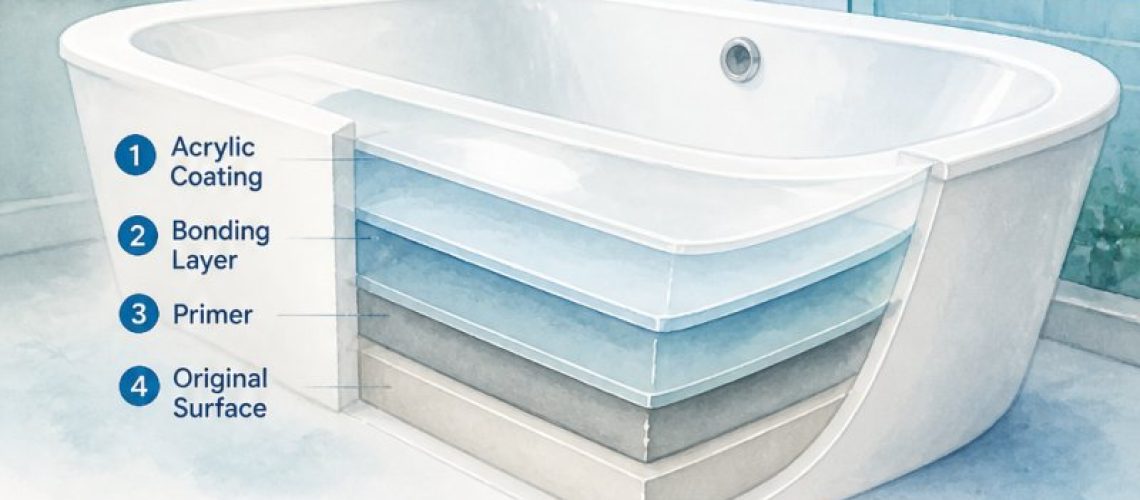
The process starts with a deep clean and an acid etch to strip soap scum, hard water minerals, and any remaining factory glaze so the new coating has something to grip. Chips and cracks get filled and sanded flush. Then the technician sprays the coating in thin, even passes, building up a finish that cures into a hard, glossy shell.
At Century BathTubs, that shell is our EP-ACRYLIC system. The “EP” stands for epoxy, and it’s the reason the finish holds up in a room that’s wet every single day.
The Difference Between Acrylic Coatings and Acrylic Liners
An acrylic liner is a molded sheet of plastic cut to fit over your existing tub. A coating is sprayed on and becomes part of the fixture itself.
That distinction matters more than it sounds. Liners sit on top of the old surface, which means they add thickness, can trap moisture underneath, and often require the drain and overflow to be re-plumbed. A sprayed coating adds no meaningful thickness, leaves the drain assembly alone, and covers curves, textured tile, and odd shapes that a pre-molded sheet can’t follow.
Ask any refinisher whether they etch the surface before spraying. Skipping that step is the single biggest reason coatings peel within a year. A finish applied over old soap film has nothing to bond to.
Why Acrylic Coating Beats Replacement for Bathroom Fixtures
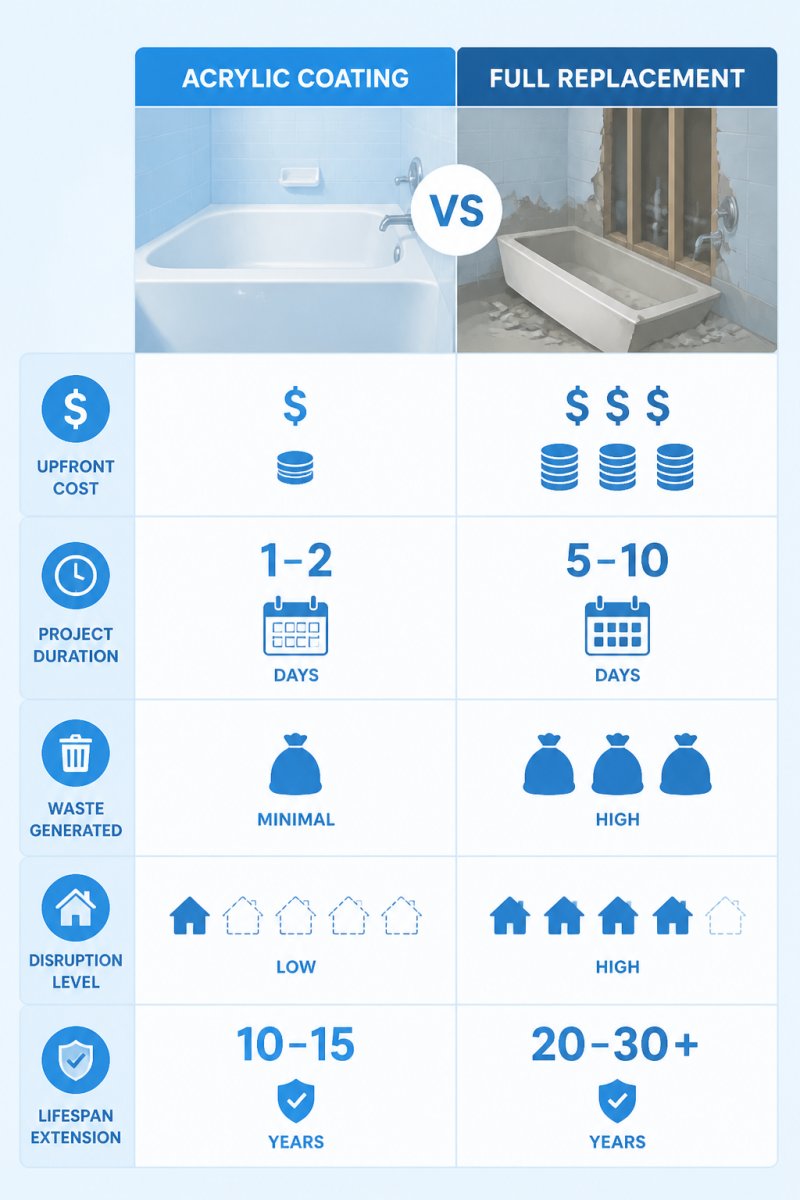
Replacement means demolition. Coating means restoration. That’s the whole argument in one line.
A full tub replacement involves removing the old unit, checking and often repairing the subfloor and surrounding tile, buying a new fixture, and paying for installation and disposal. You lose the bathroom for a stretch of days, and if the old tub is cast iron, you’re also paying someone to haul hundreds of pounds of metal out of your home.
Coating avoids all of that. The existing tub stays where it is, the surrounding tile stays intact, and nothing goes to the landfill. For landlords and property managers, the math is even clearer: you can refresh a unit between tenants without a renovation permit or a demolition crew.
There’s a safety angle too. Older cast iron and steel tubs in Toronto’s pre-war housing stock were often finished with enamel that can contain lead. Grinding or sanding that surface during removal releases dust. A spray-applied coating seals the old finish in place rather than disturbing it.
| Factor | Acrylic Coating | Full Replacement |
|---|---|---|
| Upfront cost | Lower | Higher |
| Time on site | Same day | Several days |
| Waste generated | Minimal | Old tub plus tile |
| Disruption | Bathroom usable same day | Bathroom out of service |
| Lead risk | Old finish sealed | Old finish disturbed |
If your tub is structurally sound, coating restores it for a fraction of what replacement costs. If the tub flexes underfoot or the floor beneath it is soft, replacement is the honest answer.
Epoxy vs Acrylic Tub Coating: Which Is Right for Your Bathroom?
Epoxy and acrylic are not competing products in professional refinishing. The best systems use both.
Epoxy is the hard, chemical-resistant base layer. It’s what gives the finish its chip resistance and its grip on the tub. Acrylic is the top layer: it cures fast, holds color and gloss, and resists the yellowing that epoxy alone can develop in a steamy bathroom.
That’s why our system is called EP-ACRYLIC. A pure epoxy finish can look dull over time. A pure acrylic finish can be softer and more prone to scratching. Layering them gives you the hardness of epoxy with the appearance and quick cure of acrylic.
Where does that leave DIY brush-on kits? They’re usually a single-component acrylic paint. They’re fine for a rental turnover you need to get through next month, but they don’t build the film thickness a sprayed two-part system does. If you want the finish to survive daily use, the material and the application method both matter.
Is Bathtub Refinishing Safe for Family Members and Pets?
Bathtub refinishing is safe once the coating has fully cured, and the curing window is the part to plan around. The sprayed product needs time to off-gas before the bathroom is used again.
In practice, that means keeping the bathroom door closed, running the exhaust fan, and keeping children and pets out of the room until the technician confirms it’s ready. Most jobs are back in service the same day, though the finish continues to harden over the following days.
If you’re pregnant, chemically sensitive, or simply cautious, tell the technician before the job. A reputable refinisher will schedule the work when the house is quiet and can advise on ventilation. Our team is licensed and insured, and we walk every customer through the cure timeline before we start.
The lead question is worth raising directly. If your home was built before the mid-1970s, the old tub finish may contain lead. Coating seals it. Removal releases it. That alone is a reason many Toronto families choose refinishing over replacement.
How Long Does Bathtub Refinishing Take?
A standard bathtub refinishing job takes three to five hours on site, and the tub is typically usable the same day. Prep and drying time between coats drive the schedule more than the spraying itself.
Here’s how the time breaks down:
- Surface prep (60-90 minutes): cleaning, etching, and repairing chips or cracks
- Masking (20-30 minutes): protecting tile, fixtures, and flooring
- Primer and base coat (30-45 minutes): epoxy layer applied and flashed off
- Top coats (45-60 minutes): acrylic layers sprayed and cured
- Cleanup and inspection (30 minutes): removing masking and checking coverage
For landlords with multiple units, the practical question is scheduling, not duration. A single tub is a half-day job. Five units can be batched into a sequence so you’re not waiting weeks between bathrooms. We regularly handle multi-unit work across the GTA for exactly this reason.
Don’t book a refinishing job the day before a home inspection or a tenant move-in. The finish needs its full cure window, and rushing it is how you end up with a soft spot near the drain.
Durability and Maintenance: What to Expect from Acrylic Coatings
A properly applied acrylic coating lasts years, not months, and it’s easy to keep that way. The finish is non-porous, so stains sit on the surface instead of soaking in.
What wears a coating out is almost always the same short list:
- Abrasive cleaners. Scouring powder and steel wool scratch the gloss. Use a non-abrasive bathroom cleaner and a soft cloth.
- Rubber mats with suction cups. They trap moisture against the finish and can leave marks. A textured mat without suction cups is the safer choice.
- Standing water and harsh chemicals. Drip-dry after use and skip drain cleaners that sit in the tub.
- Dropped objects. A heavy bottle landing on the tub floor can chip any finish, coated or original.
That’s the whole maintenance routine. Wipe it down, avoid abrasives, and the surface keeps its shine. Our three-year hassle-free guarantee backs the work itself, which is the part most homeowners actually worry about: what happens if it fails. If it chips or peels within that window, we come back.
Choosing the right finish for a bathroom comes down to one question: is the fixture worth saving? In most Toronto homes, it is. A sound tub with worn enamel doesn’t need a demolition crew, it needs a surface that bonds properly and cures hard. Century BathTubs has been refinishing tubs and shower tile across Toronto and the GTA since 1995, using our EP-ACRYLIC coating system, with licensed and insured technicians and a three-year hassle-free guarantee on every job. If you want a straight answer on whether your tub can be restored or should be replaced, get a free inquiry and we’ll tell you honestly.
Frequently Asked Questions
Is acrylic coating better than epoxy for bathtub refinishing?
Both have trade-offs. Epoxy creates a harder surface and resists scratches well, but it can yellow over time and has a stronger odor during application. Acrylic coating dries faster, holds color better, and typically cures within 24 hours, which means less downtime for your bathroom. For Toronto homes with older cast iron or fibreglass tubs, acrylic coatings offer a practical balance of durability and quick turnaround. The right choice depends on your fixture material and how soon you need the bathroom back in service.
Is bathtub refinishing safe for my family?
Professional refinishing is safe when done correctly. Trained technicians use ventilation, protective equipment, and allow proper curing time before the tub is used again. Once cured, the coating is inert and does not release fumes. If you have young children or pets, keep them away from the bathroom during application and for the recommended curing period, usually 24 to 48 hours. Licensed and insured providers follow safety protocols that minimize exposure for everyone in the home.
How long does bathtub refinishing take?
Most bathtub refinishing jobs take three to five hours on site. That includes surface preparation, repair of chips or cracks, and applying the coating. You can typically use the tub again after 24 hours, though full cure takes a few days. Landlords with multiple units often schedule back-to-back appointments to minimize vacancy time. The exact duration depends on the tub’s condition and the coating system used.
Can you apply acrylic coating to old cast iron tubs?
Yes. Cast iron tubs are excellent candidates for acrylic coating because the underlying structure is solid and long-lasting. Deep cracks or rust spots need proper repair first, but a skilled technician can restore the surface so it looks and performs like new. This approach extends the life of a heavy, durable fixture that would be costly and difficult to remove. Many Toronto homeowners choose coating over replacement for exactly this reason.