


Table of Contents
- Why Natural Cleaners Work on Bathtub Soap Scum
- Quick Comparison: Best Natural Cleaners for Bathtub Soap Scum
- How to Clean Soap Scum Off a Bathtub Naturally
- Safe Cleaners for Refinished Bathtubs
- Preventing Soap Scum in Toronto Hard Water
- Natural Cleaners to Avoid on Bathtubs
- Conclusion: Choosing the Best Natural Cleaner for Your Tub
- Frequently Asked Questions
Last Updated: September 22, 2026
Why Natural Cleaners Work on Bathtub Soap Scum
Soap scum is the chalky film left behind when soap reacts with the minerals in hard water. Natural cleaners break that film down without harsh fumes or abrasive damage. That matters more than most homeowners realize: scrubbing with the wrong product can dull a refinished surface far faster than the scum itself ever would.
This guide from Century BathTubs covers the best natural cleaners for bathtub soap scum, plus how to use them safely on acrylic, porcelain, and refinished tubs. We have restored tubs across Toronto and the GTA since 1995, so we have seen what works and what quietly ruins a surface.
The core problem is chemistry. Soap scum is alkaline, which is why acidic cleaners cut through it so well. The trick is matching an acid strong enough to dissolve the film but gentle enough to leave your finish intact.
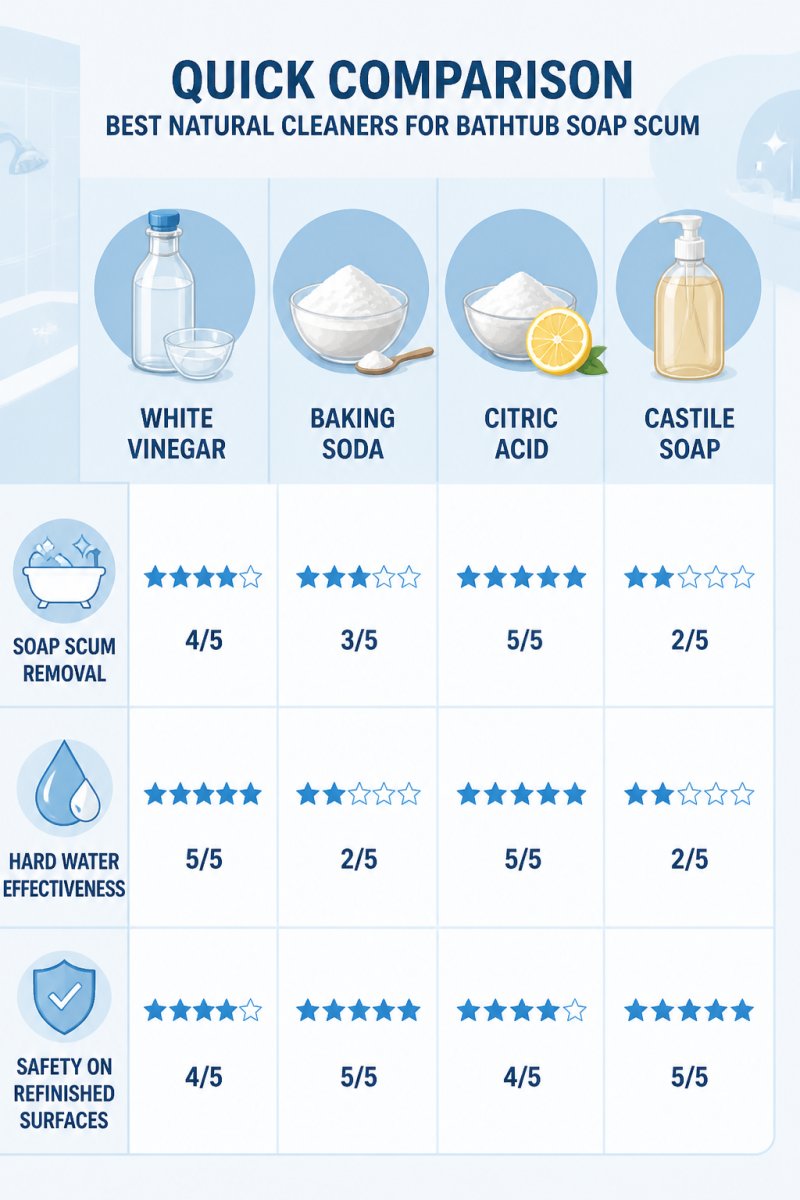
Quick Comparison: Best Natural Cleaners for Bathtub Soap Scum
The best natural cleaners for bathtub soap scum are white vinegar, baking soda, citric acid, and castile soap. Each one earns its place for a different job, and the right pick depends on your water and your tub’s surface.
| Cleaner | Best For | Works on Hard Water? | Safe on Refinished Tubs? |
|---|---|---|---|
| White vinegar | Light film, daily upkeep | Yes, with dwell time | Yes, diluted |
| Baking soda | Gentle scrubbing paste | Moderate | Yes |
| Citric acid | Heavy mineral buildup | Yes, strongest | Yes, diluted |
| Castile soap | Preventative cleaning | No | Yes |
Here is the part most guides skip: vinegar and citric acid do the dissolving, while baking soda and castile soap do the lifting and rinsing. Pairing one acid with one gentle abrasive gets better results than doubling up on either.
How to Clean Soap Scum Off a Bathtub Naturally
The most effective natural method combines an acid to dissolve scum with a mild abrasive to lift it. You do not need a cupboard full of products; three items cover almost every situation.
Step-by-Step Method for Natural Soap Scum Removal
- Rinse the tub with warm water to loosen surface film.
- Spray undiluted white vinegar over the scum and let it sit 15 to 30 minutes.
- Sprinkle baking soda over stubborn patches and scrub with a soft sponge.
- For heavy buildup, swap vinegar for a citric acid solution and repeat.
- Rinse thoroughly and dry with a microfiber cloth to prevent new deposits.
A common mistake is scrubbing dry. Scum needs dwell time to soften, and scrubbing too early just spreads it around. Give the acid its full window before you touch the surface.
Mix a paste of baking soda and a few drops of castile soap for the tub floor, where scum collects fastest. It clings to vertical curves and stays put while it works.
Safe Cleaners for Refinished Bathtubs
Safe cleaners for refinished bathtubs are non-abrasive and pH-balanced, because the coating on a refinished tub is tougher than bare porcelain but still vulnerable to scratches and strong solvents. Vinegar diluted with water, baking soda, and mild castile soap all qualify.
What you avoid matters just as much. Abrasive powders, steel wool, and bleach-heavy products wear down the finish and cause the dulling that sends people back for a second refinish. If your tub was resurfaced with a durable coating system, treat it like a fine countertop: gentle products, soft cloths, no harsh scrubbing.
At Century BathTubs, our EP-ACRYLIC coating is built to handle everyday cleaning when it is cared for correctly. When a finish does wear out, refinishing costs far less than replacement and extends the life of the tub you already have.
Preventing Soap Scum in Toronto Hard Water
Preventing soap scum in Toronto hard water comes down to frequency and drying. Toronto’s water carries a lot of dissolved minerals, so scum forms faster here than in softer-water cities. The fix is simple: clean more often and dry the surface every time.
- Squeegee or towel-dry the tub after every use.
- Rinse with warm water before scum has a chance to set.
- Run a weekly vinegar spray to keep minerals from bonding.
- Skip bar soap where you can; liquid body wash leaves less residue.
A landlord managing several units will tell you the same thing: a two-minute weekly wipe beats a two-hour deep clean every month. If you are searching for tub refinishing near me in Toronto, our team can assess whether a worn surface needs restoration before cleaning habits take hold.
Natural Cleaners to Avoid on Bathtubs
Some natural products are a bad match for tubs, even though they clean well elsewhere. Lemon juice is acidic enough to etch certain finishes with repeated use. Coarse salt and pumice scratch the surface. Undiluted essential oils can leave an oily film that attracts more dirt.
The rule of thumb: if a cleaner feels gritty or smells sharp, test it on a hidden spot first. A five-second test on the back rim saves you a costly repair. When in doubt, stick with diluted vinegar, baking soda, and castile soap.
Never mix vinegar and bleach, even in small amounts. The combination releases chlorine gas, which is dangerous in a closed bathroom. Choose one or the other, never both.
Conclusion: Choosing the Best Natural Cleaner for Your Tub
Vinegar handles most jobs, citric acid tackles hard-water buildup, and baking soda does the scrubbing. For a refinished tub, keep it gentle and dry it after every use. That routine keeps soap scum from ever getting a foothold.
When cleaning no longer brings a tub back, Century BathTubs can help. Our licensed and insured technicians have restored tubs and shower tiles across Toronto since 1995, using a durable EP-ACRYLIC coating backed by a three-year hassle-free guarantee. It is faster and more affordable than replacement, and it protects against lead in older tubs. Get started with Century BathTubs and bring your bathroom back to life with a free inquiry.
Frequently Asked Questions
What is the most effective natural way to remove soap scum from a bathtub?
A paste of baking soda and white vinegar is the most effective natural method. Apply the paste to soap scum, let it sit for 15 to 20 minutes, then scrub with a non-abrasive sponge and rinse. The acid in vinegar breaks down mineral deposits while baking soda provides gentle abrasion. For heavy buildup, repeat the process or use a citric acid solution. Avoid abrasive pads that can scratch refinished surfaces.
Are natural cleaners safe for refinished bathtubs?
Most natural cleaners are safe for refinished bathtubs when used correctly. White vinegar, baking soda, and mild castile soap are generally compatible with acrylic and EP-ACRYLIC coatings. However, avoid abrasive scrubbing pads, highly acidic cleaners left for long periods, and anything containing bleach or ammonia. Always test a small hidden area first. If your tub was professionally refinished, ask your provider for a list of approved cleaners.
How do I prevent soap scum buildup in my Toronto bathroom?
Toronto’s hard water leaves mineral deposits that speed up soap scum formation. After every shower, squeegee or wipe down the tub walls and floor. Once a week, spray a diluted white vinegar solution and let it sit for 10 minutes before rinsing. Using a water softener or shower filter can also reduce mineral content. For refinished tubs, a quick daily rinse and weekly natural clean keeps soap scum from hardening.
Is baking soda abrasive to bathtub surfaces?
Baking soda is a mild abrasive, much softer than scouring powders or steel wool. On refinished bathtubs, it is safe when used as a paste with a soft cloth or sponge. Avoid scrubbing aggressively or using dry baking soda directly on the surface. For best results, mix with water or vinegar to form a paste, apply gently, and rinse thoroughly. This method cleans without dulling the finish.