

Table of Contents
- Can You Reglaze a Fiberglass Tub? The Short Answer
- How the Fiberglass Refinishing Process Works
- How Long Does Bathtub Reglazing Last?
- Pros and Cons of Bathtub Reglazing
- DIY Fiberglass Tub Repair Kit vs. Professional Reglazing
- Bathtub Refinishing Cost in Canada
- Safety, Ventilation, and Chemical Considerations
- Conclusion
Last Updated: August 6, 2026
Can You Reglaze a Fiberglass Tub? The Short Answer
Yes, you can reglaze a fiberglass tub. The process involves cleaning, sanding, and applying a new protective coating to restore the surface without replacing the entire fixture. Whether you choose a DIY approach or hire professionals like Century BathTubs in Toronto, reglazing extends your tub’s life by several years at a fraction of the cost of replacement.
Bathtub reglazing, also called resurfacing or refinishing, addresses surface-level damage: chips, stains, discoloration, and minor scratches. It does not fix structural problems like deep cracks in the fiberglass itself or underlying damage to the tub’s frame. For cosmetic wear and surface degradation, reglazing delivers real results.
How the Fiberglass Refinishing Process Works
The fiberglass refinishing process is methodical and requires precision at each stage. A properly executed application can last three years or longer; a poorly executed one will fail within months.
Surface Preparation and Cleaning
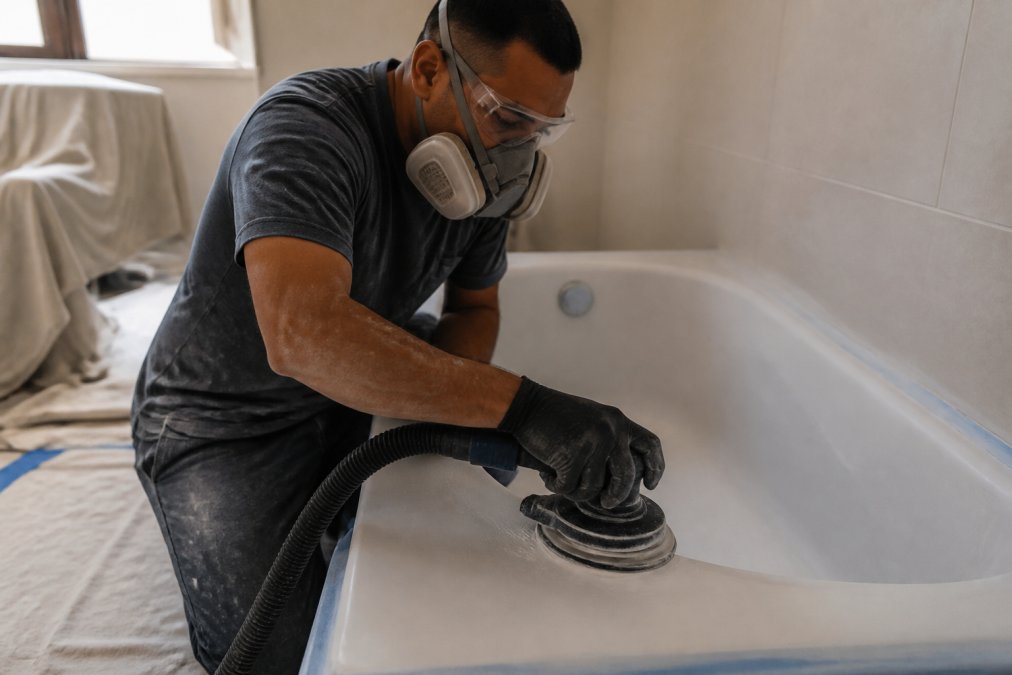
Surface preparation determines whether the new coating adheres properly or peels within weeks. The entire tub must be cleaned thoroughly to remove soap residue, hard water deposits, mold, and mildew. Scrub with a bathroom cleaner and stiff brush, paying special attention to corners and grout lines. For stubborn stains or mold, use white vinegar and baking soda or a commercial mold remover appropriate for fiberglass. Allow the tub to dry completely; moisture trapped under the new coating will cause adhesion failure.
Once clean and dry, the surface must be roughened to improve adhesion through sanding and etching.
Sanding, Etching, and Primer Application
Use 120-150 grit sandpaper to sand the entire tub in circular motions, dulling the glossy surface without gouging the fiberglass. Vacuum or wipe away all dust before proceeding.
Etching chemically roughens the surface further. Many professional kits include an acid wash or bonding agent for this purpose. Follow manufacturer’s instructions carefully, as etching solutions are corrosive and require proper ventilation and protective equipment.
After etching and rinsing, apply a bonding primer. Multiple thin coats perform better than one thick coat. Allow the primer to cure according to product instructions, usually 4-8 hours, before applying the topcoat.
Topcoat Application and Curing
The topcoat is the visible, protective layer. Most professional systems use epoxy or urethane-based coatings that are durable, water-resistant, and provide a glossy finish. Apply in thin, even layers using a roller or spray gun. Most systems require two coats for optimal coverage and durability.
After application, the tub must cure completely before use. Curing times vary by product, typically 24-72 hours. Using the tub before curing is complete will damage the finish and void any warranty.
How Long Does Bathtub Reglazing Last?
A professionally applied epoxy coating typically lasts 3-5 years before showing signs of wear. DIY applications often fail sooner, sometimes within 12-18 months, due to improper surface preparation or application technique.
Century BathTubs backs its work with a three-year hassle-free guarantee, which reflects the durability of professional-grade EP-ACRYLIC coating systems applied by trained technicians. This guarantee covers peeling, chipping, and adhesion failure under normal use.
Frequent use, hard water deposits, and acidic cleaners accelerate wear. Proper maintenance with non-abrasive products extends the coating’s life. After 3-5 years, the tub can be reglazed again, making this an economical long-term solution compared to replacement.
Pros and Cons of Bathtub Reglazing
Pros of bathtub reglazing:
Reglazing costs substantially less than replacing a tub. The process is fast, usually one to two days with the tub ready for use within 48-72 hours. Reglazing reduces waste by extending the tub’s functional life, and the fresh, glossy surface restores the bathroom’s appearance without a full renovation.
Cons of bathtub reglazing:
The coating is not permanent; after 3-5 years, you’ll need to reglaze again or replace the tub. Reglazing does not fix structural damage like deep cracks or holes. DIY reglazing often fails due to improper surface preparation or application technique. Temporary odors and VOC exposure occur during application and curing. The tub cannot be used during curing, which may require alternative arrangements if you have only one bathroom.
DIY Fiberglass Tub Repair Kit vs. Professional Reglazing
DIY kits cost significantly less than professional services, often between one-third and one-half the price. However, DIY applications carry real risks. Surface preparation is critical, and it’s easy to miss spots or leave dust that compromises adhesion. Application technique matters significantly; uneven coats, drips, and missed areas are common and often lead to failure within 12-18 months. DIY work also requires excellent ventilation and proper protective equipment, which many homeowners underestimate.
Professional reglazing costs more upfront but delivers superior results and reliability. Professional technicians have years of experience with surface preparation, application technique, and curing conditions. They use commercial-grade materials that outperform consumer kits and provide a warranty, typically 3 years, covering peeling, chipping, and adhesion failure.
Century BathTubs employs licensed and insured technicians trained in EP-ACRYLIC coating systems. The three-year hassle-free guarantee reflects confidence in the durability of professional work. For most homeowners, professional reglazing is the better choice given the modest cost difference compared to the risk of DIY failure.
Bathtub Refinishing Cost in Canada
Professional reglazing in Toronto and the Greater Toronto Area varies based on tub condition and coating system. Century BathTubs provides quotes tailored to your specific situation. Pricing depends on tub size, existing damage severity, and whether additional fixtures like shower surrounds are included.
DIY kits cost significantly less upfront but the true cost includes your time, potential failure requiring re-application, and bathroom downtime. For landlords managing multiple units, professional reglazing offers economies of scale. When comparing costs, consider the warranty and longevity; a professional coating lasting 3-5 years with a guarantee is more cost-effective than a DIY application lasting 12-18 months with no recourse if it fails.
Safety, Ventilation, and Chemical Considerations
The reglazing process involves chemicals that require careful handling. Proper ventilation and protective equipment are essential for both DIY and professional applications.
Volatile Organic Compounds (VOCs)
Primers and topcoats contain volatile organic compounds that evaporate during application and curing, releasing fumes that can cause headaches, dizziness, respiratory irritation, and nausea. Individuals with asthma or chemical sensitivities may experience more severe reactions.
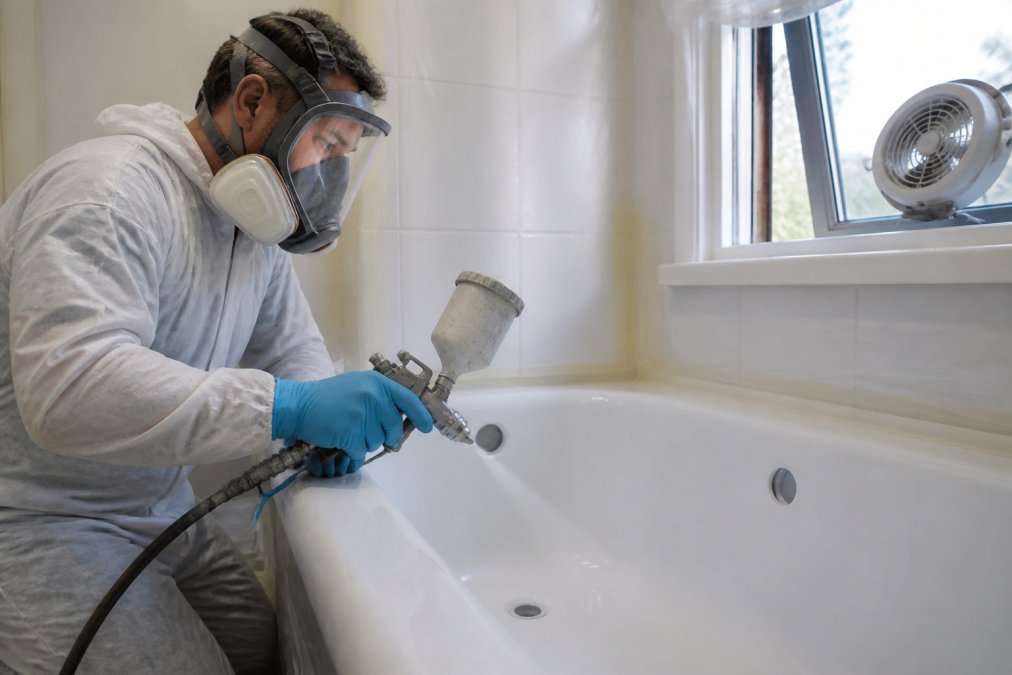
Ventilation is the primary control. Open all windows and doors in the bathroom and use exhaust fans set to maximum. For professional applications, technicians use portable ventilation equipment to direct fumes outside. For DIY work, crack windows wide open and consider using a box fan to pull air out of the bathroom.
Respiratory Protection
A properly fitted respirator is essential. N95 masks provide minimal protection against VOCs; use a respirator rated for organic vapors, typically a half-mask or full-face respirator with appropriate cartridges. Professional technicians use full-face respirators as standard practice.
Skin and Eye Protection
Primers and topcoats are caustic. Wear chemical-resistant gloves (neoprene or butyl rubber, not nitrile), safety glasses or a full-face shield, and long sleeves and pants. The bonding agent or acid wash used in surface preparation is corrosive; follow manufacturer’s instructions precisely and rinse immediately with water if skin contact occurs.
Duration of VOC Exposure
The strongest VOC release occurs during application and the first 24-48 hours of curing. After 72 hours, VOC levels typically drop significantly. Ventilation during the first three days is critical.
Reglazing a fiberglass tub is a practical, cost-effective alternative to replacement when the damage is cosmetic and the underlying structure is sound. Professional reglazing in Toronto delivers superior results backed by warranties and guarantees. Century BathTubs offers licensed, insured technicians trained in durable EP-ACRYLIC coating systems. Contact Century BathTubs for a free inquiry and learn how reglazing can restore your bathroom affordably.
| Aspect | DIY Reglazing | Professional Reglazing |
|---|---|---|
| Upfront Cost | Lower | Higher |
| Application Time | 2-4 days | 1-2 days |
| Expected Longevity | 12-18 months | 3-5 years |
| Warranty | None | Typically 3 years |
| Skill Required | High | Professional expertise |
| Safety Risk | Higher (VOC exposure) | Minimized (proper equipment) |
| Failure Risk | Moderate to high | Low |
Improper surface preparation is the #1 cause of reglazing failure. Dust, moisture, or incomplete sanding prevents adhesion and causes peeling within months. This is why professional preparation is worth the cost, it’s the foundation of durability.
If you’re managing multiple rental units, schedule professional reglazing for several bathrooms at once. Professional teams can often reduce per-unit costs and complete work faster, minimizing vacancy time and tenant disruption.
Frequently Asked Questions
Is it cheaper to reglaze a tub or buy a new one?
Reglazing a fiberglass tub typically costs significantly less than full replacement, which requires demolition, disposal, and new fixture installation. The exact savings depend on your tub's size, condition, and location in Canada. Professional reglazing extends your tub's life by years while avoiding the labour and material costs of replacement. For a detailed quote comparing your specific situation, contact Century BathTubs for a free inquiry.
How long does a reglazed fiberglass tub last?
A properly applied professional reglaze coating typically lasts 3-5 years with proper care and maintenance. The durability depends on usage frequency, water hardness, cleaning methods, and how well you avoid abrasive scrubbers. Century BathTubs backs all professional work with a three-year hassle-free guarantee. DIY kits generally last 1-2 years and are more prone to peeling or cracking if surface preparation is inadequate.
What are the main drawbacks of reglazing a bathtub?
Reglazing requires strict surface preparation and proper ventilation due to chemical fumes and VOC exposure. The curing process means your tub is unusable for 24-48 hours after application. Reglazed finishes can chip or peel if exposed to impact or if the underlying surface wasn't properly prepared. In humid bathrooms or with heavy use, the coating may not last as long. Professional application minimizes these risks compared to DIY approaches.
Can a DIY fiberglass tub repair kit work as well as professional reglazing?
DIY kits can improve the appearance of minor chips and stains, but they rarely match the durability or finish quality of professional reglazing. Professional systems use industrial-grade epoxy or urethane coatings, proper spray equipment, and controlled curing conditions. DIY kits rely on brushes or rollers, which create uneven coverage and poor adhesion. Success depends heavily on meticulous surface preparation. For a long-lasting result, professional reglazing delivers better value and reliability.
This article was written using GrandRanker