


Table of Contents
- Why Maintenance Matters for Your Refinished Bathtub
- 1. Use the Best Cleaners for Reglazed Bathtubs
- 2. Dry Your Tub After Every Use
- 3. How Long Does Bathtub Refinishing Last With Proper Care
- 4. Can You Use Suction Cup Mats on Refinished Tubs
- 5. Avoid Harsh Chemicals and Abrasive Tools
- 6. Address Stains and Damage Promptly
- 7. Schedule Regular Professional Inspections
- Frequently Asked Questions
Last Updated: September 27, 2026
Why Maintenance Matters for Your Refinished Bathtub
A refinished bathtub can look brand new, but the finish isn’t indestructible. The coating that makes your tub gleam requires ongoing care to stay durable and attractive. Without proper maintenance, even the best refinishing job can deteriorate faster than expected.
Century BathTubs applies a professional-grade EP-ACRYLIC coating system that’s built to last, but what happens after installation depends entirely on how you treat the surface. Think of it like a car’s paint job: the initial application matters, but daily maintenance determines whether it looks pristine for years or starts showing wear within months.
The good news is that learning 7 ways to maintain a refinished bathtub isn’t complicated. Most of the work involves simple habits: using the right cleaners, drying the tub properly, and catching small problems before they become big ones. A few preventive steps can extend the life of your refinishing significantly.
1. Use the Best Cleaners for Reglazed Bathtubs
Not all bathroom cleaners are safe for a refinished surface. The coating is durable, but it’s not immune to chemical damage. Using the wrong products is one of the fastest ways to degrade a refinish.
Mild soap and warm water are your safest bet. A simple dish soap solution cleans effectively without attacking the coating. For stubborn soap scum, baking soda mixed with water creates a gentle paste that lifts buildup without scratching.
Vinegar is another reliable option for routine cleaning. It cuts through mineral deposits and soap residue without the harsh abrasiveness of commercial bathroom cleaners. Spray it on, let it sit for a few minutes, then wipe clean.
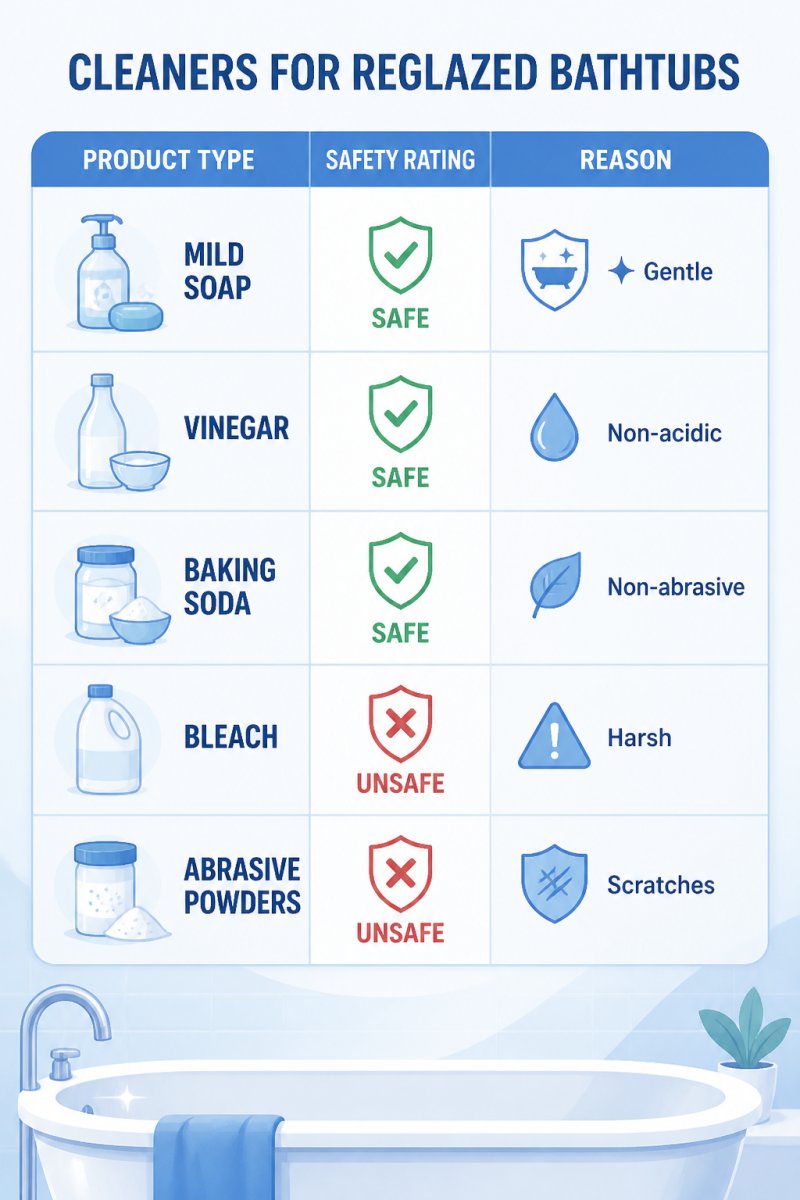
Avoid bleach, ammonia-based cleaners, and acidic products like toilet bowl cleaners. These break down the coating over time. The same goes for abrasive powders and scouring pads that can scratch the surface. Even “gentle” scrubbing products can cause damage if used repeatedly on the same spot.
When you’re unsure about a product, test it in an inconspicuous corner first. Better to verify safety on a small area than risk damaging the entire tub. Many homeowners in Toronto find that sticking to basic soap and water eliminates most cleaning concerns altogether.
Keep a small spray bottle of diluted vinegar under the sink. A quick spray and wipe after each use prevents buildup and keeps the tub looking fresh without any harsh chemicals.
2. Dry Your Tub After Every Use
Water sitting on the surface creates two problems: mineral deposits and potential coating degradation in specific spots. When water dries on its own, it leaves behind calcium and magnesium deposits that build up over time. In areas with harder water, this mineral buildup becomes visible quickly.
The fix is straightforward: dry the tub after each use. A squeegee or soft cloth takes less than a minute. This single habit prevents mineral staining and keeps the finish looking cleaner longer.
Pay special attention to corners and edges where water pools. These areas are prone to mineral accumulation and, if left wet, can develop discoloration that’s harder to remove later. A quick wipe with a microfiber cloth works well for daily maintenance.
Regular drying also prevents the growth of mildew in small crevices. While the coating itself resists mold, moisture trapped in corners can create conditions where mildew thrives. Keeping the surface dry eliminates this problem entirely.
Drying your refinished tub takes 60 seconds and prevents the majority of maintenance headaches. This is the single most effective habit you can develop.
3. How Long Does Bathtub Refinishing Last With Proper Care
A professionally applied refinish typically lasts 7-10 years with proper maintenance. Century BathTubs backs all work with a three-year hassle-free guarantee, and many clients find their refinished tubs remain in excellent condition well beyond that timeframe.
The actual lifespan depends heavily on usage and care. A guest bathroom that sees light use may look perfect for 12+ years. A family bathroom with daily showers and heavy traffic wears the coating faster. Commercial applications see different wear patterns based on how frequently the tub is used.
Proper maintenance, using safe cleaners, drying after each use, and addressing damage promptly, can extend the life significantly. Neglecting these steps can reduce lifespan by several years. Some homeowners who skip maintenance see deterioration within 4-5 years, while those who follow best practices enjoy a refinish that looks good for a decade.
The investment in proper care is minimal compared to the cost of a full replacement. A few minutes of attention each week keeps your refinished tub looking like new and extends its functional life considerably.
4. Can You Use Suction Cup Mats on Refinished Tubs
Suction cup bath mats are convenient for safety, but they can damage a refinished surface if not used carefully. The suction cups create a seal that traps moisture underneath, and the constant suction and release weakens the coating over time.
If you need a non-slip surface, consider alternatives. Adhesive-backed bath mats designed specifically for refinished surfaces are safer. These stick to the tub without creating the moisture-trapping seal that suction cups do. They’re also easier to remove without leaving residue.
Another option is a rubber-backed bath mat placed on top of the tub rather than adhered to it. This provides traction without direct contact that could damage the coating. Just make sure to dry both the mat and the tub regularly to prevent mildew.
If you already have suction cup mats, remove them regularly to let the area underneath dry completely. Don’t leave them in place for extended periods. Check underneath occasionally for any signs of discoloration or coating damage.
5. Avoid Harsh Chemicals and Abrasive Tools
The enemy of a refinished bathtub is anything rough or corrosive. Steel wool, scouring pads, and abrasive sponges scratch the coating. Harsh chemicals eat away at it. Together, they can destroy a refinish in months.
Common mistakes include using oven cleaner, drain cleaners, or degreasers on the tub. These products are far too strong for a delicate coating. Even products marketed as “safe for bathrooms” can be too aggressive if used frequently or left to sit on the surface.
Hard-bristled brushes cause visible scratches. Soft-bristled brushes are acceptable for stubborn spots, but even these should be used sparingly. Most cleaning can be done with a soft cloth and appropriate cleaner.
When dealing with tough stains, resist the urge to scrub harder. Instead, apply a safe cleaner and let it sit for 10-15 minutes, allowing chemistry to do the work rather than elbow grease. This approach removes stains without damaging the coating.
Using bleach or ammonia-based cleaners on a refinished tub can cause permanent discoloration and coating breakdown. Even one aggressive cleaning session can create damage that’s difficult to repair.
6. Address Stains and Damage Promptly
Small problems become big ones quickly if ignored. A tiny chip in the coating can allow water to seep underneath, spreading damage. A stain left unaddressed for weeks becomes harder to remove and may set permanently.
Catch issues early. If you notice a small chip, discoloration, or area where the coating seems to be lifting, contact a professional refinishing service right away. Early intervention often requires minimal touch-up work, while delayed action might require a full re-coating.
For minor stains, tackle them immediately with safe cleaners. Fresh stains respond better to treatment than old ones. If a stain persists after trying gentle methods, professional cleaning or touch-up services can restore the appearance.
Watch for signs of moisture getting underneath the coating, such as soft spots or areas where the finish seems spongy. These indicate that water has breached the seal, and professional repair is necessary to prevent further deterioration.
Regular inspections catch problems before they become expensive. A quick visual check each month takes seconds but can identify issues that need attention.
7. Schedule Regular Professional Inspections
Even with excellent home maintenance, professional inspections add years to the life of your refinished bathtub, and they’re the final step in our 7 ways to maintain a refinished bathtub. A trained technician can spot problems that aren’t visible to the untrained eye and recommend preventive measures.
Many refinishing companies in Toronto offer inspection services as part of ongoing maintenance plans. These professionals understand how coatings age and can identify early signs of wear before they become serious issues.
Annual or bi-annual inspections are reasonable for most households. If your tub sees heavy use, a large family or commercial setting, more frequent inspections make sense. After five years of regular use, an inspection helps determine whether the coating is aging normally or showing premature wear.
Professional inspections also provide documentation of the tub’s condition, which is valuable if you’re selling your home.
Homeowners who want to maximize the lifespan of their refinished bathtub and avoid unexpected damage should schedule professional inspections every 12-18 months.
Frequently Asked Questions
What cleaning products are safe for a refinished bathtub?
Mild dish soap mixed with warm water is the safest choice for your refinished bathtub. You can also use white vinegar diluted with water for light cleaning. Avoid bleach, harsh chemicals, abrasive scouring powders, and acetone-based products, these damage the EP-ACRYLIC coating. For stubborn stains, a soft cloth with baking soda paste works well. Always test any new cleaner on a small, hidden area first to ensure it won’t harm your coating.
How long does a refinished bathtub last with proper care?
A well-maintained refinished bathtub typically lasts 3 to 10 years, depending on how much use it gets and how carefully you maintain it. Our three-year hassle-free guarantee covers defects and normal wear. With consistent daily care, drying after use, using safe cleaners, and avoiding abrasive tools, many customers report their refinishing lasting well beyond the initial guarantee period.
Can I use a bath mat in a refinished tub?
Yes, you can use a bath mat in a refinished tub, but choose one carefully. Avoid heavy rubber suction cup mats that trap moisture and can create permanent impressions on the coating. Instead, use lightweight fabric bath mats or mats with small rubber feet that allow air circulation. This approach keeps your tub safe while still providing slip resistance and comfort during bathing.
How soon can I use my bathtub after refinishing?
After professional refinishing, your bathtub is usually ready for light use within 24 hours and full use within 48 to 72 hours. The exact timeframe depends on ventilation, humidity, and the specific coating system used. Our technicians will provide clear guidance on when your tub is safe to use. Avoid soaking or prolonged water contact during the first few days to allow the coating to cure fully.