


Table of Contents
- Why Your Bathtub Turns Yellow and What It Means
- Signs of Bathtub Surface Wear You Should Not Ignore
- What You’ll Need Before You Start
- Step-by-Step: How to Fix Yellow Bathtub Stains at Home
- How to Remove Hard Water Stains From Tub Surfaces
- When DIY Fails: Bathtub Refinishing in Toronto Explained
- Common Mistakes to Avoid When Treating Yellow Stains
- Conclusion
- Frequently Asked Questions
Last Updated: September 30, 2026
Why Your Bathtub Turns Yellow and What It Means
Yellow bathtub stains are a discoloration problem caused by two very different things: minerals left behind by hard water, or the breakdown of the tub’s top surface. In Toronto, where tap water carries dissolved calcium and magnesium, the mineral kind is far more common.
At Century BathTubs, we have seen this same pattern across the Greater Toronto Area since 1995. A tub that looks “dirty” is often just coated in scale. A tub that stays yellow after cleaning has usually lost its finish.
That second case is the one homeowners miss. Here is how to tell them apart.
Mineral Buildup vs. Surface Breakdown
Mineral buildup sits on the surface. It feels slightly rough or chalky, and it fades when you scrub with an acid-based cleaner.
Surface breakdown happens in the surface. The glossy top layer wears thin, exposing the porous material underneath. That layer traps dirt and turns yellow-brown over time.
- Buildup: chalky, scrubable, comes back slowly
- Breakdown: smooth but stained, scrubbing does nothing
- Buildup: usually rings and patches
- Breakdown: often even, widespread yellowing
If scrubbing changes nothing, you are not dealing with dirt. You are dealing with a worn finish.
Signs of Bathtub Surface Wear You Should Not Ignore
The clearest sign of surface wear is a stain that survives a proper cleaning. When the finish is intact, minerals rinse away. When it is gone, they sink in.
Watch for these signals:
- A dull, chalky look that no polish restores
- Fine cracks, spider lines, or a “crazy paving” pattern
- Small chips or pits near the drain and overflow
- A stain that returns within days of cleaning
- A tub that feels rough even when it looks clean
One more thing most guides skip: on older cast iron tubs, a worn finish can mean the original enamel has thinned. That is a refinishing question, not a cleaning one.
What You’ll Need Before You Start
Gather your supplies first so you are not mid-job without the right cleaner. Here is a simple starter kit.
- Rubber gloves and eye protection
- Non-scratch sponge or soft brush
- Baking soda
- White vinegar
- A mild liquid dish soap
- A commercial non-abrasive tub cleaner
- Microfiber cloths for drying
Skip steel wool and harsh scouring pads. They scratch the finish and make yellowing worse over time. A common mistake is reaching for the strongest cleaner first. Start mild and work up.
Step-by-Step: How to Fix Yellow Bathtub Stains at Home
Fixing yellow bathtub stains at home comes down to three steps: identify the material, match the cleaner to it, then rinse and check the result. The wrong cleaner on the wrong surface causes more damage than the stain itself.
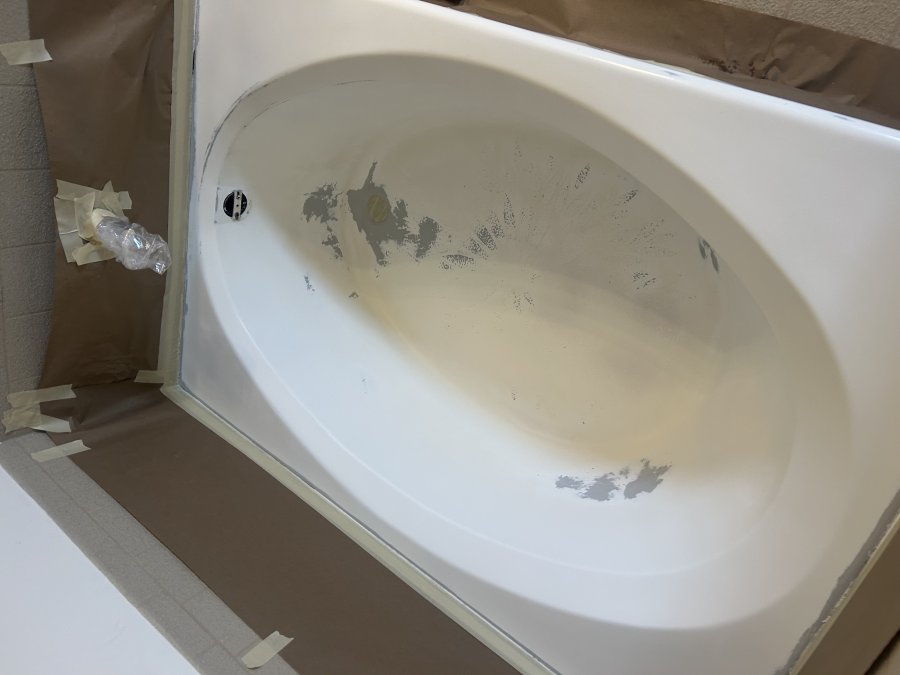
Step 1: Identify Your Tub Material
Acrylic tubs scratch easily, so use soft cloths and mild cleaners only. Porcelain and enamel are tougher but can still dull. Cast iron has a porcelain coating over heavy metal, and that coating is what stains.
If you are unsure, check the underside of the tub or the manufacturer’s label. When in doubt, test any cleaner on a small hidden spot first.
Step 2: Apply the Right Cleaning Method
For light mineral film, make a paste from baking soda and a little water. Rub it on gently, let it sit a few minutes, then rinse.
For tougher hard water deposits, mix equal parts white vinegar and water. Spray it on, leave it for 10 to 15 minutes, then wipe. Do not let vinegar sit for hours on acrylic.
For stubborn cases, use a commercial non-abrasive tub cleaner and follow the label. Always test first.
Step 3: Rinse, Dry, and Assess
Rinse thoroughly with warm water. Dry the surface with a microfiber cloth.
Now look closely. If the yellow is gone, you had buildup. If it remains, the finish is likely worn, and no cleaner will fix that. This is the moment to stop scrubbing and think about refinishing.
How to Remove Hard Water Stains From Tub Surfaces
Removing hard water stains from a tub works best with an acid-based approach, applied in short bursts. Vinegar and lemon juice are the mildest options. Commercial descalers work faster but need careful use.
- Apply the cleaner and let it dwell, but not longer than the label says
- Work in sections so the product does not dry out
- Rinse fully and dry the surface
- Repeat weekly for heavy buildup rather than scrubbing hard once
A common mistake is scrubbing harder when a stain will not budge. That removes the finish, not the stain, and makes the tub harder to keep clean. If gentle cleaning fails twice, the problem is the surface, not the dirt.
For a tub that keeps staining no matter what you try, the finish may be too far gone for cleaning alone.
When DIY Fails: Bathtub Refinishing in Toronto Explained
When cleaning no longer works, bathtub refinishing in Toronto restores the surface instead of replacing the tub. Refinishing, also called reglazing, bonds a new coating over the worn finish so the tub looks and performs like new.
Century BathTubs uses a durable EP-ACRYLIC coating system and backs the work with a three-year hassle-free guarantee. Our technicians are licensed and insured, and the coating dries fast, so your bathroom is not out of use for long.
Refinishing also helps with an older cast iron tub, where a sealed coating can cover the original surface. For homeowners across the GTA, it is a faster and less disruptive option than a full replacement.
If a yellow stain survives two proper cleanings, the finish is worn. Cleaning cannot fix a worn finish. Refinishing can.
Common Mistakes to Avoid When Treating Yellow Stains
The biggest mistake is using abrasive pads or harsh bleach on a regular basis. Both dull the finish and speed up the yellowing you are trying to remove.
Other traps to skip:
- Mixing cleaning products, which can create dangerous fumes
- Leaving acidic cleaners on acrylic for too long
- Ignoring small chips, which let water into the surface
- Assuming every yellow tub needs replacing
Never mix bleach with vinegar or ammonia-based cleaners. The combination releases toxic gas. Use one product at a time and rinse between them.
Conclusion
Yellow stains are a signal, not just a mess. If cleaning clears them, you are fine. If it does not, your tub’s finish is wearing out, and no amount of scrubbing will bring it back.
That is where Century BathTubs comes in. We have restored worn tubs and shower tiles across Toronto and the GTA since 1995, using our EP-ACRYLIC coating system, licensed and insured technicians, and a three-year hassle-free guarantee. It costs less than replacement and extends the life of the tub you already have.
Get started with Century BathTubs and bring your bathroom back to a clean, bright finish. Reach out for a free inquiry today.
Frequently Asked Questions
Why does my bathtub turn yellow over time?
Yellowing happens for two main reasons. First, minerals in Toronto’s water supply, mainly calcium and magnesium, leave deposits that build up and stain the surface. Second, the protective topcoat on older tubs breaks down from years of cleaning products, soap scum, and hot water. Once that layer wears thin, the underlying material absorbs discoloration. If the yellow returns quickly after cleaning, the finish is likely compromised and refinishing may be the better long-term fix.
Can you remove yellow stains from an acrylic bathtub?
Yes, but acrylic scratches easily, so avoid abrasive pads and harsh scrubbing. Try a paste of baking soda and water applied with a soft cloth, or a non-abrasive cleaner labeled safe for acrylic. Let it sit for 10 to 15 minutes, then rinse. For stubborn yellow bathtub stains on acrylic, a diluted white vinegar solution can help, but never mix vinegar with bleach. If the stain has penetrated the surface, cleaning will not restore it and professional refinishing is the practical option.
Is it better to clean or refinish a yellowed bathtub?
Clean first if the yellow sits on top of the surface, which is typical of hard water or soap scum. If the discoloration returns within weeks, or you notice cracks, peeling, or a chalky texture, the finish itself has worn through. At that point, cleaning only masks the problem. Refinishing restores the surface with a new coating, costs far less than replacement, and typically takes one day. Century BathTubs offers a three-year guarantee on its work.
How do I know if my bathtub needs professional reglazing?
Watch for these signals: yellowing that returns within days of cleaning, visible scratches or chips, a dull or chalky feel, peeling near the drain or overflow, and dark spots that look like they are under the surface. If you see two or more of these signs, the finish is failing. A professional can assess whether reglazing will restore it. Century BathTubs has served the GTA since 1995 and provides free inquiries to help you decide.