

Table of Contents
- What You’ll Need Before You Start
- How to Clean a Vintage Clawfoot Tub Without Damaging the Finish
- Best Non-Abrasive Cleaners for Cast Iron Tubs
- How to Remove Stains From Tub Surfaces
- Common Mistakes That Damage Vintage Tub Finishes
- When to Call a Bathtub Refinishing Toronto Professional
- Frequently Asked Questions
Last Updated: September 23, 2026
What You’ll Need Before You Start
The best approach to clawfoot tub cleaning without damaging the finish is to treat it like the antique it is: mild cleaners, soft tools, and patience. Harsh scrubbing is what ruins these tubs, not dirt. At Century BathTubs, we have restored cast iron and enamel tubs across Toronto since 1995, and the damage we see most often comes from good intentions and bad tools. This guide covers exactly what to use, what to avoid, and when a worn finish needs professional help instead of another scrub. We also do any kind of bathtubs and shower tiles refinishing.
Vintage clawfoot tubs usually have one of three surfaces: porcelain enamel over cast iron, painted cast iron, or a previously refinished coating. Each one reacts differently to cleaners. The wrong product can dull the shine, and once enamel loses its gloss, dirt sticks faster and stains set deeper.
Gather these supplies before you start:
- A soft sponge or microfiber cloth
- A non-abrasive liquid cleaner or mild dish soap
- A plastic scraper for stuck debris
- A rubber mat to protect the tub floor
- White vinegar and baking soda for stains
- A soft-bristle brush for corners
- Warm water and a clean rinse bucket
Skip steel wool, scouring pads, and powdered cleansers. They scratch the surface and leave tiny grooves that trap dirt.
Abrasive pads and bleach-based sprays are the two fastest ways to kill a vintage finish. The scratches they leave cannot be buffed out by hand, and bleach can yellow old enamel over time. Once the gloss is gone, the tub stains faster and needs refinishing sooner.
How to Clean a Vintage Clawfoot Tub Without Damaging the Finish
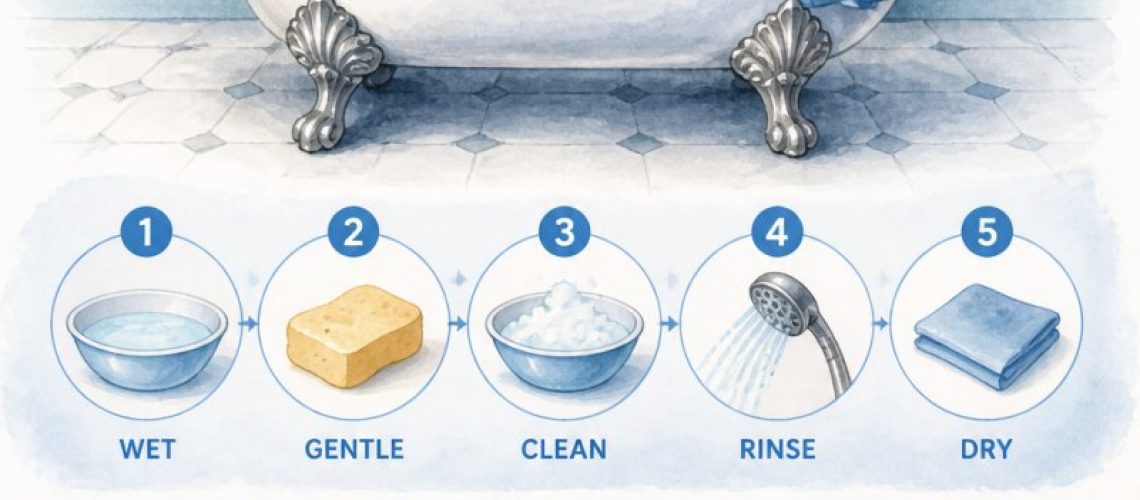
Clawfoot tub cleaning without damage takes three short steps: rinse, apply a mild cleaner, then wipe gently and rinse again. The whole job takes about 15 minutes for a routine clean. Never let cleaner sit on the surface for long, and never scrub hard to remove a stain.
Here is the full process broken down.
Step 1: Rinse and Loosen Dirt
Start with warm water and a soft sponge. Wipe down the entire tub to remove loose dirt, soap film, and hair. This step matters more than people think. Rinsing first means your cleaner works on the real grime, not on surface dust you could have washed away.
Pay attention to the rim, the drain area, and the feet. Dirt collects in these spots and can hide small chips.
Step 2: Apply a Non-Abrasive Cleaner
Use a mild liquid cleaner or a few drops of dish soap in warm water. Apply it with a sponge or cloth. Let it sit for one to two minutes only. Longer contact does not clean better, and some cleaners can dull the finish if left too long.
For a natural option, mix equal parts white vinegar and water in a spray bottle. Vinegar cuts soap scum and hard water film without scratching.
Step 3: Scrub Gently and Rinse
Use a soft-bristle brush for corners and a microfiber cloth for the rest. Move in circles with light pressure. If a spot will not lift, do not scrub harder. Switch to a stain-specific method instead, which we cover below.
Rinse everything with warm water. Dry the tub with a clean cloth to prevent water spots. A dry tub stays cleaner longer.
Dry your clawfoot tub after every use. Water left on old enamel leaves mineral spots that harden within days. A 30-second wipe-down saves you a full stain-removal session later.
Best Non-Abrasive Cleaners for Cast Iron Tubs
The best non-abrasive cleaners for cast iron tubs are mild liquid soap, white vinegar solutions, and baking soda paste for spot work. These three handle almost every routine cleaning job without touching the enamel. Cast iron tubs have a porcelain coating that scratches easily, so the cleaner matters as much as the technique.
| Cleaner | Best For | How to Use | Avoid On |
|---|---|---|---|
| Mild dish soap | Routine cleaning | Few drops in warm water | Nothing |
| White vinegar + water | Soap scum, hard water film | Equal parts, spray and wipe | Cracked or chipped spots |
| Baking soda paste | Light stains, dull spots | Paste on cloth, gentle circles | Painted finishes |
| Oxygen bleach (diluted) | Organic stains | Short soak, then rinse well | Old or thin enamel |
| Commercial non-abrasive gel | Heavy soap film | Follow label, rinse fully | Untested refinished coatings |
A common mistake is assuming “natural” always means safe. Lemon juice and vinegar are acidic. They are fine on healthy enamel but can etch a worn or chipped surface. Test any new cleaner on a small hidden spot first.
If your tub was previously refinished by another provider, check with that company before using anything acidic. Refinished coatings vary, and some react badly to vinegar.
How to Remove Stains From Tub Surfaces
Stain removal starts with identifying the stain type, because rust, minerals, and organic stains each need a different approach. Using the wrong method can set the stain deeper or damage the finish. Match the stain to the method below before you touch the tub.
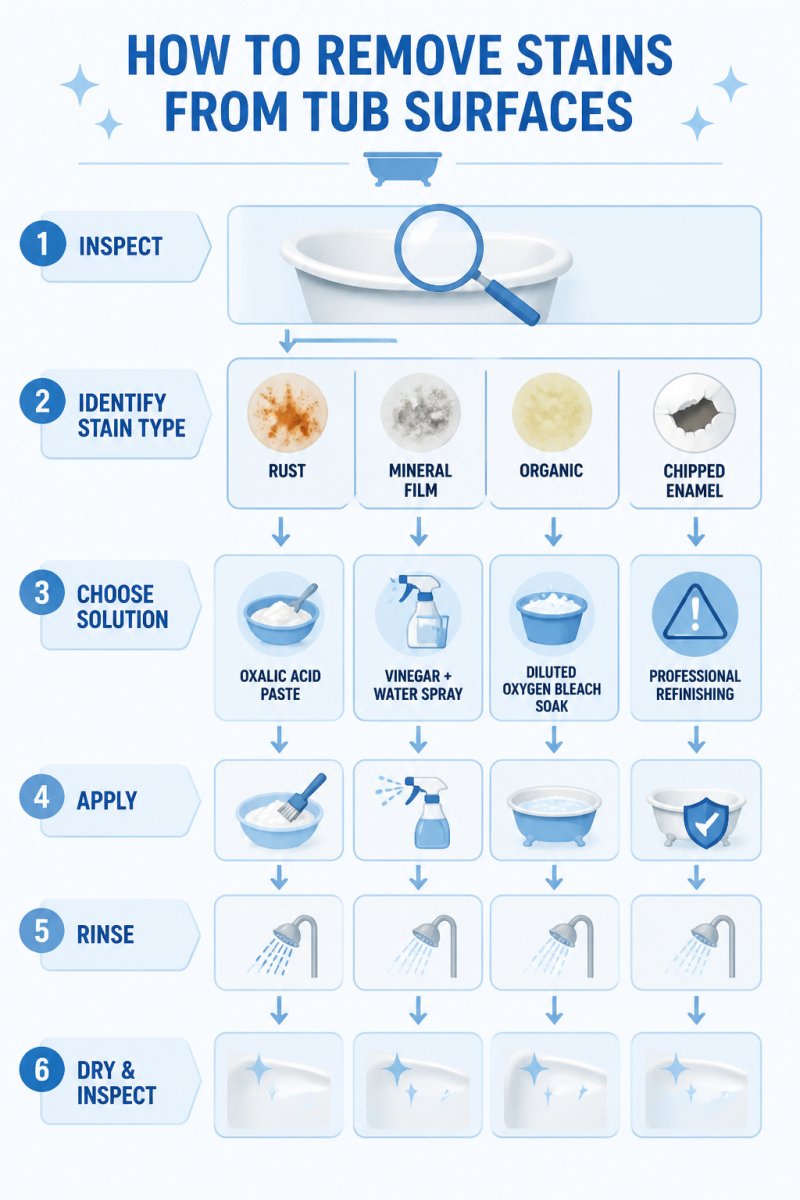
- Rust stains: These come from iron in the water or a chipped enamel spot. Use a commercial rust remover made for enamel, or a paste of oxalic acid powder and water. Apply, wait briefly, rinse fully.
- Mineral film: White or grey haze from hard water. Spray with equal parts vinegar and water, let sit two minutes, wipe with a soft cloth.
- Organic stains: Brown or pink marks from mildew or body oils. Soak with diluted oxygen bleach for 15 minutes, then rinse well.
- Soap scum: Greasy grey film. Baking soda paste with light circular motion removes it without scratching.
- Dark spots under the surface: If a stain sits under the enamel, no cleaner will reach it. That is a sign of a worn coating, not dirt.
If a stain will not lift after two gentle attempts, stop. Repeated scrubbing on a stubborn stain is how most vintage tub damage happens. The stain is likely under the surface, and that is a refinishing job, not a cleaning job.
Common Mistakes That Damage Vintage Tub Finishes
The biggest mistake is treating a vintage tub like a modern one. Old enamel is thinner and softer than what you find on new tubs. It cannot take the same cleaners or the same pressure. Here is what to avoid.
- Using abrasive powders. Scouring powder leaves fine scratches that dull the shine and trap dirt.
- Scrubbing with steel wool. It strips the gloss in seconds and cannot be undone by hand.
- Letting cleaner sit overnight. Long contact can etch or stain the surface.
- Mixing bleach and vinegar. This creates a harmful gas. Never combine cleaning products.
- Ignoring chips and cracks. Water gets under the enamel and rusts the cast iron beneath. Small chips grow fast.
- Using a harsh drain cleaner near the surface. Splash damage can pit the finish around the drain.
A chipped or cracked tub is a different problem than a dirty one. Cleaning will not fix it, and scrubbing around the damage makes it worse. If you see rust bleeding from a chip, the coating has failed in that spot.
When to Call a Bathtub Refinishing Toronto Professional
Call a professional when the finish itself is failing, not just dirty. Deep cracks, rust bleeding through, a dull chalky surface, or stains that sit under the enamel all point to a worn coating.
Toronto homeowners and landlords with chipped, rusted, or dull clawfoot tubs who want to keep the original fixture instead of replacing it. Refinishing also helps protect against lead exposure in very old tubs.
If you are searching for a “bathtub refinishing near me” option in Toronto, ask about the coating system, the guarantee, and whether the team is insured. Those three answers tell you more than any price quote.
Frequently Asked Questions
Can I use vinegar to clean a vintage clawfoot tub?
Vinegar works for light mineral deposits but use it cautiously on vintage clawfoot tubs. Its acidity can dull old enamel over time if left to sit. Dilute white vinegar with equal parts water, apply for no more than a few minutes, then rinse thoroughly. Never combine vinegar with bleach. For stubborn stains, a non-abrasive cleaner made for cast iron is safer for the finish.
What is the best non-abrasive cleaner for cast iron tubs?
Look for cleaners labeled safe for enamel or porcelain, with a pH close to neutral. Cream cleansers without silica or pumice work well. Baking soda paste handles most everyday grime without scratching. Avoid anything containing abrasive particles, strong acids, or chlorine bleach, which wear down the finish and can lead to rust on exposed cast iron.
How do I remove rust stains from a vintage clawfoot tub without damaging the enamel?
Rust stains need a targeted approach. A paste of baking soda and water applied gently with a soft cloth lifts light surface rust. For deeper stains, use a cleaner formulated for enamel-safe rust removal and follow the label directions exactly. Never use steel wool or harsh acids. If rust keeps returning, the enamel is likely compromised and professional refinishing may be the better option.
When should I consider professional refinishing for my clawfoot tub?
If cleaning no longer restores the surface, or you see chips, cracks, or rust that keeps coming back, refinishing is worth considering. A professional coating extends the life of the tub at a fraction of replacement cost and protects against lead in older fixtures. In the Toronto area, licensed and insured refinishing specialists can assess the damage and advise whether repair or replacement makes more sense.
A vintage clawfoot tub is worth saving, but only if you clean it the right way. Mild cleaners, soft tools, and quick action on chips will keep the finish healthy for years. When the enamel is cracked, rusted, or worn past cleaning, Century BathTubs can restore it with our EP-ACRYLIC coating system, backed by a three-year guarantee and more than 30 years of work in Toronto and the GTA. Get started with Century BathTubs and bring your clawfoot tub back to its original shine.