


Last Updated: November 10, 2026
Quick Summary
A chipped bathtub can usually be repaired without replacing the tub. Small chips are fixed with a targeted patch and touch-up finish, while widespread wear, peeling, or several chips point to full reglazing.
- Small chips are usually fixed with a patch and touch-up finish.
- Several chips or peeling often make a strong case for full reglazing.
- Cracks through the tub wall need professional assessment before any coating.
- Tap the tub and check the material before choosing a repair product.
- Do not use the tub until the coating has cured for the stated time.
Table of Contents
- Can a Chipped Bathtub Be Repaired or Reglazed?
- Identifying Your Tub Material and Existing Coating
- Bathtub Spot Repair vs Full Refinishing: Which Do You Need?
- How to Repair a Chipped Bathtub Step by Step
- DIY Bathtub Chip Repair Kit: What to Buy and What to Avoid
- How Long Bathtub Reglazing Takes to Cure and How Durable It Is
- Booking Your Free Inquiry for a Chipped Tub in Toronto
- Frequently Asked Questions
Can a Chipped Bathtub Be Repaired or Reglazed?
A chipped bathtub can usually be repaired, and in many cases the chip can be fixed without replacing the whole tub. For a complete walkthrough of fixing chips in Toronto tubs, see step-by-step guide to fixing chipped Toronto tubs. Century BathTubs restores worn and damaged bathtubs and shower tiles, so we see this problem often. The short answer is that small chips are a spot repair job, while widespread wear points to reglazing.
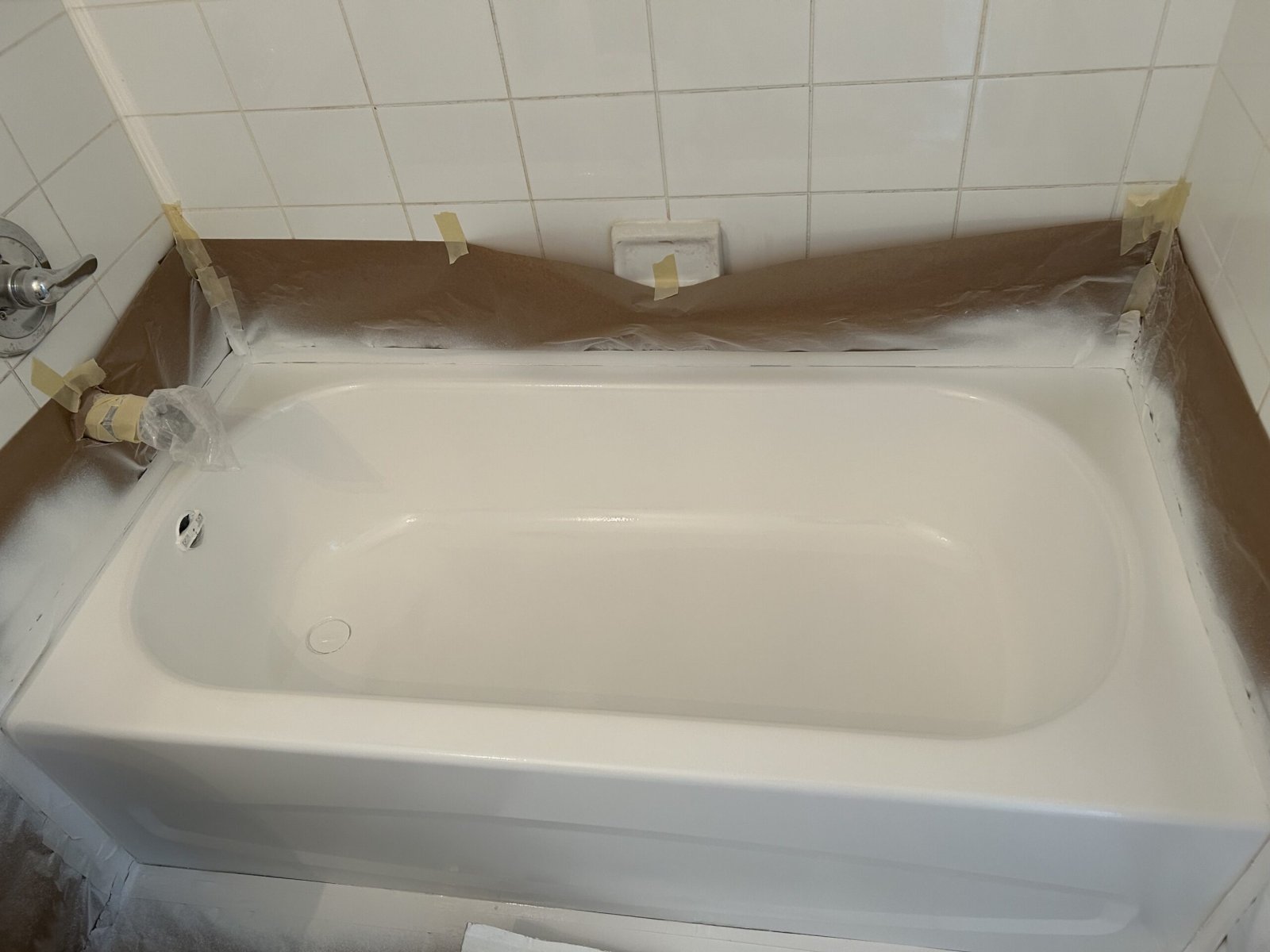
Whether you can reglaze a chipped bathtub depends on how much of the surface is damaged. Reglazing covers the whole tub with a new finish, so it works best when the chip is one of several signs of aging. A single chip on an otherwise sound surface often needs only a targeted repair.
- Small chips: usually fixed with a patch and touch-up finish
- Several chips or peeling: often a good case for full reglazing
- Cracks through the tub wall: these need professional assessment before any coating
Identifying Your Tub Material and Existing Coating
Before you start any repair, identify what the tub is made of and what coating is already on it. Most older tubs are cast iron or steel with a porcelain enamel layer. Newer tubs are often acrylic or fibreglass. Each material takes a coating differently, so the product you choose depends on what sits underneath the finish.
Start with a simple tap test. Tap the tub with a coin along the sides. A dull, solid sound often points to thick cast iron, while a hollow or drummy sound can indicate acrylic or a thinner steel shell. Check the edges around the drain and overflow, where the base material is usually visible and easiest to read. Note any spots where the sound changes, since they can mark a previous repair or a thin area of wear.
Next, check whether the tub has been refinished before. A previous coating layer changes how a new product will bond. Look for a surface that feels slightly thicker than the original enamel, for brush marks or uneven edges around fixtures, or for a finish that looks glossier than the rest of the tub. Prior refinishing is not a problem in itself, but it means the surface may need more preparation to hold a new coat.
Examine the existing coating closely. A finish that is dull or lightly scuffed can often accept a new layer after degreasing and light sanding. A finish that is flaking, bubbling, or lifting has failed, and the failed material must come off before any repair will bond. Press the edge of a peeling area with a plastic scraper. If it moves or separates, the bond underneath is compromised.
Finally, look for moisture. Dark staining, soft spots, or a musty smell around the base of the tub can point to water getting under the coating. Moisture beneath a finish is the most common reason a repair fails, because the new coating cannot bond to a surface that is still wet or contaminated. Dry the area thoroughly and address any water source before you apply anything.
Watch out: Do not apply a repair product over a coating you have not identified. A product made for acrylic can fail on cast iron, and a repair over a lifting finish will peel within weeks.
Bathtub Spot Repair vs Full Refinishing: Which Do You Need?
Spot repair fixes one area, while full refinishing coats the entire tub. The right choice depends less on how the chip looks and more on whether the finish around it is still bonded. That is the question most guides skip, and it decides whether a patch will last.
A practical way to make the call is to ask three questions. First, is the damage isolated to one spot, or do you see the same wear in several places? Second, does the surrounding finish stay firmly attached when you press a fingernail or a plastic scraper along its edge? Third, does the color still match closely enough that a patch would look intentional rather than obvious? If the answer is one chip, a firmly bonded border, and a usable color match, spot repair is a reasonable first step. If you find several chips, lifting edges, or a finish that has faded across the tub, full refinishing gives you an even surface and avoids a patchwork look.
Color matching is the trade-off most people underestimate. A spot repair can never be a perfect match to an aged finish, because the old surface has yellowed or dulled differently from the new material. Expect a visible edge or a slight shade difference, especially on an older tub. Full refinishing removes that problem because the whole tub receives one coat, so the color reads consistently from end to end.
Durability follows the same logic. A spot repair is only as strong as the bond at its border, so it is most reliable on a sound surface with a single defect. Full refinishing extends the life of the entire fixture, but only if the surface was properly cleaned, sanded, and prepared before coating. Neither option can rescue a tub that has a cracked wall or a substrate that has been damaged by moisture.
The cost difference between the two options is a common deciding factor. Pricing depends on the size of the damage, the tub’s condition, and the surface preparation required. For current prices or a quote, contact Century BathTubs directly, and ask any contractor to explain exactly what is included, including surface preparation, number of coats, and cure time, so you can compare like with like. Our overview of professional reglazing services in Toronto covers costs, durability, and how reglazing compares to replacement.
Watch out: A spot repair over a finish that is already lifting will fail at the border within weeks. If the surrounding coating moves when you press it, the patch is the wrong choice and full refinishing is the correct next step.
How to Repair a Chipped Bathtub Step by Step
A proper repair follows a clear order. Skipping steps is the main reason patches fail. Work through each stage in turn and allow the product to cure fully before using the tub.
Cleaning, Drying, and Removing Loose Coating
Clean the chipped area with a degreaser to remove soap scum and oil. Rinse well and let the surface dry completely, which can take several hours. Next, scrape away any loose or peeling coating with a plastic scraper. Stop at the edge of firmly bonded finish so the repair has a solid border to grip.
Filling, Sanding, and Applying the Finish
Fill the chip with a repair compound made for bathtubs, pressing it in slightly above the surface. Let it harden, then sand it smooth with fine-grit paper. Wipe away dust, then apply a thin coat of the matching finish. Build the coat in two or three thin layers rather than one thick one, which can sag or trap bubbles.
Watch out: Ventilate the room well during and after application. Bathtub coatings give off strong fumes, and the room should stay dry until the finish has cured.
DIY Bathtub Chip Repair Kit: What to Buy and What to Avoid
Many homeowners reach for a DIY kit first. A kit can handle a very small chip on a sound surface. Choose one labelled for your tub material, since kits made for acrylic may not bond to cast iron. Our guide to repairing chipped bathtub enamel yourself explains the process and the repair kits available in Canada. Check the colour match before buying, as a mismatched patch stands out.
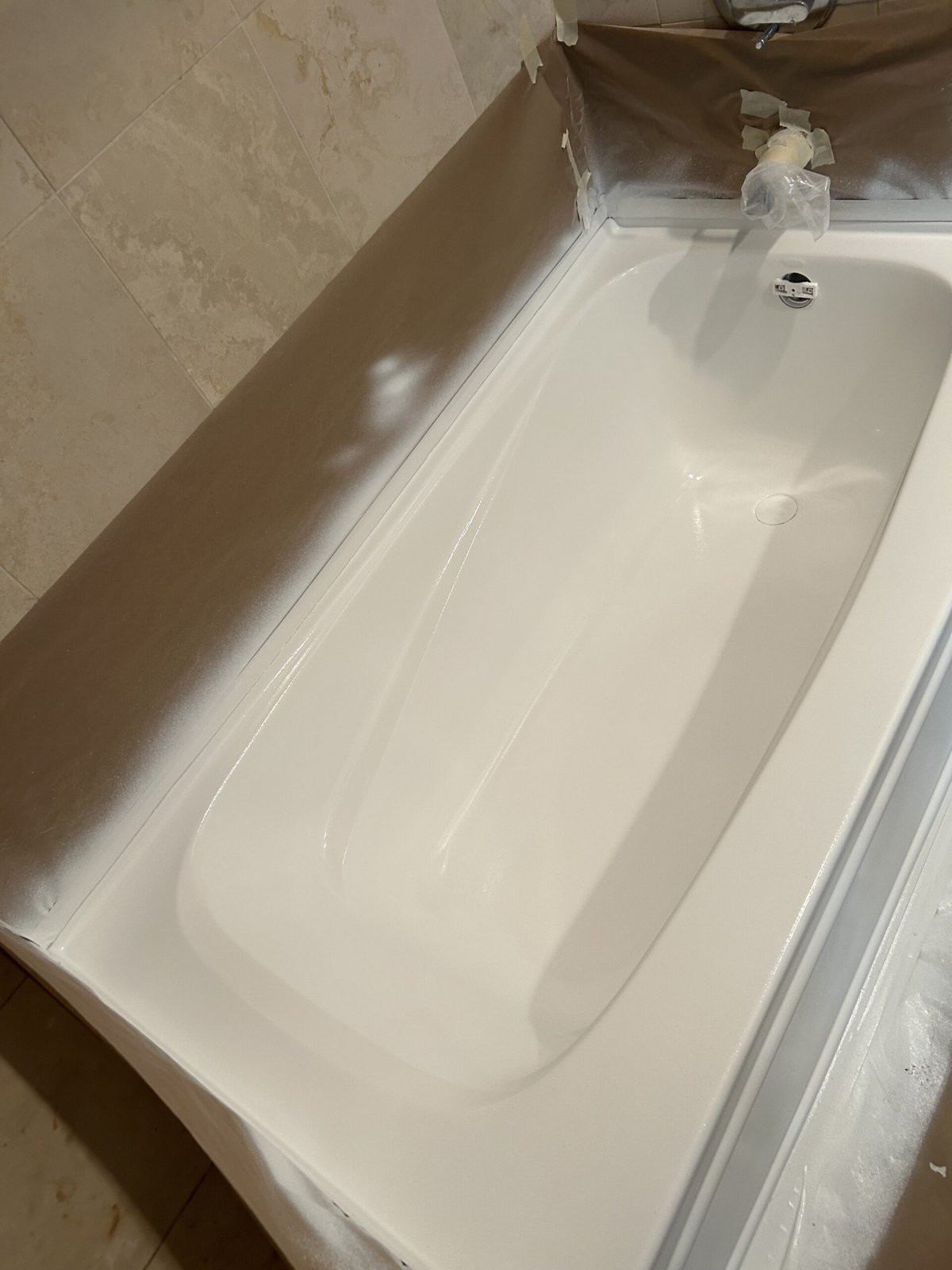
Avoid kits that promise a permanent fix for large or deep damage. A kit cannot repair a cracked tub wall or restore a badly failing finish. Read the label for the recommended temperature range and cure time, and follow them exactly.
- Buy a kit made for your tub material
- Check the colour match with a sample
- Skip kits that claim to fix cracks or full-tub failure
- Confirm the product’s cure time before planning your bathing schedule
How Long Bathtub Reglazing Takes to Cure and How Durable It Is
Reglazing needs time to cure before the tub is safe to use. Cure times depend on the coating used, so confirm the schedule for your specific job before using the tub. Avoid standing water, bath mats, and heavy use until the manufacturer’s stated time has passed.
With proper preparation and care, a professional reglazing can last for years. Durability depends on the quality of the coating, how well the surface was prepared, and how the tub is cleaned afterward. Use a soft, non-abrasive cleaner, since harsh scrubbing wears the finish down faster.
Century BathTubs stands behind its work with a three-year hassle-free guarantee on all refinishing. Our EP-ACRYLIC coating system is designed to restore worn or faded surfaces and extend the life of the fixture. Our coating is fast drying.
Booking Your Free Inquiry for a Chipped Tub in Toronto
A chipped tub is easier to fix when the damage is still small. If you are unsure whether a patch will hold or whether the tub needs a full reglaze, a professional assessment gives you a clear answer. Century BathTubs is licensed and insured, and has been in business since 1995.
Request a FREE INQUIRY to have us look at your tub, identify the material and coating, and recommend the right repair. You can also review our bathtub refinishing service in North York to see how we restore worn tubs and shower tiles. We will explain your options in plain terms so you can decide with confidence.
Frequently Asked Questions
Can you reglaze a bathtub that has a chip?
Yes. Small chips can usually be repaired with a filler and a touch-up coating, which is a spot repair. When chipping is widespread, or the existing finish is peeling across large areas, a full reglazing of the tub surface gives a more uniform and longer-lasting result. A professional can assess the damage and recommend which approach fits your tub, and Century BathTubs offers a free inquiry to review your specific situation before any work begins.
Can a chipped bathtub be repaired without reglazing the whole tub?
Often, yes. A localized chip that is clean, stable, and not surrounded by loose coating can be filled, sanded smooth, and touched up without refinishing the entire tub. The key factors are the chip size, whether the surrounding finish is firmly bonded, and how visible the repair will be. If the surrounding area is already failing, spot repair is unlikely to hold and reglazing is the better option.
Can you reglaze a bathtub yourself?
DIY chip repair is possible for minor damage, but full reglazing requires careful surface preparation, proper ventilation, and specialized coatings applied in thin, even layers. Improper prep is the most common reason DIY work fails and peels early. Reading product instructions closely, testing in a hidden spot, and following cure times are essential. For large or highly visible damage, a professional refinisher is usually the more reliable choice.
How long does bathtub reglazing take to cure?
Cure times depend on the coating system, room temperature, and humidity. Confirm the cure schedule for the specific coating used, and do not use the tub until that time has passed. Ask the refinisher for the specific cure schedule for the coating used, and avoid water exposure, bath products, and abrasive cleaners until the recommended time has passed. Century BathTubs can confirm its cure timing when you request a quote.
