


Table of Contents
- What Is Acrylic Bathtub Coating and How Does It Work?
- The Key Benefits of Acrylic Bathtub Coating for Toronto Homes
- Bathtub Refinishing Safety: What Homeowners Need to Know
- How Long Does Bathtub Refinishing Take?
- Maintaining Refinished Bathtubs: Care Tips for Long-Lasting Results
- How to Choose the Right Acrylic Bathtub Coating Provider
- Frequently Asked Questions
Last Updated: September 28, 2026
What Is Acrylic Bathtub Coating and How Does It Work?
Acrylic bathtub coating is a sprayed-on, high-solid surface layer that bonds to a prepared tub and cures into a hard, non-porous finish. It restores worn porcelain, fiberglass, or cast iron without demolition. For Toronto homeowners, the benefits of acrylic bathtub coating start with one number: you avoid a full replacement.
The process follows a fixed sequence:
- Clean and degrease the tub surface
- Repair chips, cracks, and rust pits
- Etch or sand to create a mechanical bond
- Mask and ventilate the room
- Spray the acrylic coating in thin, even passes
- Cure and cure-check before use
What most guides miss is step two. Skipping crack repair is the single most common reason a coating fails early. The coating is only as stable as the surface beneath it.
Acrylic Coating vs. Standard Bathtub Paint
Standard bathtub paint is a thin, air-dry product sold in hardware stores. Acrylic coating is a two-part catalyzed system applied by trained technicians with spray equipment. The difference shows up in adhesion and film thickness, not marketing.
Paint sits on the surface. Acrylic bonds into it. That is why a properly applied coating handles daily soap, shampoo, and cleaning agents far better than a paint-on kit. For a homeowner weighing the two, the honest answer is that paint suits a temporary patch, while coating suits a long-term fix.
The Key Benefits of Acrylic Bathtub Coating for Toronto Homes
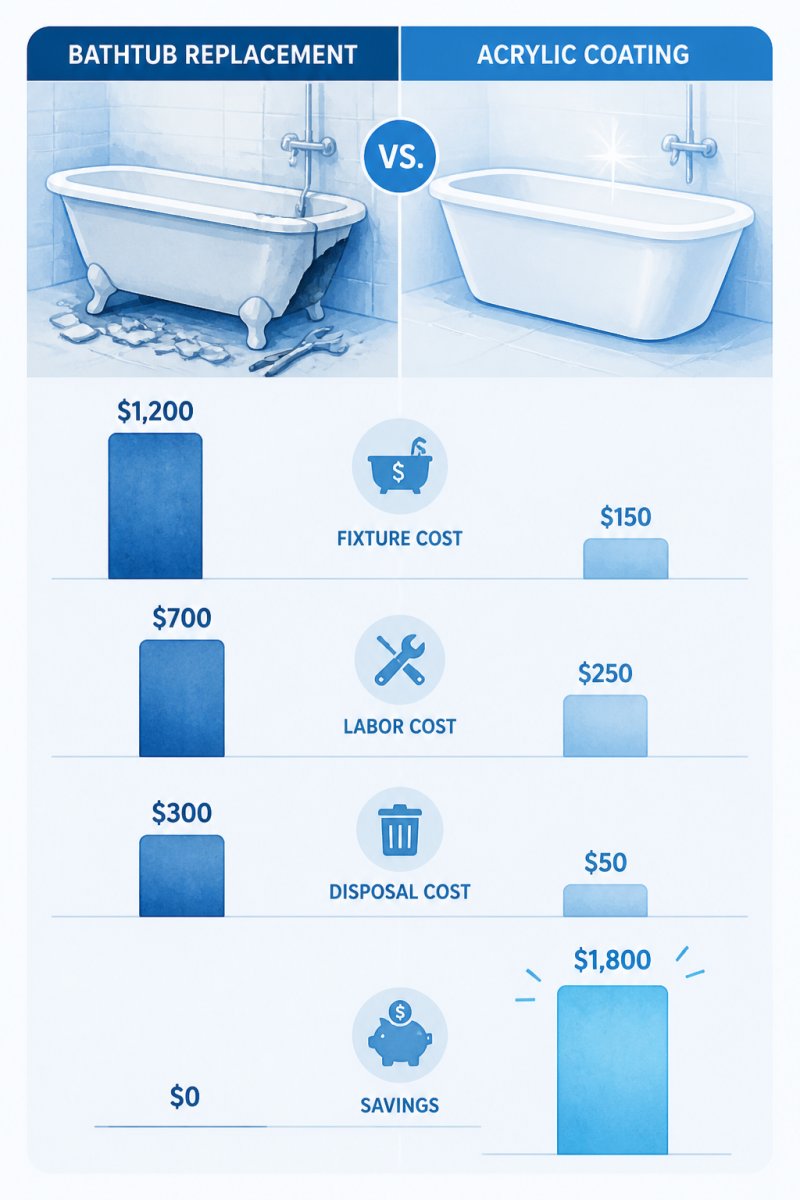
The main benefit is cost avoidance. A refinished tub keeps your existing fixture, plumbing, and tile surround intact, so you pay for a surface rather than a renovation. Pricing depends on tub condition, size, and access, so ask for a written quote rather than trusting a generic figure.
Old cast iron tubs are common in older Toronto housing stock, and many were finished with coatings that can contain lead. Refinishing seals that surface rather than disturbing it, which matters if you have young children or are preparing a rental unit.
Health Canada guidance on lead in older homes
Cost Savings Compared to Replacement
Replacement means buying a tub, hiring a plumber, removing the old fixture, and repairing tile and drywall afterward. Coating removes almost all of that scope. For landlords managing multiple units, that gap is the whole argument.
Durability and Longevity
A correctly applied acrylic coating resists chipping, peeling, and yellowing under normal use. Longevity depends on three things: surface prep, cure time, and how you clean it afterward. Get those right and the finish holds up for years.
Applying a coating over a wet or poorly bonded surface traps moisture underneath. The result is blistering and peeling within months, and the fix is a full strip and redo, not a touch-up.
Bathtub Refinishing Safety: What Homeowners Need to Know
Bathtub refinishing safety comes down to ventilation and cure time. The coating and its solvents release vapors while spraying and during the initial cure, so the bathroom needs active exhaust and the rest of the home should be separated from the work area.
Practical safety steps:
- Keep children and pets out of the room during application and cure
- Run the exhaust fan and open a window where possible
- Wait the full cure period before first use, not just until the surface feels dry
- Confirm your provider is licensed and insured before work begins
A common mistake is treating the tub as usable the moment it looks dry. Surface dry and full cure are different states. Using the tub early can mar the finish and shorten its life.
How Long Does Bathtub Refinishing Take?
Most single-tub refinishing jobs are completed within a day, with the coating ready for use after a short cure window. The exact timeline depends on how much repair the tub needs and how well the room ventilates.
A rough sequence looks like this:
| Stage | What Happens | Typical Duration |
|---|---|---|
| Prep and repair | Cleaning, crack filling, sanding | 1-2 hours |
| Masking and setup | Protecting tile, floor, fixtures | 30-45 minutes |
| Spraying | Applying coating in passes | 45-90 minutes |
| Cure | Drying and hardening | Several hours to overnight |
For landlords with multiple units, the better question is scheduling. Ask whether the provider can handle several bathrooms in one visit rather than spacing jobs across weeks.
Maintaining Refinished Bathtubs: Care Tips for Long-Lasting Results
Maintaining refinished bathtubs is simpler than most people expect, but the wrong cleaner will undo good work fast. Use non-abrasive, pH-neutral cleaners and a soft cloth or sponge.
Avoid:
- Scouring powders and abrasive pads
- Bleach-heavy or acidic cleaners left to sit
- Rubber mats with suction cups, which trap moisture and stain the finish
- Dropping heavy objects on the tub floor
Rinse and wipe after use, and address chips early. A small repair is cheap. A neglected chip spreads.
Skip the suction-cup bath mat. Over time the cups trap water against the coating and leave rings that will not wash out. Use a mat without suction backing instead.
How to Choose the Right Acrylic Bathtub Coating Provider
Choosing a provider is a verification exercise, not a price comparison. Ask for proof of licensing and insurance, a written scope, and the guarantee terms in writing.
Questions worth asking:
- Are you licensed and insured, and can I see documentation?
- What coating system do you use, and how is it applied?
- What does the guarantee cover, and for how long?
- Can you handle multiple bathrooms for a rental property?
- What is the cure time before the tub is usable?
Century BathTubs has worked on tubs and shower tiles across Toronto and the GTA since 1995, using an EP-ACRYLIC coating system applied by trained, licensed, and insured technicians. Every job carries a three-year hassle-free guarantee. If you are searching for bathtub refinishing near me, ask any provider these same questions and compare the answers, not just the quote.
Canadian Centre for Occupational Health and Safety guidance on solvent ventilation
Frequently Asked Questions
Is acrylic bathtub coating safe for my family and pets?
Yes, once fully cured, acrylic bathtub coating is safe for families and pets. Professional refinishers use EPA-registered products and follow safety protocols to minimize odors and VOC emissions during application. After the recommended curing period, which is typically 24 to 48 hours, the surface is inert and poses no health risk. Always ensure the technician is licensed and insured for your peace of mind.
How long does an acrylic bathtub coating last?
With proper care, an acrylic bathtub coating can last 10 to 15 years or more. The lifespan depends on usage, cleaning products, and the quality of the application. Avoiding abrasive cleaners and using a bath mat can help extend the life of your refinished tub. Many professionals offer warranties, such as a three-year guarantee, which speaks to the durability of the coating when applied correctly.
Can you refinish a bathtub that has chips or cracks?
Yes, acrylic bathtub coating can repair chips, cracks, and other surface damage. The refinishing process involves filling and sanding the damaged areas before applying the coating, restoring the tub to a smooth, like-new condition. This makes coating a cost-effective alternative to replacement, even for tubs with significant wear. However, structural issues may require professional assessment.
How long does a bathtub need to cure after professional coating?
After professional acrylic bathtub coating, the tub typically needs 24 to 48 hours to cure before light use, and up to 72 hours for full cure. During this time, avoid using the tub and keep the area ventilated. Your technician will provide specific instructions based on the product used and environmental conditions. Following these guidelines ensures a durable, long-lasting finish.
Worn tubs rarely need replacing, they need a proper surface. If you are weighing a refinished tub against a full renovation, Century BathTubs can assess your fixture and confirm whether coating is the right call. Our EP-ACRYLIC system, three-year hassle-free guarantee, and licensed, insured technicians have served Toronto and the GTA since 1995. Get started with Century BathTubs and refresh your bathroom without the demolition.