

Last Updated: October 24, 2026
Quick Summary
Cast iron tub restoration cost depends on the tub’s condition, size, coating system chosen, and local factors like labor rates and accessibility. Understanding these cost drivers helps you determine whether refinishing makes financial sense compared to replacement.
- Surface refinishing for cosmetic wear is the most affordable repair option available
- Professional refinishing typically takes three to five business days from start to finish
- Refinished tubs are backed by a three-year hassle-free guarantee on materials and application
- Waiting too long to address damage significantly increases restoration costs over time
- Get a free professional assessment to understand your specific tub’s restoration needs and pricing
Table of Contents
- What Determines Cast Iron Tub Restoration Cost
- Cast Iron Tub Refinishing vs Replacement: Cost and Value
- Cast Iron Bathtub Repair Options and Their Impact on Cost
- How Long Does Bathtub Refinishing Take
- Bathtub Refinishing Lifespan and Long-Term Value
- Common Mistakes That Increase Restoration Costs
- Getting Your Free Restoration Quote
- Frequently Asked Questions
What Determines Cast Iron Tub Restoration Cost
When you’re looking at an antique cast iron tub restoration cost, the final price depends on several specific factors that go beyond just the size of the tub. Learn how bathtub reglazing works, costs, durability, and whether it’s right for you to understand all the factors involved.
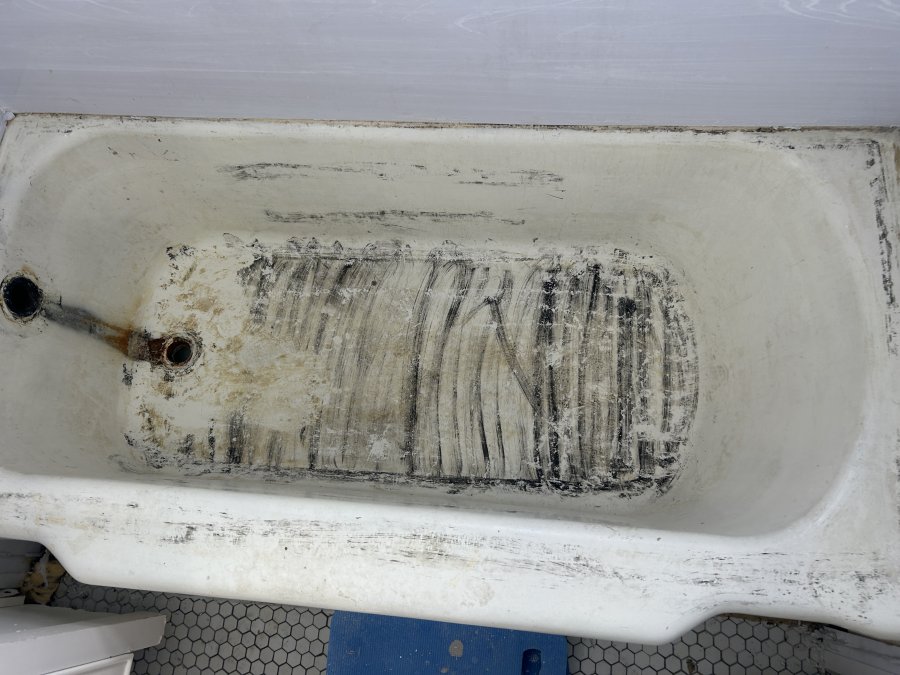
The most obvious factor is the tub’s condition. A surface that’s simply faded or has minor staining costs less to restore than one with deep chips, cracks, or areas where the original coating has completely worn away.
Tub size matters too. A standard five-foot tub takes less time and materials than an oversized soaking tub or a vintage clawfoot model. Accessibility also plays a role, if the tub is in a tight bathroom or difficult to reach, the work takes longer.
The coating system you choose affects the final cost as well. Our EP-ACRYLIC coating system, for example, provides durability and fast drying compared to other options. Different finishes and specialty coatings carry different price points, so your choice of finish directly influences what you’ll invest.
Local factors matter in Toronto and the GTA as well. Travel time, local labor rates, and the availability of specialized technicians all influence pricing. A project in downtown Toronto may differ from one in the outer suburbs simply due to logistics.
The key insight most homeowners miss: restoration almost always costs significantly less than replacement, even when the tub requires substantial prep work. That’s why understanding these cost drivers is worth your time.
Cast Iron Tub Refinishing vs Replacement: Cost and Value
The choice between cast iron tub refinishing and replacement isn’t just about the immediate expense, it’s about long-term value and what you’re actually getting for your money.
Replacement means removing the old tub entirely, which involves cutting it out, disposing of it, and installing a brand-new fixture. This process is disruptive, time-consuming, and generates significant waste.
Refinishing, by contrast, restores your existing tub in place. The work is faster, less invasive, and produces a like-new surface without the environmental impact of disposal and replacement. The tub stays where it is, which means minimal disruption to your bathroom and your daily routine.
From a value perspective, refinishing extends the life of a fixture you already own. An antique cast iron tub has structural integrity that newer, thinner-walled models often lack. Protecting that investment through restoration makes financial sense, especially when the tub is otherwise sound.
The real cost difference becomes apparent when you factor in the total project timeline. Refinishing in Toronto typically takes just a few days from start to finish. Replacement can take weeks when you account for removal, disposal, ordering, and installation.
Century BathTubs customers often tell us the same thing: they were surprised how affordable refinishing turned out to be compared to what they’d budgeted for replacement. That’s the value proposition that keeps antique cast iron tubs in homes rather than in landfills.
Cast Iron Bathtub Repair Options and Their Impact on Cost
Not every issue with a cast iron bathtub requires full refinishing. Understanding your repair options helps you choose the approach that matches your actual needs and budget.
Surface refinishing addresses cosmetic wear, fading, staining, minor scratches, and discoloration. This is the most common restoration work and typically the most affordable option. The existing coating is cleaned and prepared, then a new finish is applied.
Chip and crack repair handles localized damage. Small chips can often be filled and blended into the surrounding finish without requiring a complete refinish. Larger cracks or multiple damage points may require more extensive preparation.
Deep cleaning and resealing is sometimes sufficient for tubs that are structurally fine but heavily soiled or stained. A professional deep clean can restore appearance dramatically, and a protective sealant adds durability.
Full restoration is necessary when the existing coating is failing across large areas, when there are multiple structural issues, or when you want to change the finish color or type entirely.
The cost difference between these options can be substantial. A simple deep clean and reseal costs far less than full restoration. Targeted chip repair falls somewhere in the middle.
When you contact a refinishing company near you in Toronto or the GTA, a professional assessment will determine which option makes sense.
Different repair approaches address different problems and carry different price points.
| Repair Option | Best For | Cost Level |
|---|---|---|
| Surface refinishing | Cosmetic wear, fading, staining, scratches | Most affordable |
| Chip and crack repair | Small localized damage | Mid-range |
| Deep cleaning and resealing | Soiled or stained but intact finish | More economical |
| Full restoration | Failing coating, multiple issues, color change | Most extensive |
How Long Does Bathtub Refinishing Take
The timeline for bathtub refinishing depends on the scope of work and the specific condition of your tub, but most projects follow a predictable schedule.
A standard refinishing project typically takes three to five business days from start to finish. This includes initial preparation, surface treatment, coating application, and curing time. The actual hands-on work might only be one or two days, but the curing process between coats requires patience.
The first day usually involves thorough cleaning and assessment. The old finish is evaluated, and any repairs needed are identified. Damaged areas are prepped, and protective measures are put in place to protect surrounding surfaces.
Days two and three focus on the coating application. Depending on the system used, multiple coats may be necessary. Each coat requires drying time before the next can be applied.
The final days are curing time. While the surface may feel dry to the touch after 24 hours, full hardness and durability develop over the following days. We typically recommend avoiding heavy use for at least 48 to 72 hours after completion.
For commercial properties or rental units in Toronto, this timeline is a significant advantage over replacement. You’re looking at days, not weeks. That means less disruption to tenants or guests and faster return to normal operations.
One thing to watch out for: trying to rush the process or use the tub before it’s fully cured can compromise the finish. The timeline exists for a reason, it ensures the coating bonds properly and develops full durability.
Bathtub Refinishing Lifespan and Long-Term Value
How long does a refinished tub actually last? This is the question that determines whether refinishing represents genuine value or just a temporary fix.
The exact duration depends on how well the tub is maintained and how heavily it’s used.
The coating Century BathTubs applies includes a three-year hassle-free guarantee, which means if the finish fails during that period due to defects in application or materials, we address it at no cost. That guarantee reflects our confidence in the durability of our work.
The real long-term value becomes clear when you compare the cost of refinishing every seven to ten years against the cost of replacement even once. Learn how long tub reglazing lasts to evaluate whether refinishing makes sense for your situation. Refinishing is substantially more affordable, even when you account for multiple applications over decades of ownership.
Maintenance significantly impacts lifespan. Regular cleaning with non-abrasive products, avoiding harsh chemicals, and preventing standing water extends the life of the finish. A tub that’s cared for properly often lasts longer than one that’s neglected.
For antique cast iron tubs, this durability equation favors refinishing strongly. The underlying tub is often a century or more old and structurally sound. Protecting that investment with periodic refinishing keeps the fixture functional and attractive for generations. You’re preserving a piece of your home’s history while avoiding the waste of replacement.
That’s the long-term value proposition that makes restoration so appealing.
Common Mistakes That Increase Restoration Costs
Several mistakes can drive up the cost of your cast iron tub restoration. Knowing what to avoid helps you keep expenses in line.
Waiting too long to address damage is the biggest cost multiplier. A small chip that could be repaired affordably becomes a larger problem when left untreated.
Attempting DIY fixes often backfires. Improper surface preparation, wrong materials, or incorrect application technique can create a surface that won’t accept a professional coating properly.
Choosing the wrong refinishing company matters more than many homeowners realize. A company that cuts corners on preparation or uses substandard materials may deliver a finish that fails within months.
Ignoring underlying structural issues before refinishing is another costly mistake. If the tub has cracks or corrosion that affect its integrity, refinishing won’t solve the problem. A professional assessment catches these issues early, before they become expensive repairs.
Using harsh chemicals or abrasive cleaners after refinishing degrades the coating prematurely. This isn’t a mistake in the refinishing process itself, but it’s a common error that shortens the life of your investment. Proper maintenance instructions prevent this entirely.
Not getting a proper assessment before committing to work leads to surprises during the project. Hidden damage discovered mid-project can increase costs. A thorough evaluation upfront prevents budget-blowing discoveries later.
The pattern is clear: most cost overruns come from either delaying action or cutting corners on quality. Addressing problems promptly and choosing experienced professionals near you in Toronto keeps restoration costs predictable and reasonable.
Getting Your Free Restoration Quote
The best way to understand what your specific cast iron tub restoration will cost is to get a professional assessment. Every tub is different, and pricing depends entirely on the condition and scope of work your particular fixture requires.
When you reach out for a free quote, a trained technician will evaluate your tub in person. They’ll assess the condition of the existing finish, identify any damage or structural issues, and discuss your goals for the restoration.
Century BathTubs offers free inquiries for homeowners and commercial property managers throughout Toronto and the GTA. You’ll get a clear, honest assessment with no pressure.
For landlords with multiple units or property managers overseeing several bathrooms, we can discuss how to coordinate work efficiently. Many commercial clients find that scheduling multiple projects strategically reduces overall costs and minimizes disruption.
Learn how to choose a bathtub refinishing company so you can evaluate options with confidence. Our checklist walks you through what to look for in a refinishing partner, from credentials to guarantees to service quality.
When you’re ready to move forward, get a free inquiry for your Toronto-area tub restoration and let’s discuss your specific situation. The conversation is free, and you’ll have the information you need to make a smart decision about your investment.
Restoring an antique cast iron tub is one of the smartest investments you can make for your home or rental property.
Frequently Asked Questions
Is it cheaper to refinish or replace a cast iron bathtub?
Refinishing an antique cast iron tub is typically far more cost-effective than replacement. Replacement requires removing the old tub, disposing of it, purchasing a new fixture, and paying for installation labor. Refinishing restores your existing tub using a durable coating system, preserving the original craftsmanship while avoiding disposal costs and installation complexity. For most homeowners, refinishing delivers significant savings while extending your tub’s life by years.
Can a chipped or rusted antique cast iron tub be refinished?
Yes, most chipped and rusted cast iron tubs can be refinished. Surface rust, chips, and minor corrosion are addressed during the refinishing process through proper preparation and repair. However, deep structural cracks or severe deterioration that compromises the tub’s integrity may require replacement instead. A professional assessment determines whether your tub is a candidate for refinishing or if replacement is the safer option.
How long does a refinished cast iron tub last?
A professionally refinished cast iron tub with a quality coating system has a three-year hassle-free guarantee. The durability depends on maintenance, water hardness, cleaning habits, and the coating system used. Regular gentle cleaning and avoiding abrasive scrubbers help maximize the lifespan.
What affects the cost of refinishing an antique cast iron tub?
Several factors influence restoration costs: tub size and shape, extent of damage requiring repair, surface condition, accessibility for technicians, and the coating system selected. Clawfoot tubs or custom shapes may cost more than standard rectangular tubs. Deep cracks or rust requiring extensive preparation increase costs. Local labor rates and the complexity of the job also play a role. Contact us for a free assessment to understand your specific cost factors.
