

Table of Contents
- Quick Comparison: 5 Bathtub Finishes for Rentals
- 1. EP-ACRYLIC Coating: Best Overall for Rental Durability
- 2. Porcelain Enamel: Best for Cast Iron Tubs
- 3. Acrylic Resurfacing: Best for Quick Turnaround
- 4. Epoxy Finish: Best for Budget-Conscious Landlords
- 5. Fiberglass Gel Coat: Best for Lightweight Tubs
- How Long Does Bathtub Reglazing Take in a Rental Turnover?
- Bathtub Refinishing vs Replacement for Landlords: Which Makes Sense?
- Frequently Asked Questions
Last Updated: September 25, 2026
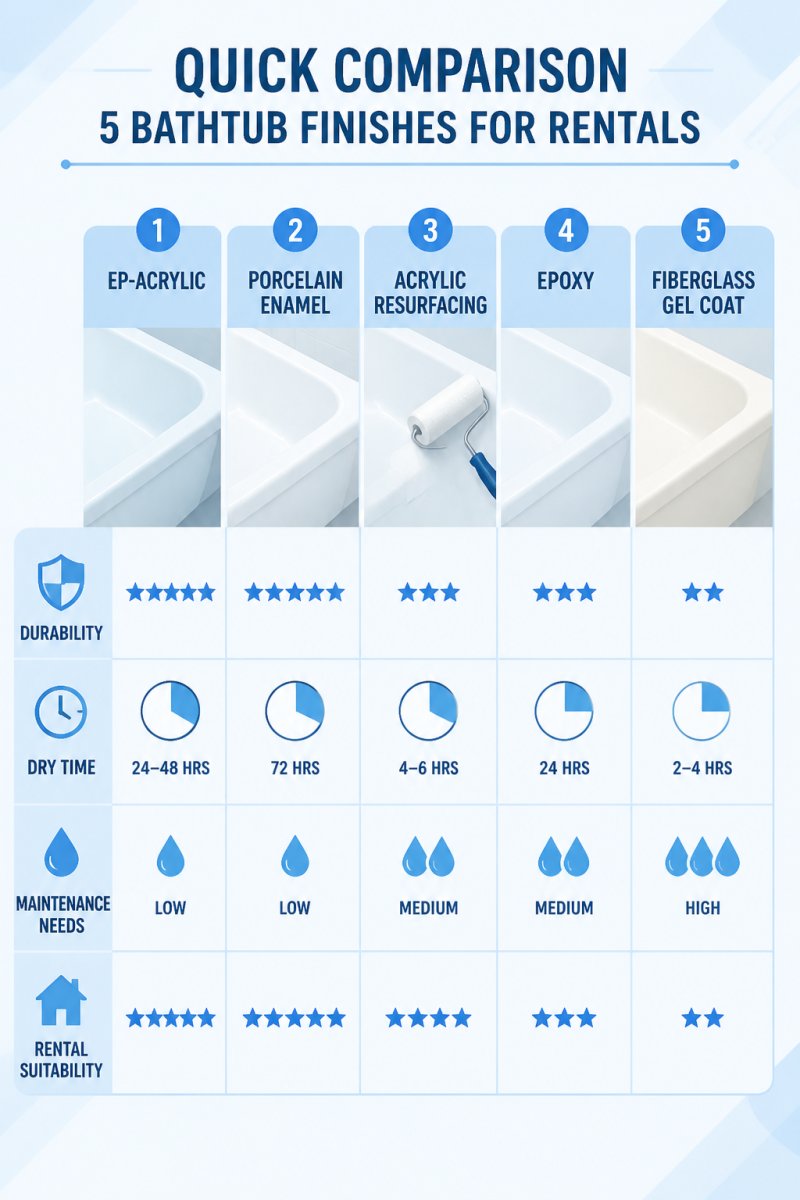
Quick Comparison: 5 Bathtub Finishes for Rentals
Choosing the right bathtub finish for a high-turnover rental is a balance between durability, downtime, and long-term maintenance. In Toronto, where landlords often juggle back-to-back leases between May and September, the finish you pick determines how fast a unit returns to market and how often you get called back for repairs.
This guide from Century BathTubs covers five finishes that hold up under constant use, plus how each one fits a rental turnover schedule.
| Finish | Durability | Dry Time | Maintenance | Best For |
|---|---|---|---|---|
| EP-ACRYLIC coating | High | Fast | Low | Most rental tubs |
| Porcelain enamel | Very high | N/A (factory) | Low | Cast iron tubs |
| Acrylic resurfacing | Medium-high | Moderate | Medium | Quick turnarounds |
| Epoxy finish | Medium | Slow | Medium | Tight budgets |
| Fiberglass gel coat | Medium | Fast | Medium | Lightweight tubs |
1. EP-ACRYLIC Coating: Best Overall for Rental Durability
EP-ACRYLIC coating is the best overall choice for high-turnover rentals because it bonds to the existing tub surface and resists chipping under repeated cleaning. Unlike a standard paint-on finish, this coating cures into a hard shell that handles abrasive cleaners and constant foot traffic.
Century BathTubs has applied this system since 1995 across Toronto and the GTA, and it comes with a three-year hassle-free guarantee. That matters for landlords who cannot afford a callback three months into a tenancy.
The finish also encapsulates the surface of older tubs, which can be a concern in pre-1980s housing stock. Rather than removing and disposing of a cast iron tub, refinishing encapsulates the surface.
Schedule refinishing during the gap between tenants, not during a tenancy. A tub that cures undisturbed for the full recommended window holds its finish far longer than one exposed to moisture and traffic too early.
2. Porcelain Enamel: Best for Cast Iron Tubs
Porcelain enamel remains the most durable surface for cast iron tubs, but it is a factory finish, not a field-applied one. When a cast iron tub’s enamel wears thin or chips, the practical fix is not re-enameling on site.
Most landlords in Toronto with original cast iron tubs choose a refinishing coating instead, because true porcelain enamel requires removing the tub and firing it at extremely high temperatures. That is rarely realistic in an occupied building.
Where porcelain enamel still wins: a relatively new cast iron tub in good condition. If the surface is intact, leave it alone and clean it with non-abrasive products. Once it dulls or chips, refinishing is the cost-effective path.
3. Acrylic Resurfacing: Best for Quick Turnaround
Acrylic resurfacing is the fastest route to a rent-ready bathroom when you are working against a lease start date. The material applies over the existing surface and cures relatively quickly, which shortens the window a unit sits empty.
The trade-off is durability. Acrylic finishes handle normal use well but can scratch under harsh scrubbing or dropped objects. For a rental, that means giving tenants clear cleaning instructions at move-in.
For landlords with a bathtub reglazing service near me search already open, acrylic resurfacing is often the option that fits a one-week turnover. It is less forgiving than EP-ACRYLIC over the long term, but it gets the unit back on the market fast.
4. Epoxy Finish: Best for Budget-Conscious Landlords
Epoxy finish is the budget-friendly option, and it works well when the tub surface is sound but cosmetically tired. The material is tough once fully cured and resists water damage when applied correctly.
The catch is dry time. Epoxy typically needs a longer curing window than acrylic or EP-ACRYLIC systems, which can push a turnover schedule. If your unit must be rent-ready in 48 hours, epoxy is the wrong pick.
A common mistake is applying epoxy over a damp or poorly prepared surface. It will peel within months. Surface prep matters more than the product name on the can.
Skipping surface preparation to save a day is the fastest way to a failed finish. A coating applied over soap scum, moisture, or a previous peeling layer will lift, and you will pay for the job twice.
5. Fiberglass Gel Coat: Best for Lightweight Tubs
Fiberglass gel coat suits lightweight tubs, which are common in newer Toronto condo and rental builds. The gel coat restores color and gloss to a faded fiberglass shell without adding significant weight.
Fiberglass tubs flex slightly under load, so the coating must be flexible enough to move with the surface. A rigid finish will crack at the stress points. Gel coat formulated for fiberglass handles that movement.
This is not the finish for a heavy cast iron tub. Match the coating to the substrate, or you will be repairing cracks within the first year.
How Long Does Bathtub Reglazing Take in a Rental Turnover?
Bathtub reglazing typically takes a few hours of active work, but the full process spans prep, application, and curing. The curing window is what determines when a tenant can use the tub again, and it varies by finish.
Here is how the timeline breaks down:
- Preparation: Cleaning, sanding, and repairing chips or cracks
- Application: Spraying or rolling the coating in even layers
- Curing: The waiting period before the surface is usable
- Return to service: Usually the next day for fast-curing systems
For a landlord, the practical question is how long the unit sits empty. Fast-curing coatings shorten that window considerably. If you are comparing options, ask the provider for the specific cure time of the finish they recommend.
Bathtub Refinishing vs Replacement for Landlords: Which Makes Sense?
Bathtub refinishing makes more sense than replacement for most landlords because it costs less, takes less time, and avoids the disruption of removing a tub. Replacement means demolition, plumbing work, disposal, and a longer vacancy.
Replacement only wins in specific cases: a tub that is structurally cracked through, a size change you actually want, or a full bathroom remodel where the tub is coming out anyway. For a worn but structurally sound tub, refinishing is the better call.
Century BathTubs handles both residential and multi-unit work across Toronto, so a landlord with several units can have bathrooms refinished without waiting weeks between jobs. The three-year guarantee covers the work, and the team is licensed and insured.
If you are weighing a bathtub reglazing service near me against a full replacement quote, get both numbers side by side. Then factor in vacancy days, which often tip the decision toward refinishing.
Frequently Asked Questions
How long does professional bathtub reglazing last in a rental unit?
A professionally applied finish like EP-ACRYLIC coating comes with a three-year hassle-free guarantee. Longevity depends on the finish type, how well tenants maintain the surface, and whether the tub was properly prepped before coating.
What is the most durable bathtub finish for high-turnover apartments?
EP-ACRYLIC coating offers the best combination of durability and quick turnaround for high-turnover rentals. It resists chipping, staining, and frequent cleaning chemicals better than standard epoxy or acrylic resurfacing. Porcelain enamel is also highly durable but requires more downtime and costs more to apply. For landlords who need a fast, long-lasting finish between tenants, EP-ACRYLIC is the practical choice.
Can you reglaze a bathtub multiple times?
Yes, a bathtub can be reglazed multiple times as long as the existing surface is structurally sound with no deep cracks or soft spots. Each reglazing adds a new layer over the old finish. However, if the tub has significant damage or previous coatings are peeling badly, a full strip and recoat may be needed. A professional inspection will confirm whether another reglazing is viable.
What maintenance do reglazed bathtubs need in rental units?
Reglazed tubs should be cleaned with non-abrasive products only. Avoid bleach-based or gritty cleaners that can dull the finish over time. A soft cloth or sponge with mild soap is enough for routine cleaning. Landlords should include care instructions in the lease or turnover checklist so tenants know how to protect the surface. With proper care, a quality reglazing job holds up well between tenants.
High-turnover rentals punish shortcuts. A finish that peels in six months costs more than one that lasts, once you add up the callback, the vacancy, and the tenant complaint. Century BathTubs has refined tubs and shower tiles across Toronto since 1995, backed by a three-year hassle-free guarantee, licensed and insured technicians, and the EP-ACRYLIC coating system built for rental wear. Get started with Century BathTubs and keep your units rent-ready without tearing out a single tub.