

Table of Contents
- Why Bathtub Refinishing Problems Occur
- Bathtub Reglazing Peeling: Causes and Solutions
- Bathtub Refinishing Bubbles and Blisters
- How to Remove Stains from a Refinished Tub
- Bathtub Reglazing Cure Time and Usability
- Rough Texture and Uneven Finish Problems
- When to Call a Professional for Bathtub Refinishing Issues
- Frequently Asked Questions
Last Updated: October 11, 2026
Why Bathtub Refinishing Problems Occur
Bathtub refinishing problems happen when the coating doesn’t bond properly to the surface. At Century BathTubs, we’ve seen this occur across hundreds of projects in the Toronto area. The most common issues stem from poor surface preparation, moisture trapped beneath the coating, or rushing the cure time before use.
Understanding why these problems happen is the first step to avoiding them. A worn tub needs careful cleaning and priming. Any dirt, soap residue, or old coating left behind creates a weak foundation. When moisture gets trapped under the new finish, it causes bubbles and peeling later.
The good news: most bathtub refinishing problems are preventable with proper technique and patience.
Bathtub Reglazing Peeling: Causes and Solutions
What Causes Peeling After Refinishing
Peeling happens when the coating loses adhesion to the tub surface. This occurs when the substrate isn’t clean, or when moisture sits between the old and new coating.
Common causes include:
- Soap scum or wax left on the tub before refinishing
- High humidity during application or curing
- Applying new coating over a damaged or flaking old finish
- Not allowing proper dry time between prep and coating
- Using incompatible primers or sealers
When the new coating can’t grip the surface, it peels away in sheets. This typically appears within the first few weeks after refinishing.
How to Prevent Peeling in the Future
Preventing peeling starts with thorough surface prep. Clean the tub completely with a degreaser. Remove all old caulk and damaged coating. Sand the surface to help the new coating bond.
Key prevention steps:
- Strip the tub down to bare material if the old finish is compromised
- Use a bonding primer designed for bathtub refinishing
- Control humidity during application and cure time (ideally 40-60% relative humidity)
- Allow full cure time before water exposure (typically 48-72 hours, depending on the product)
- Apply the coating in thin, even layers rather than one thick coat
At Century BathTubs, we use an EP-ACRYLIC coating system that bonds strongly to properly prepared surfaces. Our three-year hassle-free guarantee backs every job we do in the Toronto and GTA area.
Bathtub Refinishing Bubbles and Blisters
Understanding Bubble Formation
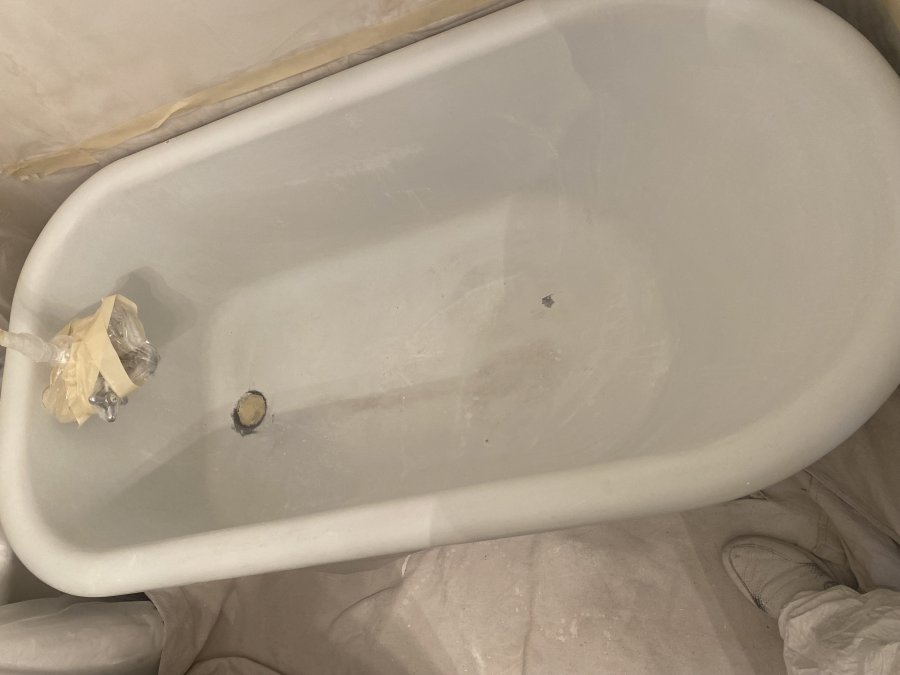
Bubbles form when air or moisture gets trapped beneath the coating during application or curing. The coating hardens on top while gas escapes from below, leaving hollow pockets.
Moisture is the main culprit. If the tub isn’t completely dry before coating, water vapor rises as the finish cures. This creates pressure that pushes the coating away from the surface.
Air bubbles also occur when:
- The coating is applied too thickly
- Spraying technique traps air in the finish
- The tub surface has micro-cracks that release gas during curing
- Environmental humidity spikes during application
Repair Options for Bubbled Surfaces
Small bubbles (under 5mm) sometimes disappear as the coating fully cures. Monitor the tub for the first week.
For persistent bubbles, your options are:
- Sand and re-coat the affected area if caught early
- Apply a topcoat to seal the bubbles (temporary fix)
- Full refinishing if bubbles cover a large area or continue spreading
Prevention is far easier than repair. Ensure the tub is bone-dry before coating. Use a moisture meter to verify dryness. Apply thin, even coats. Control the spray pattern to avoid trapping air.
How to Remove Stains from a Refinished Tub
Safe Cleaning Methods for Coated Surfaces
A refinished tub has a protective coating that needs gentle care. Harsh scrubbing or abrasive cleaners damage the finish and void your warranty.
Safe cleaning approach:
- Use a soft cloth or sponge
- Choose pH-neutral cleaners designed for coated surfaces
- Avoid bleach, vinegar, and scouring powders
- Never use a steel wool pad or stiff brush
- Rinse thoroughly with water after cleaning
Gentle daily cleaning prevents stain buildup. Wipe down the tub after each use to remove soap residue and hard water deposits.
Stain Types and Targeted Solutions
Different stains need different approaches.
Hard water stains: These mineral deposits appear as white or cloudy spots. Spray with a 50/50 mix of water and white vinegar, let sit for 10 minutes, then wipe gently. Rinse well. For stubborn deposits, use a soft cloth with a small amount of rubbing alcohol.
Soap scum: Build-up along the waterline. Use a bathroom cleaner designed for coated surfaces. Spray, wait 5 minutes, wipe with a soft cloth.
Rust stains: Orange or brown discoloration from metal objects left on the tub. Remove the source immediately. Use a specialized rust remover for acrylic surfaces, following the product instructions carefully.
Mold or mildew: Dark spots in corners or around the drain. Use a bathroom mold cleaner diluted per instructions. Never let bleach sit on the surface.
Always test any cleaner on a hidden area first. When in doubt, stick with warm water and a soft cloth.
Bathtub Reglazing Cure Time and Usability
The cure time for a refinished tub varies by product and environmental conditions. Most acrylic coatings need 48-72 hours before the tub can hold water. Full cure strength develops over 7-10 days.
Factors affecting cure time:
- Temperature (warmer speeds curing)
- Humidity (lower humidity is better)
- Coating thickness (thinner coats cure faster)
- Air circulation in the bathroom
During the cure period, keep the bathroom well-ventilated. Open windows or run an exhaust fan. Avoid hot showers or baths during this time, as steam slows the curing process.
Don’t assume the tub is ready just because it feels dry to the touch. The surface may be firm while the deeper layers still cure. Rush this step and you risk damaging the finish.
Rough Texture and Uneven Finish Problems
A rough or uneven finish detracts from the tub’s appearance and can feel uncomfortable. This typically results from dust in the coating, improper spray technique, or applying the finish in poor conditions.
Causes of rough texture:
- Dust or debris settling on wet coating
- Spraying in windy conditions
- Uneven spray pattern or distance
- Contaminated spray equipment
- Old coating flakes mixing with the new finish
An uneven finish often means one area received more coats than another, or the spray technique varied during application.
Minor roughness can sometimes be smoothed by light sanding with very fine-grit sandpaper (220-grit or higher), followed by a protective topcoat. For significant texture problems, full refinishing is the better solution.
Prevention includes:
- Prep the area thoroughly (seal windows, close doors)
- Use clean spray equipment
- Maintain consistent spray distance and speed
- Apply thin, even coats
- Allow proper drying between coats
When to Call a Professional for Bathtub Refinishing Issues
Some bathtub refinishing problems are beyond DIY repair. If you’re facing extensive peeling, widespread bubbling, or deep cracks in the coating, professional help is your best option.
Call a professional when:
- Peeling covers more than 10% of the tub surface
- Bubbles continue appearing after the initial cure period
- The finish feels rough or sticky weeks after application
- You notice cracks or chips spreading across the surface
- The tub shows signs of water damage or delamination
- You’re unsure whether the damage is cosmetic or structural
A refinishing expert can assess the damage, determine if repair is possible, and recommend the best path forward. In the Toronto and GTA area, Century BathTubs handles complex refinishing issues with our trained, licensed, and insured technicians. We evaluate each tub and provide honest recommendations about whether repair or full refinishing makes sense.
Professional refinishing also comes with a guarantee. Our three-year hassle-free guarantee gives you peace of mind that the work will hold up.
Frequently Asked Questions
Why is my bathtub refinishing coating peeling after a few months?
Peeling typically results from improper surface preparation, moisture trapped under the coating, or inadequate curing time before the tub is used. If the underlying surface wasn’t cleaned and dried completely, or if water exposure occurs too soon after application, the coating loses adhesion. Professional refinishing uses proper preparation protocols and EP-ACRYLIC systems designed to bond securely when applied correctly, which is why a three-year guarantee protects your investment.
How long does bathtub reglazing cure time take before I can use my tub?
Most refinished bathtubs require 24 to 48 hours of curing before light use, though full cure can take up to 7 days depending on humidity and temperature. Professional installations typically recommend avoiding heavy use or standing water for at least 48 hours. Your refinisher should provide specific cure-time guidance based on the coating system used. Rushing this process is a common cause of premature damage.
Can you actually fix deep cracks in a cast iron tub, or should I replace it?
Many cracks and damage can be repaired through professional refinishing, which is significantly more affordable than replacement. Refinishing restores structural integrity by sealing cracks with durable coating systems and extends the life of your fixture. For severely compromised tubs, a professional assessment determines whether repair is viable. This approach also protects you from potential lead exposure in older cast iron fixtures.
How do I remove stains from a refinished tub without damaging the coating?
Use non-abrasive cleaners like mild dish soap and soft cloths or sponges. Avoid scouring pads, bleach-based cleaners, and harsh chemicals that can dull or damage the coating. Regular cleaning prevents buildup and keeps your refinished surface looking new. Always rinse thoroughly after cleaning to prevent residue buildup.
Bathtub refinishing problems don’t have to ruin your investment. Most issues stem from skipped steps during prep or curing. By understanding what causes peeling, bubbles, stains, and texture problems, you can prevent them or catch them early. When DIY solutions fall short, Century BathTubs brings professional expertise and a commitment to quality that protects your tub for years. Contact us in the Toronto area for a free inquiry about your refinishing needs.