


Table of Contents
- Why Old Bathtubs Stain So Easily
- DIY Bathtub Stain Remover Options Compared
- How to Remove Yellow Stains From an Old Bathtub
- When Cleaning Fails: Professional Bathtub Refinishing Toronto
- Is Bathtub Refinishing Worth It?
- Common Mistakes When Removing Stains From Old Tubs
- Conclusion: Choosing the Right Approach for Your Tub
- Frequently Asked Questions
Last Updated: September 26, 2026
Why Old Bathtubs Stain So Easily
The best bathtub stain remover for old tubs depends less on brand and more on what your tub is actually made of. Old porcelain, cast iron, and acrylic surfaces lose their protective glaze over time, and that worn top layer is what traps minerals, soap scum, and rust. This guide from Century BathTubs breaks down which removers work, which ones cause permanent damage, and when cleaning stops being the answer.
Toronto’s water is moderately hard, and years of calcium and magnesium deposits etch into a tired finish. Add iron particles from aging pipes and you get the familiar yellow-brown ring that no amount of scrubbing shifts.
The core problem is simple: once the glaze wears through, stains aren’t sitting on the surface. They’re inside it.
That distinction decides everything that follows.
Scrubbing a worn tub harder makes it worse. Abrasives grind away what little glaze remains, exposing more porous material underneath, and the next stain sets in deeper and faster.
DIY Bathtub Stain Remover Options Compared
Every DIY bathtub stain remover falls into three families: oxygen-based cleaners, abrasives, and bleach or acid products. Each works on a different kind of stain, and each carries a different risk to your tub’s finish.
| Product Type | Best For | Risk Level | Time Required |
|---|---|---|---|
| Oxygen-based cleaner | Organic stains, light yellowing | Low | 30-60 min soak |
| Abrasive powder or pumice | Rust spots, hard water rings | High on acrylic, low on porcelain | 5-15 min scrubbing |
| Bleach and acid products | Mold, mildew, organic discoloration | Medium to high | 15-30 min |
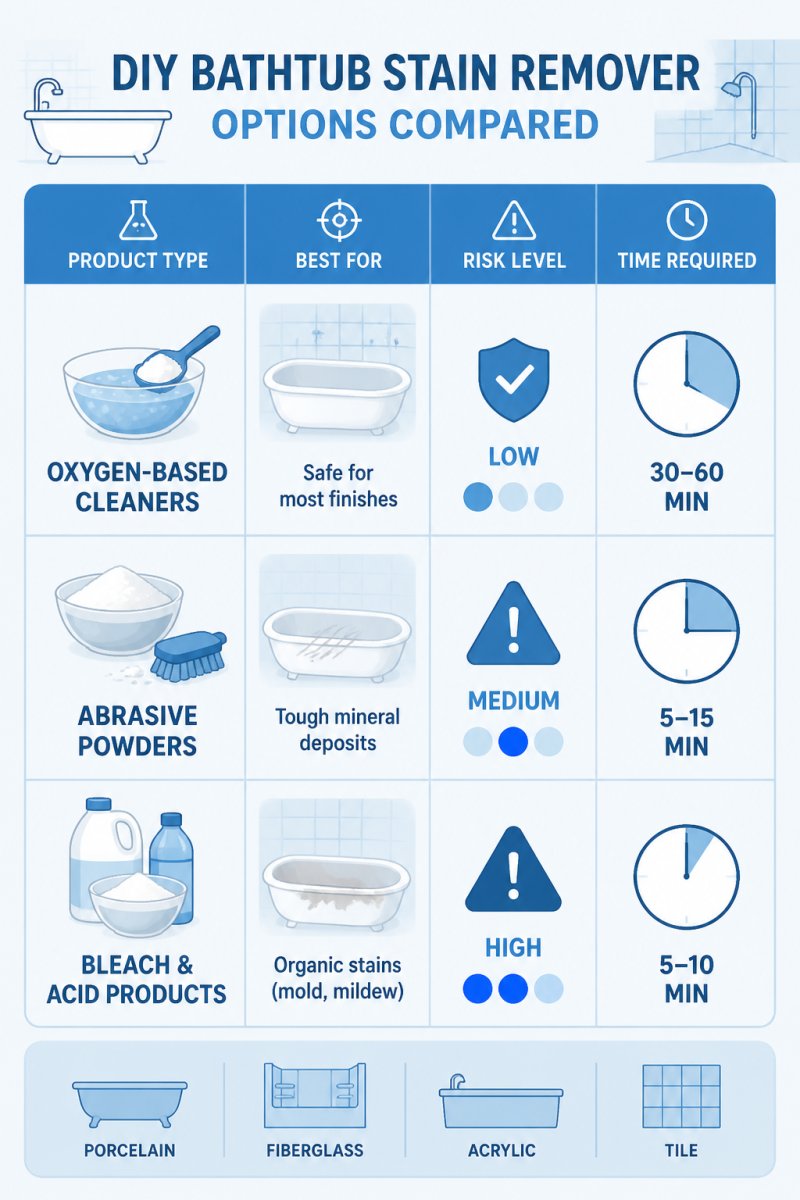
Oxygen-Based Cleaners
Oxygen bleaches are the safest general-purpose choice for old tubs. They release oxygen bubbles that lift organic staining without attacking the finish itself. Mix with warm water, soak for at least half an hour, then rinse. They’re slow, but they rarely cause damage.
Abrasive Powders and Pumice Stones
Abrasive powders cut through rust and mineral rings fast. On porcelain and cast iron, that’s acceptable. On acrylic or fiberglass, it’s a mistake you can’t undo. A common error is reaching for pumice on a modern acrylic tub, which leaves permanent dull scratches that collect dirt.
Bleach and Acid-Based Products
Bleach kills mold and lifts organic discoloration, but it can dry out and discolor certain finishes. Acid-based descalers dissolve mineral deposits effectively, yet they etch metal fixtures and damage enamel if left too long. Ventilate the room, wear gloves, and never mix acid products with bleach.
How to Remove Yellow Stains From an Old Bathtub
Removing yellow stains from an old bathtub works best with a staged approach: start gentle, escalate only if needed, and stop before you damage the surface. Most yellowing comes from mineral buildup and oxidized finish, so the method matters as much as the product.
Step-by-Step Cleaning Process
- Rinse the tub and remove loose debris.
- Apply an oxygen-based cleaner and let it soak 30-60 minutes.
- Scrub with a non-abrasive pad, not steel wool.
- Rinse thoroughly and check the result in good light.
- For stubborn rust, spot-treat with a mild acid descaler and rinse immediately.
- Dry the surface completely to prevent new mineral spots.
If yellowing returns within weeks, the finish itself is failing, not the cleaning routine.
Test any new cleaner on a small hidden patch first, near the drain or overflow. A finish that reacts badly will show it there instead of across the whole tub.
When Cleaning Fails: Professional Bathtub Refinishing Toronto
When stains keep coming back, the finish is gone, and no remover will fix that. Professional bathtub refinishing Toronto homeowners rely on restores the surface rather than cleaning it. At Century BathTubs, we’ve refinished worn tubs across the Greater Toronto Area since 1995, and the pattern is always the same: cleaning buys time, but a compromised glaze needs a new coating.
Refinishing strips the failing layer and applies a durable new finish. Our EP-ACRYLIC coating system is designed to bond to old porcelain, cast iron, and acrylic, and it dries fast so your bathroom isn’t out of service for days. It also seals the surface, which matters on older tubs where lead-based glaze may be present.
For landlords and property managers juggling multiple units, refinishing is often the only option that keeps bathrooms usable without a full tear-out. If you’re searching for bathtub refinishing near me, a licensed and insured provider in Toronto can assess whether your tub is a candidate or whether replacement genuinely makes more sense.
Health Canada guidance on lead in older home surfaces
Is Bathtub Refinishing Worth It?
Bathtub refinishing is worth it when the tub is structurally sound but cosmetically worn, which describes most older tubs that stain repeatedly. The alternative is replacement, which means demolition, plumbing work, and a bathroom out of commission for longer.
Here’s the honest trade-off:
- Refinishing: Lower cost than replacement, faster turnaround, keeps your existing tub and layout.
- Replacement: Suits tubs with structural cracks, deep damage, or a layout you want to change anyway.
The one drawback of refinishing is that it won’t fix a tub that’s genuinely failing. Deep cracks that flex or leak mean replacement is the better call, and any reputable provider should tell you that upfront.
Refinishing makes sense when the tub is solid but the surface is spent. If the tub flexes, leaks, or has structural cracks, replacement is the smarter spend.
Common Mistakes When Removing Stains From Old Tubs
The biggest mistakes with any bathtub stain remover are using the wrong product for the finish and scrubbing too aggressively. Both cause damage that cleaning can never reverse.
- Using abrasive pads or steel wool on acrylic, which scratches permanently.
- Mixing bleach and acid cleaners, which creates dangerous fumes.
- Leaving acid descalers on too long, which etches enamel and metal.
- Ignoring the root cause, worn glaze, and cleaning the same stain every month.
- Skipping the rinse, which leaves residue that attracts new dirt.
What most guides miss is that repeated staining is a symptom, not the problem. Treat the surface, not just the stain.
Conclusion: Choosing the Right Approach for Your Tub
Matching the remover to your tub’s material and the stain type solves most yellowing. When stains keep returning, the finish has failed, and that’s a refinishing problem, not a cleaning one.
Century BathTubs has restored worn tubs across Toronto and the GTA since 1995 with our EP-ACRYLIC coating system, backed by a three-year hassle-free guarantee. We’re licensed and insured, and our trained technicians handle bathtub and shower tile refinishing for homes and rental properties alike. Get started with Century BathTubs and extend the life of your tub without the cost and disruption of replacement.
Canadian Mortgage and Housing Corporation guidance on home renovation
Frequently Asked Questions
What is the best way to remove deep stains from an old porcelain bathtub?
For deep stains on porcelain, start with an oxygen-based cleaner and let it sit for several hours. Avoid abrasive powders that scratch the surface. If stains persist after multiple attempts, the issue may be a worn finish rather than surface dirt. In that case, professional bathtub refinishing in Toronto can restore the surface with a durable coating, saving you from replacement costs.
Can I use bleach on an old bathtub without damaging the finish?
Bleach can remove organic stains like mildew, but it may dull or discolor certain finishes over time. Dilute it with water and never mix it with other cleaners. For older tubs with worn enamel, bleach can seep into cracks and cause further damage. If your tub’s finish is already compromised, refinishing is a safer long-term solution than repeated bleach use.
Why do old bathtubs in Toronto homes get stained so easily?
Older tubs in Toronto often have porous, worn enamel that traps minerals from hard water, soap scum, and rust. These stains go beyond the surface and regular cleaning won’t fix them. When stains keep returning, professional bathtub refinishing Toronto can seal the surface and prevent future staining, extending the life of your tub.
Is bathtub refinishing worth it compared to buying a new tub?
Refinishing is typically more affordable than replacement, especially when you factor in demolition, plumbing, and tile work. It also takes less time and avoids the mess of a full renovation. If your tub is structurally sound but stained or worn, refinishing is often the better choice. Century BathTubs offers a three-year guarantee on their work, giving you peace of mind.