

Table of Contents
- Bathtub Refinishing vs New Installation: Quick Comparison
- Understanding Bathtub Reglazing Cost in Canada
- New Bathtub Installation Cost in Canada
- Pros and Cons of Bathtub Refinishing
- The Refinishing Process Explained
- DIY Bathtub Refinishing Kits vs Professional Services in Canada
- Material Compatibility: Cast Iron, Fiberglass, Acrylic, and Porcelain
- Durability, Lifespan, and Long-Term ROI
Bathtub Refinishing vs New Installation: Cost & Durability
Last Updated: July 29, 2026
When faced with a worn, stained, or damaged bathtub, homeowners in Toronto often wonder whether refinishing or new installation makes more sense. The choice can save thousands of dollars or unlock significant long-term value, but only if you understand what each option delivers. At Century BathTubs, we’ve spent over three decades helping customers navigate this decision. The answer depends on your specific circumstances rather than a one-size-fits-all recommendation.
Refinishing costs significantly less upfront and takes days instead of weeks, but replacement offers a fresh start and longer lifespan. This guide breaks down the real costs, durability expectations, and decision framework you need.
Bathtub Refinishing vs New Installation: Quick Comparison
Bathtub refinishing applies a new coating over your existing tub, restoring its appearance and extending its functional life. New installation removes the old tub entirely and installs a brand-new fixture, often involving plumbing modifications and surrounding tile or wall work.
Refinishing takes 24-48 hours total (including curing time), while replacement typically requires 3-7 days of active work. Refinishing costs significantly less because it avoids demolition labor, disposal fees, and new material expenses. However, a refinished tub will eventually need replacement, it’s a temporary restoration, not a permanent solution.
The decision hinges on three questions: What’s the current condition of your tub? How long do you plan to stay in the home? What’s your budget?
Comparison Table: Cost, Timeline, and Durability
| Factor | Bathtub Refinishing | New Installation |
|---|---|---|
| Typical Cost Range | $1,200-$1,800 (professional) | $3,000-$8,000+ |
| Time to Complete | 2-3 days (including cure) | 5-10 days |
| Lifespan | 7-10 years | 20-30 years |
| Disruption Level | Minimal; bathroom usable within 24 hours | High; bathroom out of service for extended period |
| Best For | Cosmetic damage, budget constraints, quick fixes | Structural damage, layout changes, permanent solution |
| Material Compatibility | Works on most surfaces; best on cast iron and acrylic | Any new material choice available |
| Warranty | Typically 3-5 years | 5-10+ years (varies by manufacturer) |
Understanding Bathtub Reglazing Cost in Canada
Professional refinishing in the Toronto and GTA area typically ranges between $1,200 and $1,800 for a standard alcove tub. Century BathTubs uses a premium EP-ACRYLIC coating system that delivers superior durability compared to budget alternatives, bonding strongly to existing surfaces and resisting hot water and frequent use. Our three-year hassle-free guarantee reflects confidence in the coating’s performance.
Several factors influence your actual quote. Tub size, current condition, and geographic location within the GTA affect pricing. Deep surface damage costs more to restore than minor stains. Accessibility also influences cost, a tub in a tight bathroom with limited ventilation requires more careful setup. Custom colors or specialty finishes cost more than standard white.
New Bathtub Installation Cost in Canada
New bathtub installation cost in Canada ranges dramatically based on scope. A straight swap, removing the old tub and installing a new one without modifications, typically costs $1,500 to $3,500 in labor plus the fixture price. A basic acrylic tub might cost $400-$800, while mid-range cast iron or premium acrylic models run $1,000-$2,500.
However, most renovations involve more than a simple swap. If the tub surround needs replacement, add $1,500-$4,000. Plumbing modifications escalate costs quickly. A complete bathroom renovation easily reaches $8,000-$15,000 or more.
In Toronto, plumbers typically charge $75-$150 per hour. A straightforward installation might take 6-10 hours; complex work can require 40-80 hours. Professional installation includes removal and disposal of the old tub, positioning and leveling the new fixture, plumbing connections, and testing for leaks. Always confirm what’s covered: Is the faucet included? Are water supply lines and drain installation included? Does the warranty cover installation defects?
Pros and Cons of Bathtub Refinishing
Bathtub refinishing delivers immediate, visible results at a fraction of replacement cost. You save thousands of dollars, and a refinished tub looks and functions like new with a smooth, glossy surface. The process takes minimal time, your bathroom is usable within 24 hours.
For rental properties, flipping homes, or situations where you need a quick cosmetic upgrade before selling, refinishing makes economic sense. It extends the life of an existing tub by 7-10 years, often sufficient if you’re not staying long-term. The process is non-invasive: no demolition, no plumbing work, no structural disruption. Professional refinishing also seals the surface, protecting against lead contamination in older tubs, particularly relevant for vintage Toronto homes.
When Refinishing Makes Sense
Refinishing is the right choice when your tub is structurally sound but cosmetically worn. If the substrate is intact with no cracks extending into the material, refinishing restores function and appearance affordably. This applies to most tubs 10-30 years old showing normal wear: surface stains, minor chips, dull finish, or discoloration.
Refinishing also makes sense when budget is the primary constraint or time constraints require your bathroom functional within days. It’s ideal when you like your tub’s layout and size but dislike its appearance.
Limitations of the Refinishing Process
Refinishing cannot fix structural damage. Cracks extending through the material, soft spots indicating water damage, or compromised substrate mean refinishing will fail. The durability of a refinished tub is shorter than a new one: 7-10 years versus 20-30 years. If you plan to stay 15+ years, you may refinish once and then face replacement later.
A refinished tub requires careful maintenance. Abrasive cleaners and harsh chemicals damage the coating. You must use gentle, non-abrasive cleaning methods. Refinishing cannot change the tub’s style, size, or configuration. If you want a larger soaking tub or different shape, you need replacement.
The Refinishing Process Explained
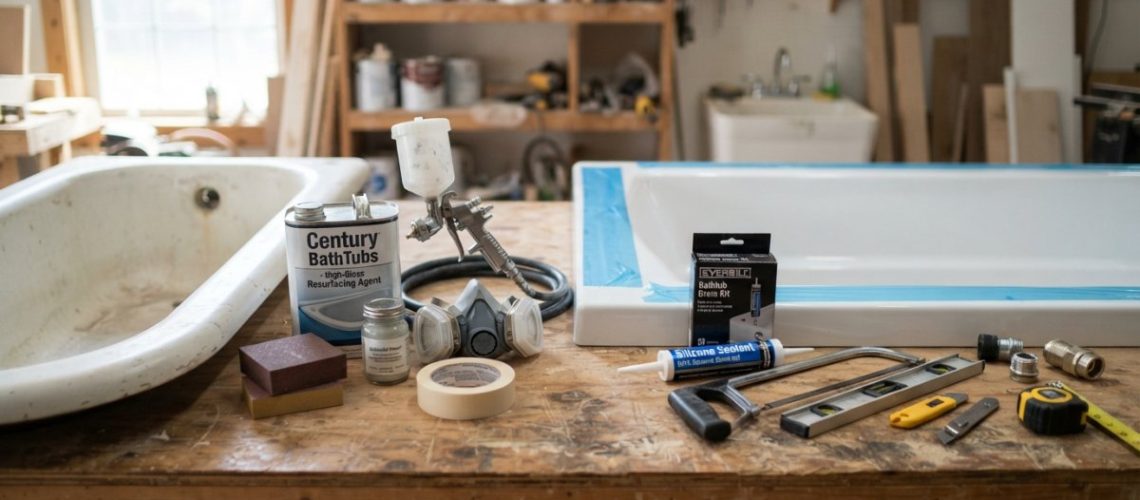
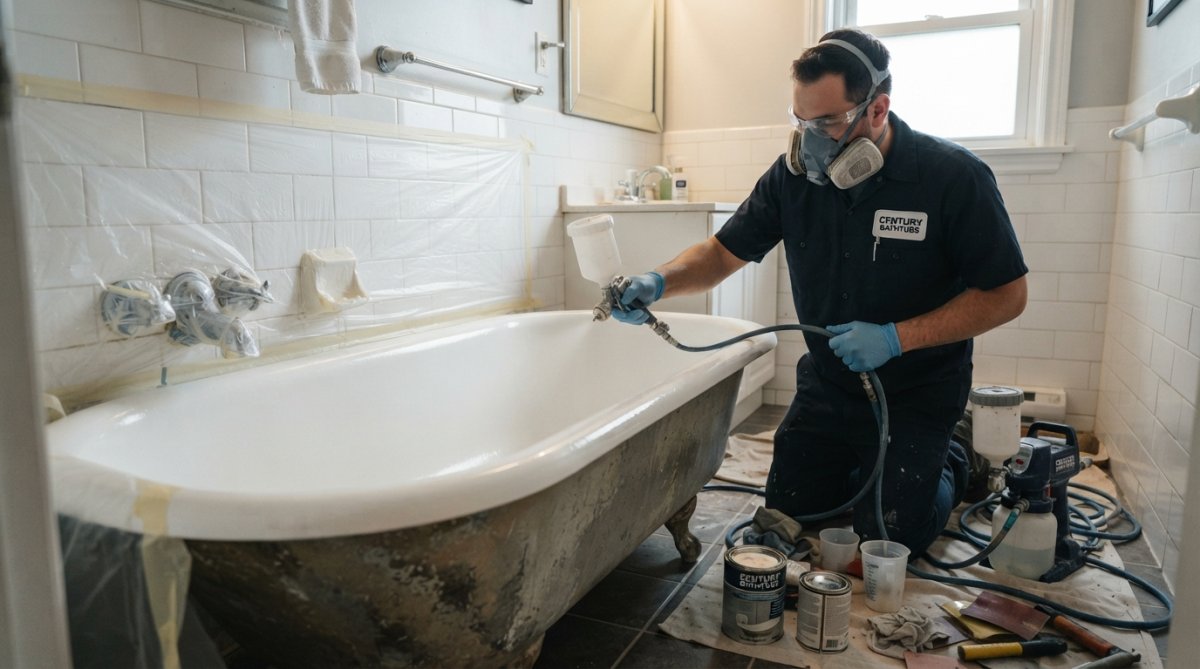
Professional bathtub refinishing follows a multi-step process designed to ensure the new coating bonds strongly and lasts years. The process begins with thorough surface preparation. The existing coating is cleaned and any loose material is removed. The surface is then acid-etched to create microscopic texture allowing the new coating to grip the substrate mechanically. This acid-etching step is critical, without it, the new coating peels within months.
After etching, the surface is rinsed, dried completely, and inspected. Any chips or cracks are filled with epoxy. The entire tub is masked, protecting surrounding walls, fixtures, and flooring. Proper ventilation is set up because coating application produces strong fumes that must be exhausted outside.
The coating is applied in multiple thin layers using spray equipment. Professional-grade epoxy-acrylic systems cure to a hard, glossy finish resisting water, heat, and daily wear. The curing process requires 24-48 hours before the tub can be used.
Surface Preparation and Acid Etching
Surface preparation determines whether a refinished tub lasts three years or ten years. The existing coating must be completely clean and free of soap residue, hard water deposits, and mold.
Acid etching separates professional work from DIY attempts. A mild acid solution is applied to the surface, creating microscopic pits that give the new coating something to grip. Without this etching, the coating bonds only to the old surface, and when that surface fails, the new coating peels with it. Professional technicians understand the correct application rate, contact time, and rinsing procedure for different materials, porcelain, fiberglass, and acrylic each require slightly different approaches.
Coating Application and Curing Time
The coating is typically a two-part epoxy-acrylic system mixed immediately before application and used within 4-6 hours before it thickens. Professional spray equipment applies the coating in thin, even layers. Multiple thin coats build up thickness and durability better than a single thick coat.
Curing time is critical. The coating is touch-dry within hours, but full cure takes 24-48 hours. During this time, the bathroom must remain undisturbed, no water contact, no cleaning, no use. Professional contractors enforce strict curing protocols to protect their warranty.
DIY Bathtub Refinishing Kits vs Professional Services in Canada
DIY refinishing kits are available at Canadian retailers like Canadian Tire and Walmart Canada, typically priced between $50 and $100. These kits appeal to budget-conscious homeowners, but results are often disappointing. The appeal is obvious: you save labor costs, which represent 60-70% of a professional quote. However, execution is where most DIY attempts fail. Surface preparation requires patience and attention to detail that many homeowners underestimate. The acid-etching step is often skipped or done incorrectly. Coating application requires steady hands, proper ventilation, and understanding of how the material behaves.
Most DIY refinishing results in peeling, chipping, or uneven finish within 1-3 years. You end up with a worse-looking tub and no warranty.
DIY Kit Durability and Long-Term Results
DIY kits typically last 2-4 years if applied carefully, compared to 7-10 years for professional work. The difference comes down to surface preparation and coating quality. Consumer-grade kits use lower-cost materials that don’t cure as hard or resist water as effectively as professional-grade epoxy systems.
The Rust-Oleum kit produces fumes requiring excellent ventilation, many homeowners don’t set up adequate exhaust, so the coating doesn’t cure properly. Application technique matters enormously. Professional spray equipment applies coating evenly and smoothly. A brush or roller leaves visible brush marks, creates uneven thickness, and is prone to drips. Even if the coating cures fully, the finish looks noticeably inferior.
Professional Application and Warranty Protection
Professional refinishing includes a warranty, typically 3-5 years, covering peeling, chipping, and coating failure. This warranty is backed by the contractor’s reputation and insurance. If the coating fails within the warranty period, the contractor refinishes at no cost.
Century BathTubs offers a three-year hassle-free guarantee on all refinishing work, reflecting the durability of the EP-ACRYLIC coating system and application quality. Professional contractors carry liability insurance and are licensed and bonded. If something goes wrong, you have recourse. Professionals also have access to higher-quality materials than consumer kits.
Material Compatibility: Cast Iron, Fiberglass, Acrylic, and Porcelain
Not all tub materials refinish equally well. Cast iron tubs are heavy, durable, and refinish beautifully. Cast iron is porous at the microscopic level, creating excellent grip for the new coating. A refinished cast iron tub can look factory-new and typically lasts 8-10 years with proper care.
Fiberglass tubs are lighter and more common in modern homes. Fiberglass refinishes well but doesn’t have cast iron’s durability. A refinished fiberglass tub typically lasts 6-8 years. Acrylic tubs are durable, lightweight, and available in various colors. Acrylic refinishes reasonably well, though the coating doesn’t bond quite as strongly as to cast iron. A refinished acrylic tub typically lasts 6-8 years.
Porcelain-over-steel tubs are common in mid-range homes. Porcelain is smooth and glossy, making it harder for the new coating to grip. The acid-etching step is crucial. If done correctly, refinishing works well. Refinished porcelain tubs typically last 7-9 years.
Which Materials Refinish Best
Cast iron refinishes best and lasts longest. If your tub is cast iron, refinishing is an excellent choice delivering 8-10 years of durable results. Porcelain-over-steel refinishes well if surface preparation is done correctly. Acrylic and fiberglass refinish adequately, but with shorter expected lifespans (6-8 years) compared to cast iron.
When Replacement Is Your Only Option
Replacement is necessary if your tub has deep cracks extending through the material. A surface chip can be filled and refinished, but a structural crack indicates the material is failing. If your tub has soft spots or feels spongy, the substrate is damaged and refinishing won’t help. If your tub is no longer level or stable, structural repair is needed before refinishing. If you want to change the size, shape, or style of your tub, replacement is your only option.
Durability, Lifespan, and Long-Term ROI
A professional refinish typically lasts 7-10 years, while a new tub lasts 20-30 years or more. However, the ROI calculation is more complex than simply comparing lifespans.
If you refinish for $1,500 and it lasts 8 years, your annual cost is about $188 per year. If you replace for $5,000 and it lasts 25 years, your annual cost is $200 per year. The difference is modest. However, if you refinish and then need to replace 5 years later, you’ve spent $1,500 + $5,000 = $6,500 over 5 years, a much higher annual cost.
The real ROI depends on how long you stay in the home. If you’re selling within 5 years, refinishing is almost always the better financial choice. A refinished tub adds perceived value at a fraction of replacement cost. If you plan to stay 15+ years, replacement becomes more economical.
How Long a Refinished Tub Actually Lasts
Professional refinishing lasts 7-10 years under normal use with proper care. "Normal use" means daily bathing and cleaning with non-abrasive products. "Proper care" means avoiding scouring pads, bleach-based cleaners, and harsh chemicals.
The EP-ACRYLIC coating system that Century BathTubs uses typically lasts toward the longer end of that range (8-10 years) because it cures to a harder finish than budget alternatives. Factors that extend life include gentle cleaning, avoiding excessive hot water, and not placing heavy objects on the surface. Factors that shorten lifespan include aggressive scrubbing, abrasive cleaners, hard water deposits, and heavy use.
Calculating True Cost Savings Over Time
Scenario 1: Refinish now, stay 5 years, then sell
- Refinishing cost: $1,500
- Resale value boost: approximately $1,500-$2,000
- Net cost: near zero or negative
- Verdict: Refinishing is the clear winner
Scenario 2: Refinish now, stay 10 years, then replace
- Refinishing cost: $1,500 (year 0)
- Refinishing again: $1,500 (year 8)
- Replacement cost: $5,000 (year 10)
- Total: $8,000 over 10 years = $800/year
Scenario 3: Replace now, stay 25 years
- Replacement cost: $5,000
- No future work needed
- Total: $5,000 over 25 years = $200/year
- Verdict: Most economical long-term choice
The key insight: refinishing makes sense when your timeline is short or when you want to spread costs over time. Replacement makes sense when you’re staying long-term and want a permanent solution.
Choosing between bathtub refinishing and new installation depends on your specific situation, timeline, and budget. For homeowners in Toronto and the GTA who need a quick, affordable bathroom refresh, professional refinishing delivers impressive results without the disruption of a full renovation. Century BathTubs has helped thousands of customers save thousands of dollars by restoring worn tubs with our durable EP-ACRYLIC coating system and three-year hassle-free guarantee. If your tub is structurally sound but cosmetically worn, a professional refinish extends its life by 7-10 years at a fraction of replacement cost. Contact Century BathTubs for a free inquiry and let our licensed, insured technicians assess whether refinishing is right for your home.
Frequently Asked Questions
How much does bathtub refinishing cost compared to new installation in Canada?
Bathtub refinishing costs significantly less than full replacement. Professional refinishing pricing depends on tub material, condition, and location, while new installation typically involves higher labor, plumbing, and demolition costs. For current pricing on refinishing services in your area, contact a licensed professional for a custom quote. Refinishing generally saves thousands of dollars compared to replacement.
How long does a refinished bathtub last, and what causes peeling or chipping?
A professionally applied refinish can last 10-15 years with proper maintenance, though durability varies based on the coating system used. DIY kits typically last 2-5 years. Peeling and chipping occur when surface preparation is inadequate, the coating isn't properly cured, or heavy abrasive cleaning damages the finish. Professional contractors use acid etching and multi-step processes to minimize these issues. Always follow curing time recommendations before using the tub.
When should you replace a bathtub instead of refinishing it?
Choose replacement if your tub has structural cracks, deep rust holes, severe water damage beneath the surface, or is no longer level. If the existing plumbing needs upgrades or you want to change the tub type entirely, replacement is more practical. Refinishing works best for cosmetic damage like stains, fading, or minor chips. Have a professional inspect your tub to determine whether it's structurally sound enough for refinishing.
What are the health and environmental benefits of refinishing vs replacement?
Refinishing reduces landfill waste by extending your tub's life rather than discarding it. However, the refinishing process involves VOCs (volatile organic compounds) that require proper ventilation during application. Professional services use controlled application methods to minimize exposure. Replacement means demolition waste but no ongoing VOC concerns. Refinishing is generally the more eco-friendly choice when the tub is structurally sound, as it avoids the environmental cost of manufacturing and transporting a new fixture.
Can I use a DIY refinishing kit, and how does it compare to professional service?
DIY kits like Rust-Oleum's two-part epoxy acrylic formula are available at Canadian retailers and cost approximately $50-$70. However, they require meticulous surface preparation, excellent ventilation, and careful application to achieve an even finish. Professional refinishing uses industrial-grade coatings and multi-step processes that deliver superior durability and appearance. DIY kits are suitable for budget-conscious homeowners willing to invest time and effort, while professional services offer warranties and longer-lasting results.
This article was written using GrandRanker