

Table of Contents
- What Actually Happens During Tub Reglazing
- Bathtub Refinishing Cure Time: The Real Waiting Period
- Signs of Improper Bathtub Curing
- How to Clean a Reglazed Bathtub Without Damaging the Finish
- What Happens If You Shower Too Soon
- Conclusion
- Frequently Asked Questions
Last Updated: September 22, 2026
What Actually Happens During Tub Reglazing
Tub reglazing is the process of bonding a new acrylic coating over an old tub surface so it looks and performs like new. At Century BathTubs, we’ve been applying our EP-ACRYLIC coating system across Toronto and the GTA since 1995, and the question we hear most is simple: can I shower 24 hours after tub reglazing?
The short answer is no. The coating may feel dry to the touch within a day, but it has not finished curing. Curing is a chemical reaction, not just drying. The surface hardens from the outside in, and the layers underneath stay soft long after the top feels firm.
That gap between “feels dry” and “is fully cured” is where most damage happens. Below, we break down the real timeline, the signs that something went wrong, and how to care for a reglazed tub so it lasts.
Bathtub Refinishing Cure Time: The Real Waiting Period
Bathtub refinishing cure time runs about 24 hours before light water contact and up to 7 days before full normal use. The coating dries to the touch first, then cures in stages. Each stage has its own rules.
Here is the timeline we give every customer in Toronto:
| Stage | Time After Reglazing | What You Can Do |
|---|---|---|
| Dry to touch | 24 hours | Nothing. No water, no towels, no items in the tub. |
| Partial cure | 48-72 hours | Light water exposure, quick showers with care. |
| Full cure | 5-7 days | Normal use, cleaning, bath mats, full water contact. |
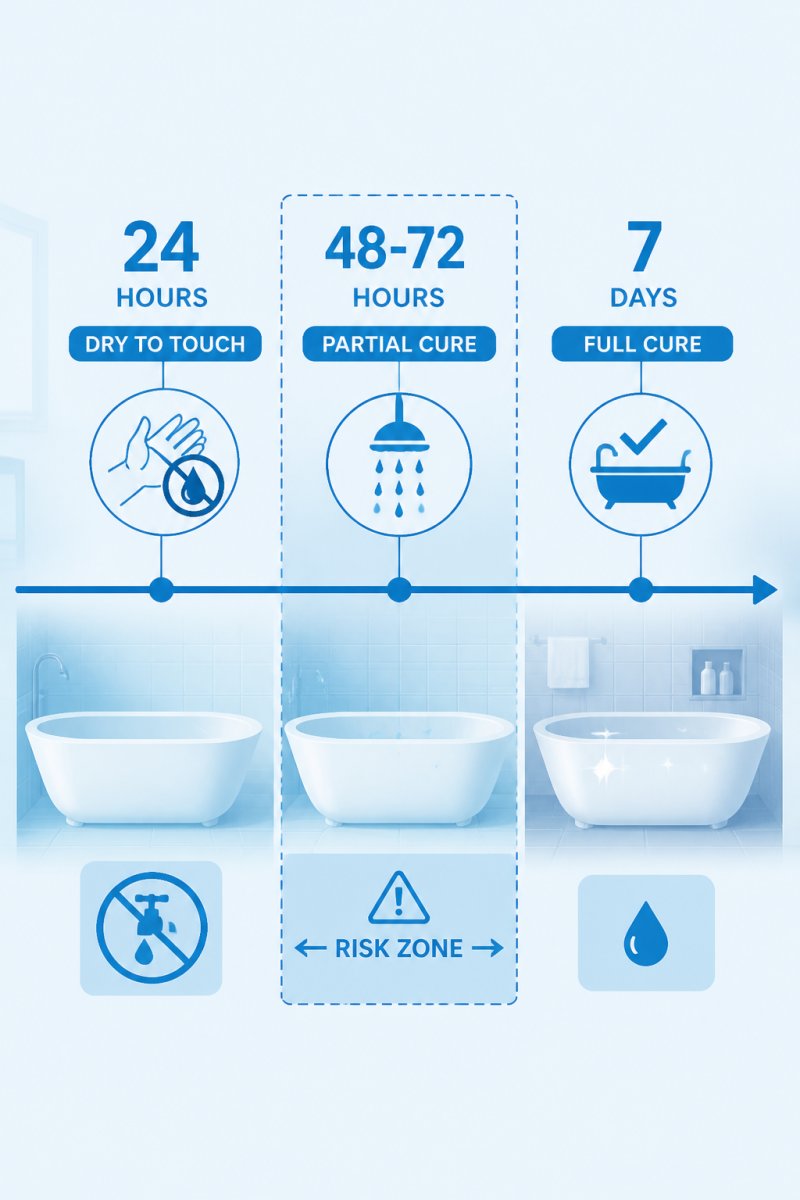
The risk zone sits between 24 and 72 hours. Water, soap, and body weight all press into a surface that is still setting. Even a quick shower can leave marks that never come out.
Why 24 Hours Is Not Enough for Full Curing
Curing is a chemical bond, and chemical bonds take time. The EP-ACRYLIC coating we use needs several days to reach full hardness. Heat and airflow speed it up. Damp, closed bathrooms slow it down.
A common mistake is testing the surface with a finger, feeling hardness, and assuming the job is done. That top layer can feel solid while the base is still soft. Step on it or run hot water over it, and the damage shows up weeks later as peeling or dull patches.
Running water over a reglazed tub before the coating fully cures can trap moisture under the surface. That leads to bubbling, peeling, and a finish that fails months early. Once that happens, the only fix is a full re-coat.
Signs of Improper Bathtub Curing
Signs of improper bathtub curing show up fast if you know what to look for. Catching them early can save the whole finish.
Watch for these red flags:
- Soft or tacky spots that stay sticky past 48 hours
- Dull patches where the shine has faded
- Small bubbles or blisters near the drain
- Fine cracks along the tub floor or edges
- Water that beads unevenly instead of running off
Any one of these points to moisture or weight hitting the surface too soon. A few of them together usually mean the coating needs professional attention.
Run your hand along the tub floor before you use it. If it feels cool and slick, it is still curing. If it feels firm and dry, you are likely past the partial cure stage.
How to Clean a Reglazed Bathtub Without Damaging the Finish
How to clean a reglazed bathtub comes down to one rule: gentle products, soft tools, no scrubbing. The coating is durable, but abrasive cleaners and rough pads wear it down over time.
Follow these steps:
- Wait the full 7 days before the first proper clean
- Use a soft cloth or sponge, never steel wool or scouring pads
- Choose mild soap or a non-abrasive bathroom cleaner
- Skip bleach, ammonia, and any product labeled “scrubbing”
- Rinse with warm water and dry with a soft towel
A squeegee after each shower keeps soap scum from building up in the first place. It takes ten seconds and adds years to the finish.
The single biggest cause of a failed reglaze is harsh cleaning, not heavy use. Mild soap and a soft cloth protect the coating better than any specialty product.
What Happens If You Shower Too Soon
Showering too soon can ruin the finish, and the damage is often permanent. Water gets under the coating while it is still soft. Soap and shampoo work into that gap. The bond breaks down from the inside.
What you will likely see:
- Cloudy or milky patches on the tub floor
- Peeling at the edges within a few weeks
- A chalky feel that no cleaner fixes
- Cracks that spread from the drain outward
If you have already showered early, stop using the tub and let it sit dry. Call a professional to assess it. Sometimes a light touch-up works. Often, the coating needs to be stripped and reapplied.
This is why we schedule reglazing around your household routine. Landlords with multiple units in Toronto can stagger jobs so no tenant is left without a working bathroom.
Conclusion
The wait is the hard part, but it is what makes a reglaze last. Rushing the cure costs far more than a few days of patience.
Century BathTubs has handled bathtub and shower tile refinishing across Toronto and the GTA since 1995. Our licensed and insured technicians use the EP-ACRYLIC coating system, backed by a three-year hassle-free guarantee. We work with homeowners, landlords, and commercial properties, and we keep the job fast so your bathroom is back in use quickly.
Get started with Century BathTubs and restore your tub with a finish built to last. Request your free inquiry today.
Frequently Asked Questions
What happens if I shower too soon after bathtub reglazing?
Showering too soon can prevent the coating from bonding properly to the tub surface. Water and soap can seep into partially cured areas, causing the finish to bubble, peel, or develop soft spots. Even if the tub feels dry to the touch at 24 hours, the coating underneath may still be curing. Most professionals recommend waiting at least 48 to 72 hours before any water contact, and full cure takes about 7 days.
How long does the EP-ACRYLIC coating take to fully cure?
EP-ACRYLIC coatings typically reach full cure in about 7 days, though this depends on ventilation, humidity, and temperature. At 24 hours the surface is dry to the touch but not ready for water. Light water exposure may be possible after 48 to 72 hours, but full resistance to standing water, cleaning products, and daily use develops over the full week. Always follow the specific instructions provided by your refinishing technician.
Does humidity in Toronto affect bathtub reglazing cure times?
Yes, humidity plays a role in how fast the coating cures. Toronto summers can be humid, which slows the curing process because moisture in the air interferes with the chemical reaction. Winter months with dry indoor heating tend to speed things up. Proper ventilation in the bathroom helps regulate humidity and supports consistent curing. If your bathroom has poor airflow, expect the cure to take closer to the full 7 days.
What are the signs that my bathtub finish is fully cured?
A fully cured tub feels hard and smooth with no tackiness. The surface should not smell like solvents or chemicals. Water should bead and roll off rather than soak in or leave dull spots. If you notice soft areas, a lingering odor, or a finish that marks easily when pressed, the coating is still curing. Wait longer before using the tub normally and contact your refinishing provider if symptoms persist.