

Table of Contents
- Why Toronto Homeowners Choose Bathtub Resurfacing
- Bathtub Refinishing Cost Toronto: What Affects Your Quote
- How Long Does Bathtub Resurfacing Last?
- Bathtub Reglazing vs Replacement: Which Makes Sense for Your Bathroom?
- The Resurfacing Process: What to Expect from Start to Finish
- Choosing a Bathtub Resurfacing Service in Toronto
- Conclusion
- Frequently Asked Questions
Last Updated: September 20, 2026
Why Toronto Homeowners Choose Bathtub Resurfacing
Bathtub resurfacing Toronto homeowners rely on is a refinishing process that restores a worn tub’s surface instead of replacing the fixture, and it has become the default choice for anyone updating a bathroom without gutting it. Century BathTubs has handled these projects across Toronto and the GTA since 1995, and the pattern is consistent: a tub that looks beyond saving usually isn’t. The enamel is damaged. The cast iron underneath is fine.
That distinction matters because replacement is rarely just a bathtub purchase. It pulls in demolition, plumbing, tile repair, and disposal, and it takes the bathroom out of service for days. Resurfacing keeps the existing tub in place and rebuilds the surface on top of it.
The Canada Mortgage and Housing Corporation guidance on home renovations is a useful starting point for understanding how renovation scope drives cost, and resurfacing is the clearest example of shrinking scope without shrinking the result.
Below, we break down what a quote should include, how long the finish holds up, and how to pick a provider in Toronto.
Bathtub Refinishing Cost Toronto: What Affects Your Quote
Bathtub refinishing cost Toronto varies by tub size, condition, and coating system, so any provider quoting a flat number before seeing the tub is guessing. Pricing depends on the work required, not a menu price.
Several factors move a quote up or down:
- Tub material and size. A standard alcove tub takes less material and labor than a large soaker or a clawfoot with exposed exterior surfaces.
- Surface condition. Chips, deep cracks, rust, or previous failed coatings need extra prep before any new finish goes on.
- Coating system. A durable EP-ACRYLIC coating costs more than a basic paint-on product but holds up far longer.
- Access and setup. Tight bathrooms or upper-floor units with no elevator add handling time.
- Volume. Landlords and commercial properties refinishing multiple bathrooms at once typically get more efficient per-unit pricing.
Because these variables swing widely, Century BathTubs does not publish flat rates. The honest answer is to request a free inquiry with photos of the tub and get a quote based on the actual condition.
The biggest pricing mistake is choosing the lowest quote without asking what coating is used. A cheap finish that peels within a year costs more than doing it once with a proper system.
How Long Does Bathtub Resurfacing Last?
How long does bathtub resurfacing last? With a professional-grade coating and correct care, a resurfaced tub typically holds up for many years, and reputable providers back the work with a written guarantee. Century BathTubs covers its work with a three-year hassle-free guarantee.
Longevity comes down to three things: the coating system, the prep work, and how the tub is treated afterward.
Prep is where cheap jobs fail. A coating bonds only to a surface that has been cleaned, etched, and repaired properly. Skip that and the finish lifts at the edges within months. The coating itself matters just as much, which is why a durable EP-ACRYLIC system outperforms generic refinishing paint.
Aftercare is the part homeowners control:
- Use non-abrasive cleaners and a soft sponge, not scouring pads.
- Avoid leaving rubber mats or suction cups in place for long periods.
- Wipe up standing water and harsh cleaners rather than letting them sit.
- Fix chips early, before water reaches the material underneath.
Treat it well and the surface stays intact for years. Treat it like a scouring pad test lab and any finish will fail.
Bathtub Reglazing vs Replacement: Which Makes Sense for Your Bathroom?
Bathtub reglazing vs replacement comes down to the tub’s structure. If the tub is structurally sound and only the surface is worn, reglazing wins on cost, speed, and waste. If the tub is cracked through the body, flexing, or leaking at the drain, replacement is the better call.
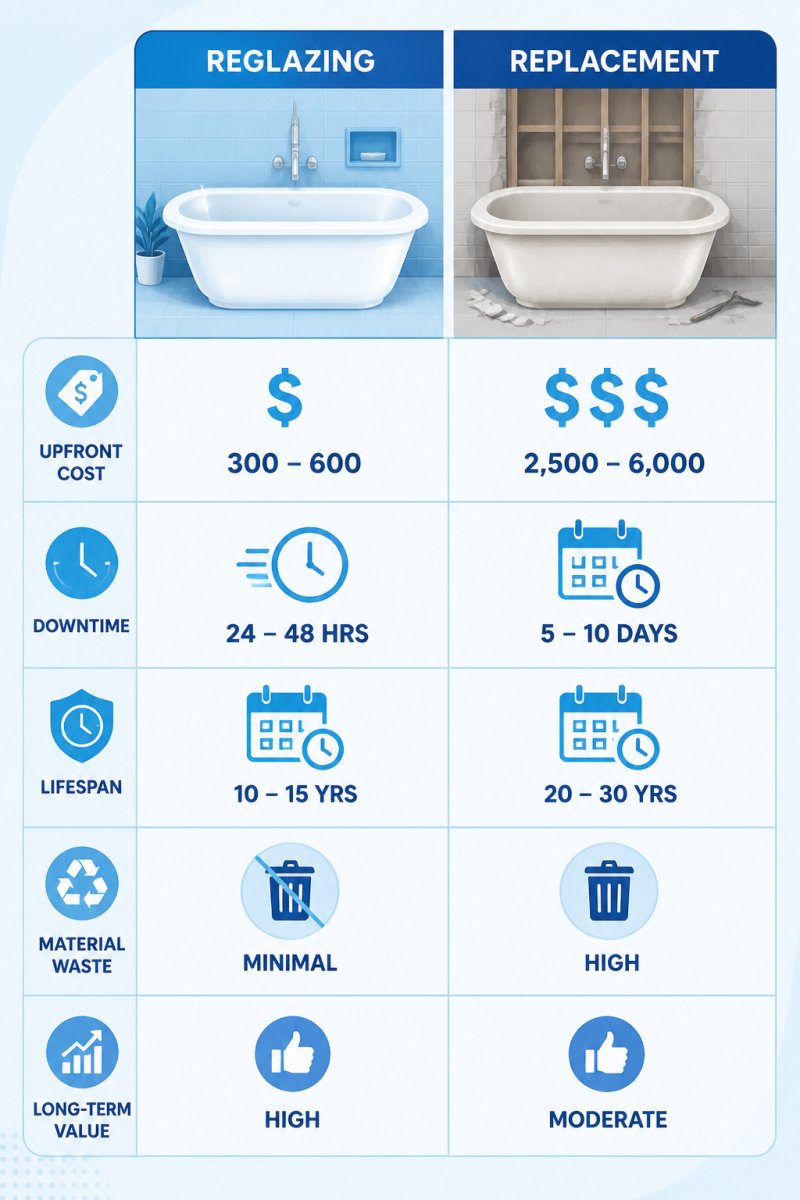
Here is how the two options stack up:
| Factor | Reglazing | Replacement |
|---|---|---|
| Upfront cost | Lower | Higher |
| Downtime | A day or two | Several days |
| Lifespan | Many years with care | Decades |
| Material waste | Minimal | Old tub discarded |
| Best for | Sound tub, worn surface | Structural damage |
The waste difference is worth noting for anyone weighing the environmental side. Refinishing keeps a large, heavy fixture out of the landfill. There is also a safety angle: older tubs can carry lead in their glaze, and encapsulating that surface with a new coating is one way to manage it, a point worth raising with any provider.
Replacement still makes sense when the tub is genuinely failing. But for the majority of Toronto bathrooms with a solid tub and a tired finish, reglazing is the smarter spend.
The Resurfacing Process: What to Expect from Start to Finish
A professional resurfacing job follows a fixed sequence, and knowing it helps you judge whether a provider is doing the work properly.
- Inspection and quote. The technician checks the tub’s material, damage, and existing coatings, then provides a written quote.
- Preparation. The area is masked and ventilated, and fixtures are removed or protected.
- Cleaning and etching. The old surface is stripped of soap scum, minerals, and any failing finish, then etched so the new coating can bond.
- Repairs. Chips, cracks, and rust spots are filled and sanded smooth.
- Coating application. The EP-ACRYLIC coating is applied in layers for an even, durable finish.
- Curing. The finish dries fast, and the tub is ready for normal use after the recommended curing window.
Most residential jobs are completed in a single visit, which is the main reason resurfacing suits occupied homes and rental units. The bathroom is out of service briefly, not for days.
Ask the provider how they handle the drain and overflow during coating. Taping these off properly is a small detail that separates a clean job from one with drips and uneven edges.
Choosing a Bathtub Resurfacing Service in Toronto
Choosing a bathtub resurfacing service in Toronto should start with verification, not price. Ask for proof of licensing and insurance, a written guarantee, and a clear description of the coating system. A provider who hesitates on any of those is a risk.
For landlords managing multiple units, capacity matters as much as quality. Ask whether the provider can schedule several bathrooms in one block rather than spacing jobs weeks apart. Century BathTubs works with residential and commercial clients across Toronto and the GTA, including multi-unit properties, and has been licensed and insured since 1995.
A short checklist for vetting any provider:
- Confirms licensing and insurance in writing
- States the coating system by name
- Offers a written guarantee with a defined term
- Provides a quote based on inspection, not a phone estimate
- Can handle multiple units on a schedule that suits you
- Explains curing time and aftercare clearly
Searching for “bathtub resurfacing near me” returns plenty of options. The differentiator is rarely the pitch. It is whether the provider will put the guarantee and credentials in writing.
Conclusion
Getting a bathtub back to looking new is a decision about scope, not budget alone. A sound tub with a worn surface is a refinishing job, and treating it as a replacement project wastes money and time. The Government of Canada guidance on hiring contractors is worth reviewing before signing anything, and the Ontario Ministry of Consumer Services consumer protection resources explains what protections apply to home renovation work in the province.
Frequently Asked Questions
How much does bathtub resurfacing cost in Toronto?
Pricing for bathtub resurfacing in Toronto depends on the tub’s condition, size, and any repairs needed. It typically costs a fraction of a full replacement, which involves demolition, disposal, and new fixtures. Century BathTubs has provided cost-effective refinishing since 1995 and offers a free inquiry for an accurate quote based on your specific tub.
Is bathtub resurfacing worth it compared to a full replacement?
For most Toronto homeowners, resurfacing is worth it when the tub is structurally sound but worn. It saves thousands compared to replacement, finishes in a day, and keeps old cast iron tubs out of landfill. Century BathTubs uses an EP-ACRYLIC coating system that extends the life of your fixture and comes with a three-year hassle-free guarantee.
How long does a resurfaced bathtub last?
A professionally resurfaced bathtub can last many years with proper care. Longevity depends on the coating quality, surface preparation, and how you clean it. Century BathTubs’ EP-ACRYLIC system is designed for durability, and the company backs its work with a three-year guarantee. Using non-abrasive cleaners and avoiding harsh chemicals will help your refinished tub stay in good shape.
Can you resurface a bathtub that has chips or cracks?
Yes, chips and cracks can be repaired before resurfacing. Century BathTubs’ technicians fill and sand damaged areas, then apply the EP-ACRYLIC coating to create a smooth, seamless finish. Deep structural damage may require an assessment, but most cosmetic issues are fixable. If you have an old cast iron tub with cracks, a professional can determine whether resurfacing is a viable alternative to replacement.
The real challenge is finding a provider who backs the finish with a guarantee and shows up when promised. Century BathTubs has served Toronto and the GTA since 1995 with licensed, insured technicians, a durable EP-ACRYLIC coating system, and a three-year hassle-free guarantee on every job. Get started with Century BathTubs and request a free inquiry to see what your tub actually needs.