

Table of Contents
- What Is Bathtub Refinishing and Why It Matters
- How Long Does Bathtub Refinishing Last
- The Bathtub Refinishing Process Explained
- Bathtub Reglazing Cost: What to Expect
- DIY Bathtub Refinishing Kit vs. Professional Service
- How to Clean a Refinished Bathtub
- Bathtub Refinishing vs. Replacement: Cost and Value
- Frequently Asked Questions
Last Updated: August 11, 2026
What Is Bathtub Refinishing and Why It Matters
Bathtub refinishing is the process of restoring a worn, chipped, or discolored bathtub to like-new condition without removing or replacing it. The refinishing process involves cleaning, repairing surface damage, applying a bonding agent, and coating the tub with a durable acrylic finish. This cost-effective alternative to full replacement has become increasingly popular among homeowners, landlords, and property managers who want to refresh their bathrooms without the disruption and expense of demolition.
The appeal is straightforward: a refinished tub looks and functions like a brand-new fixture, but at a fraction of the replacement cost. For homeowners in the toronto area looking to update their bathrooms on a budget, bathtub refinishing offers real savings. Whether dealing with a chipped cast iron tub, a stained fiberglass surface, or simply an outdated color, refinishing extends the life of existing fixtures while protecting against hazards like lead in older tubs.
Century BathTubs has been helping customers across the toronto region and beyond since 1995, using a professional-grade EP-ACRYLIC coating system that delivers durability and a factory-new finish. The team’s licensed, insured technicians understand what homeowners, landlords, and commercial property owners actually need: fast turnaround, reliable results, and genuine protection for their investment.
The biggest mistake homeowners make is assuming refinishing only works on minor cosmetic issues. In reality, professional reglazing can address deep cracks, chips, and stains that make an old tub look completely unusable, often restoring it to better-than-original condition.
How Long Does Bathtub Refinishing Last
How long does bathtub refinishing last? A professionally applied acrylic coating typically maintains its appearance and durability for 10 to 15 years with proper care, though the actual lifespan depends on usage intensity, maintenance habits, and the quality of the initial application. Century BathTubs provides a three-year hassle-free guarantee on all work, which reflects confidence in the durability of the EP-ACRYLIC coating system.
The longevity of a refinished tub comes down to several factors. Heavy use in commercial settings (hotels, rental units with frequent turnovers) may see wear within 5 to 7 years, while residential bathrooms with moderate use often exceed 12 years without significant degradation. The coating itself hardens fully during the curing process, typically 24 to 48 hours, and becomes increasingly resistant to chipping and peeling as it ages.
Maintenance plays a critical role in extending the life of a refinished surface. Harsh scrubbing, abrasive cleaners, and acidic products accelerate wear. Homeowners who use soft cloths, mild soap, and non-abrasive techniques routinely report that their refinished tubs maintain their finish well beyond the initial warranty period.
A refinished bathtub’s actual lifespan is less about the coating itself and more about how the homeowner treats it. Gentle maintenance can add years to the finish; neglect or aggressive cleaning can shorten it significantly.
The Bathtub Refinishing Process Explained
Professional bathtub refinishing follows a structured sequence that ensures adhesion, durability, and a high-gloss finish that rivals factory standards. Understanding each step helps homeowners appreciate why professional service outperforms DIY attempts and why the process requires time and proper ventilation.
Surface Preparation and Acid Etching
The foundation of any successful bathtub refinishing project is surface preparation. Technicians begin by thoroughly cleaning the tub to remove soap residue, hard water deposits, and any mold or mildew. This step is non-negotiable, a contaminated surface will cause the new coating to fail, regardless of application quality.
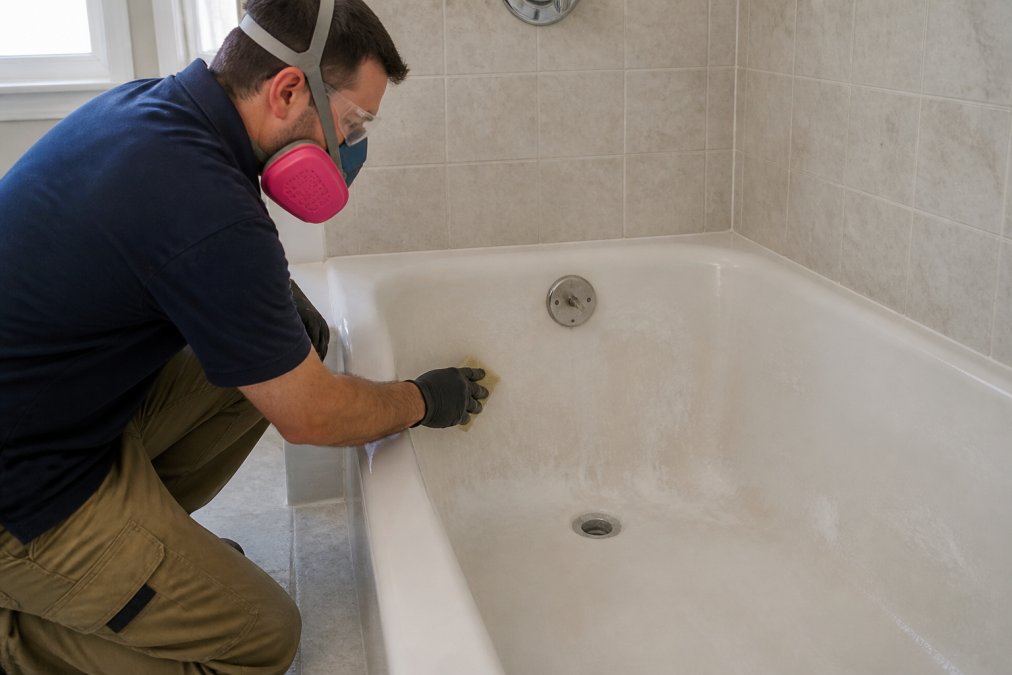
Next comes acid etching, a chemical process that roughens the tub’s surface microscopically. This etching creates tiny anchor points that allow the bonding agent and acrylic coating to adhere properly. Without acid etching, the new finish would eventually peel or chip because it has nothing to grip. The etching solution is applied carefully, allowed to work for a specific duration, then rinsed thoroughly. Proper ventilation is essential during this step, as the chemical fumes can be strong.
Primer Application and Bonding
Once the surface is etched and dry, a primer or bonding agent is applied. This intermediate layer creates the chemical bridge between the original tub material and the new acrylic coating. The bonding agent ensures that the acrylic adheres uniformly and prevents peeling or separation later. This step is often overlooked in low-quality DIY kits, which is why professional results are consistently superior.
The primer must be applied in a thin, even coat and allowed to cure for the manufacturer’s recommended time. Rushing this stage is a common cause of refinishing failure. Century BathTubs technicians follow strict timing protocols to ensure the bonding layer is fully cured before the final coating is applied.
Acrylic Coating and Curing Time
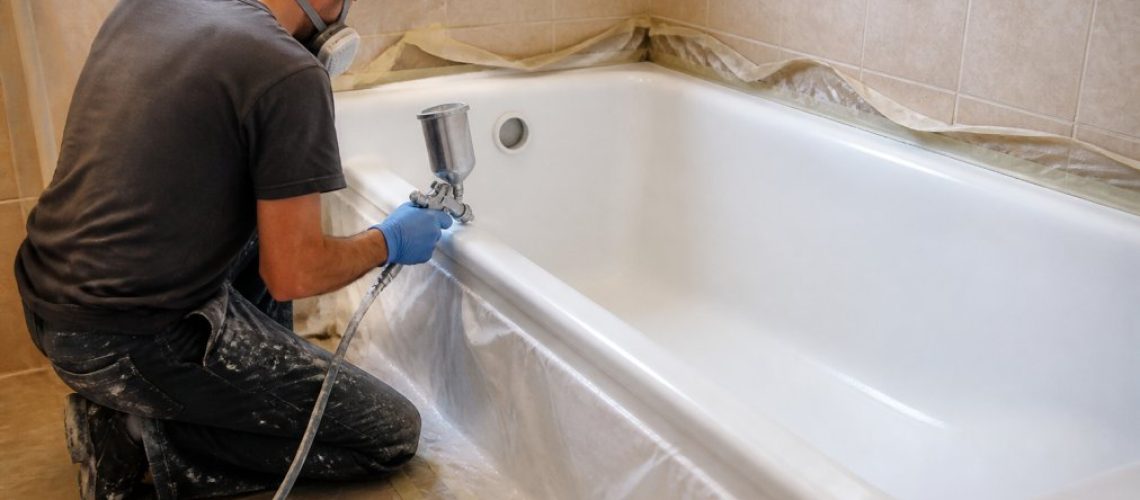
The final step is applying the acrylic coating, which provides the visible finish and most of the durability. Professional-grade acrylic, like the EP-ACRYLIC system used by Century BathTubs, is sprayed evenly across the entire surface to create a uniform, high-gloss finish. The coating must be applied in controlled conditions, proper temperature, humidity, and ventilation are critical.
Curing time is when the coating hardens and bonds completely to the surface beneath. While the tub may feel dry to the touch within 24 hours, full curing typically takes 48 hours or longer. During this curing period, the bathroom should not be used. This is why timing the work around household schedules matters, a professional can complete the application in a single day, but the tub must remain unused for two days afterward.
Bathtub Reglazing Cost: What to Expect
Bathtub reglazing cost varies based on tub size, surface condition, and whether additional repairs (like crack filling) are needed. Rather than stating a specific price, the reality is that reglazing is significantly more affordable than replacing the entire tub and surrounding fixtures. The actual cost depends on factors like whether the tub requires extensive repair work, the size of the bathroom, and local market rates.
For homeowners comparing options, bathtub refinishing typically costs a fraction of what replacement would require, which includes not just a new tub, but also plumbing modifications, tile work, and labor. A refinished tub that lasts 10 to 15 years represents exceptional value over that timeframe.
Century BathTubs offers free estimates so homeowners can understand the investment before committing. This transparent approach helps customers make informed decisions about whether refinishing or replacement makes sense for their situation. The three-year guarantee also protects the investment, ensuring that if any issues arise, they’re covered.
Avoid suspiciously cheap refinishing quotes. Low-cost providers often cut corners on [surface preparation](/how-to-prepare-bathtub-for-reglazing/) or use inferior coatings, resulting in premature peeling or chipping. The cheapest option upfront frequently becomes the most expensive when the work fails and must be redone.
DIY Bathtub Refinishing Kit vs. Professional Service
The market offers DIY bathtub refinishing kits that promise to deliver professional results for a fraction of the cost. In theory, this sounds appealing. In practice, the difference between a DIY attempt and professional work is substantial and immediately visible.
DIY kits typically fail because they lack the equipment, materials, and expertise required for proper surface preparation and application. Homeowners struggle with acid etching consistency, bonding agent timing, and achieving an even acrylic coat without spray equipment. The ventilation requirements are also more challenging to meet in a residential setting. Many DIY attempts result in an uneven finish, premature peeling, or a coating that doesn’t cure properly.
Professional service, by contrast, uses commercial-grade materials, proper spray equipment, and technicians trained in the exact timing and technique required. The difference is comparable to painting a room yourself versus hiring a professional painter, the professional delivers consistency and durability that a one-time DIY effort cannot match.
For homeowners committed to a DIY approach, success requires strict adherence to instructions, proper safety equipment, and realistic expectations about the finish quality. For most people, professional refinishing is the sensible choice, particularly when the cost difference is modest relative to the three-year guarantee and superior durability.
How to Clean a Refinished Bathtub
Maintaining a refinished bathtub properly extends its lifespan significantly. The coating is durable, but it’s not indestructible, aggressive scrubbing and harsh chemicals accelerate wear. A simple maintenance routine keeps the finish looking new for years.
Daily or weekly cleaning should use only soft cloths or non-abrasive sponges with mild soap and water. Avoid scouring pads, steel wool, or any abrasive material that can scratch the surface. For stubborn stains, a paste of baking soda and water works effectively without damaging the coating. This gentle approach removes soap residue and prevents mildew without degrading the finish.
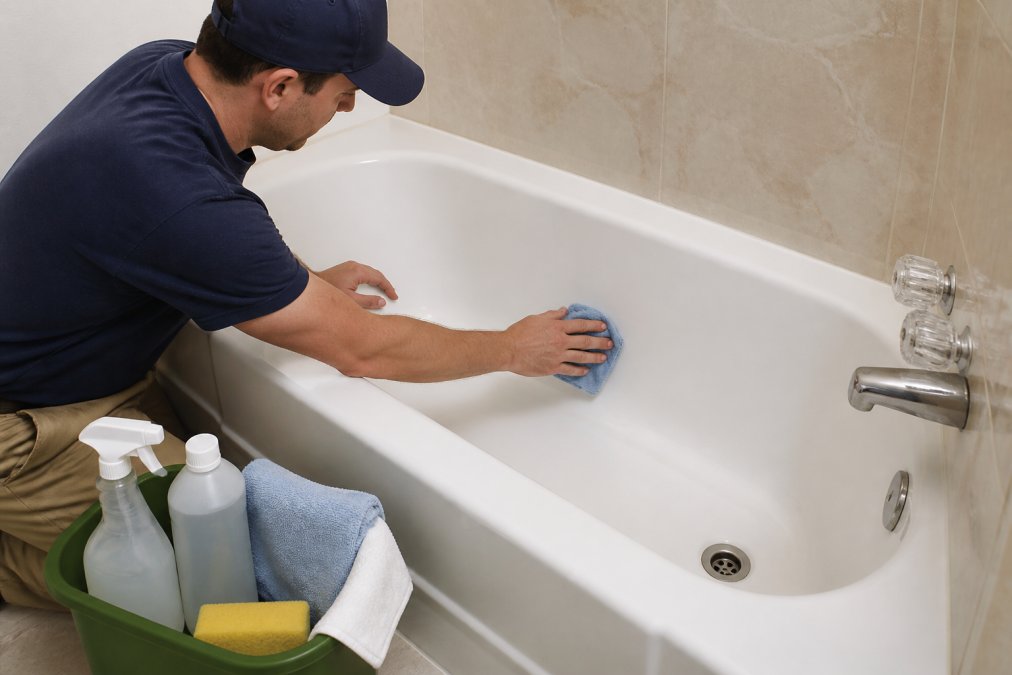
Hard water deposits can build up over time, creating a dull appearance. A vinegar-and-water solution (equal parts) applied with a soft cloth removes mineral deposits without harming the acrylic. Rinse thoroughly after using vinegar to prevent residue buildup.
Never use bleach, acetone, or drain cleaners on a refinished tub, these chemicals can damage the coating. Similarly, avoid abrasive tile cleaners or products designed for porcelain, as they’re too harsh for acrylic. Stick with products labeled safe for acrylic or fiberglass, or use simple household ingredients like baking soda and vinegar.
Regular maintenance prevents the need for early refinishing. A homeowner who cleans gently and avoids harsh chemicals will see their refinished tub maintain its appearance and durability well beyond the initial warranty period.
Bathtub Refinishing vs. Replacement: Cost and Value
When a bathtub shows significant wear, homeowners face a choice: refinish or replace. The decision involves more than just upfront cost, it requires understanding the full scope of replacement work and the long-term value of each option.
Replacement requires removing the old tub, which often involves cutting through tile, plumbing modifications, and potential structural repairs if water damage is present. The new tub, installation labor, tile work, and finishing touches add up quickly. The disruption extends over days or weeks, and the bathroom is unusable during much of that time.
Bathtub refinishing, by contrast, takes a single day for application and two days for curing. The bathroom is minimally disrupted, and the homeowner avoids the cost of removal, plumbing work, and tile restoration. The refinished tub looks and functions like new, with the added benefit that the original fixtures remain intact.
For homeowners in the toronto area, refinishing also makes sense from a practical standpoint. Many older homes have cast iron or vintage tubs that, once refinished, become focal points rather than eyesores. Replacement would mean removing a quality fixture that simply needed restoration.
Refinishing is the smarter choice when the tub’s structure is sound. Replacement makes sense only if the tub is cracked beyond repair, the plumbing is failing, or the homeowner wants a completely different fixture style.
The cost-to-value ratio favors refinishing in most cases. A homeowner investing in professional refinishing gets a restored fixture, minimal disruption, and a three-year guarantee, all for a fraction of replacement cost. When the refinished tub lasts 10 to 15 years, the return on that investment becomes even clearer.
| Consideration | Refinishing | Replacement |
|---|---|---|
| Timeframe | 1 day application + 2-day cure | 5-10 days or more |
| Bathroom disruption | Minimal | Extensive |
| Fixture integrity | Preserved | Removed entirely |
| Material cost | Lower | Higher |
| Labor cost | Lower | Higher |
| Warranty | 3 years (Century BathTubs) | Varies by installer |
| Longevity | 10-15 years | 20-30 years (new fixture) |
Bathtub refinishing near me searches often reflect homeowners’ desire for a convenient, affordable solution to bathroom updates. The reality is that professional bathtub refinishing delivers exactly that, a fast, cost-effective way to restore worn fixtures without the disruption and expense of full replacement.
Century BathTubs has spent over 30 years helping toronto-area homeowners and commercial property owners achieve exactly this outcome. The team’s licensed, insured technicians apply a durable EP-ACRYLIC coating system backed by a three-year hassle-free guarantee. Whether refreshing a single bathroom or managing multiple units, the process is straightforward: contact Century BathTubs for a free estimate, schedule the work around your timeline, and enjoy a refinished tub that looks and functions like new.
For homeowners ready to move forward, the Canadian Standards Association provides guidance on bathroom safety standards that professional refinishing work should meet. Century BathTubs operates in full compliance with local building codes and safety requirements, ensuring that every refinishing project protects both the fixture and the homeowner. Get started with a FREE INQUIRY today to explore how bathtub refinishing can transform your bathroom.
Frequently Asked Questions
Is it worth refinishing a bathtub instead of replacing it?
Bathtub refinishing costs a fraction of full replacement and delivers a factory-new finish without demolition. If your tub’s structure is sound and damage is limited to surface cracks or stains, refinishing extends its life by years while saving thousands. Replacement makes sense only if the tub has major structural damage or you want a completely different size or style. For most homeowners, reglazing is the cost-effective choice.
How long does bathtub refinishing last?
Professional bathtub refinishing with a durable acrylic coating typically lasts 3 years or longer with proper care. The longevity depends on the quality of the bonding agent, primer application, and how well you maintain the surface. Avoid abrasive scrubbers and harsh chemicals; use gentle cleaning methods instead. Century BathTubs backs all work with a three-year hassle-free guarantee, ensuring your investment is protected.
What is the difference between reglazing and refinishing a bathtub?
Reglazing and refinishing are often used interchangeably and refer to the same process: restoring a bathtub’s surface with a new coating. Both involve acid etching the existing surface, applying a bonding agent, and spraying an acrylic or epoxy coating. The result is a high-gloss, slip-resistant finish that looks and feels like a brand-new tub. Professional-grade systems deliver superior durability compared to DIY kits.
Does bathtub refinishing involve toxic chemicals?
Professional bathtub refinishing does involve chemical stripping and primer application, but licensed technicians follow strict safety protocols to minimize exposure. The acid etching process removes old finishes safely, and modern acrylic coatings cure without releasing harmful fumes when applied by trained professionals in well-ventilated spaces. Ensure your contractor is licensed and insured to guarantee safe handling and proper ventilation during the work.