

Table of Contents
- Why Professional Tub Reglazing Lasts Longer: The Technical Foundation
- The Professional Tub Reglazing Process Explained
- Best Reglazing Materials: Epoxy, Polyurethane, and EP-Acrylic Coatings
- Factors Affecting Coating Durability and Longevity
- Care for Reglazed Bathtub: Maintenance Routine to Extend Lifespan
- Bathtub Reglazing Warranty Canada: What Protection Means
- Professional vs. DIY Reglazing: Why Longevity Differs
- Cost-Benefit Analysis: Reglazing vs. Replacement
Professional Tub Reglazing Lasts Longer: Why It Works
Last Updated: July 30, 2026
The difference between a bathtub finish that chips after six months and one that lasts a decade comes down to surface preparation. At Century BathTubs, we’ve spent over 30 years observing why professional tub reglazing lasts longer than DIY attempts. Professional reglazing involves acid etching, proper bonding agents, and commercial-grade coatings applied in controlled environments. These aren’t optional steps, they’re the foundation that separates a finish that fails from one that endures.
This guide explains why professional tub reglazing lasts longer, what makes the difference in durability, and how proper maintenance extends that lifespan.
Why Professional Tub Reglazing Lasts Longer: The Technical Foundation
Professional reglazing works because it addresses the root cause of coating failure: poor adhesion. When a new coating sits on top of an old, glossy surface without proper preparation, it has nothing to grip. Within months, moisture penetrates the gap and the coating peels, bubbles, and fails.
Professional contractors eliminate this problem through acid etching and chemical bonding, which create a microscopic landscape the new coating can anchor into. A DIY kit skips this stage entirely, which is why most consumer reglazing attempts fail within 12-18 months.
The substrate matters too. Porcelain, fiberglass, and acrylic each require different preparation approaches. Professional technicians adjust their process accordingly, while one-size-fits-all DIY approaches often stumble.
The most overlooked factor in reglazing durability is ventilation during curing. Professional facilities maintain precise humidity and temperature control for 48-72 hours after application. Your bathroom cannot replicate this. Improper curing creates a weak finish that appears fine for months, then suddenly fails under normal moisture exposure.
Surface Preparation as the Critical Difference
Professionals spend 40-50% of their time preparing the surface. This isn’t wasted time, it’s the entire job.
Surface preparation begins with stripping. The old finish must be removed completely, not sanded over. Professional contractors use chemical strippers or grinding equipment to reach bare substrate, then inspect for cracks and damage requiring repair.
Acid etching comes next. This chemical process opens the surface at a microscopic level, creating texture that the new coating can bond to chemically. The etching solution is applied for 15-20 minutes, then neutralized and rinsed thoroughly. Too short, and the bond is weak. Too long, and the substrate can be damaged. This precision is why professional results are difficult to replicate with consumer kits.
After etching, the surface is cleaned with specialized degreasing agents to remove any residue, dust, or contamination. Even microscopic particles can create weak points in the final finish. Professional contractors use compressed air and tack cloths to ensure absolute cleanliness before coating application begins.
The entire preparation phase takes 4-6 hours for a standard bathtub. Most homeowners attempting DIY reglazing cut this phase in half, which directly translates to coating failure within months.
Skipping the neutralization step after acid etching ruins the entire job. If etching solution isn’t fully neutralized, it continues reacting with the substrate under the new coating, creating bubbles and peeling within weeks. Professional contractors use pH testing to confirm neutralization is complete.
Acid Etching and Chemical Bonding
Acid etching is the linchpin of professional reglazing durability. Without it, the new coating sits on a glossy surface with virtually no adhesion. With it, the coating forms a chemical bond that resists moisture, temperature changes, and physical wear.
Acid opens microscopic pores in the substrate, allowing the primer and topcoat to flow into the surface and create mechanical interlocking. The chemical reaction between the etching solution and the substrate creates a reactive surface that the new coating bonds to chemically. This dual mechanism, mechanical and chemical bonding, is why professional finishes last 10-15 years while DIY attempts fail in months.
Commercial-grade etching solutions contain specific acid concentrations calibrated for different substrate types. Porcelain requires stronger acid (typically hydrochloric acid at 10-15% concentration). Fiberglass and acrylic require weaker solutions to avoid substrate damage. Consumer-grade kits often use generic solutions that are either too weak to be effective or too strong and damage the tub.
After etching, the bonding agent (primer) is applied. This specialized coating adheres to both the etched substrate and the topcoat. Professional primers are formulated to cure slowly enough to self-level but fast enough to prevent dust contamination. The result is a finish that resists peeling, chipping, and moisture penetration.
The Professional Tub Reglazing Process Explained
Professional reglazing is a coordinated sequence of preparation, application, and curing.
Step-by-Step Preparation and Application
The process begins with assessment. Professional contractors inspect the tub for structural damage, deep cracks, or material incompatibility issues that reglazing can’t fix.
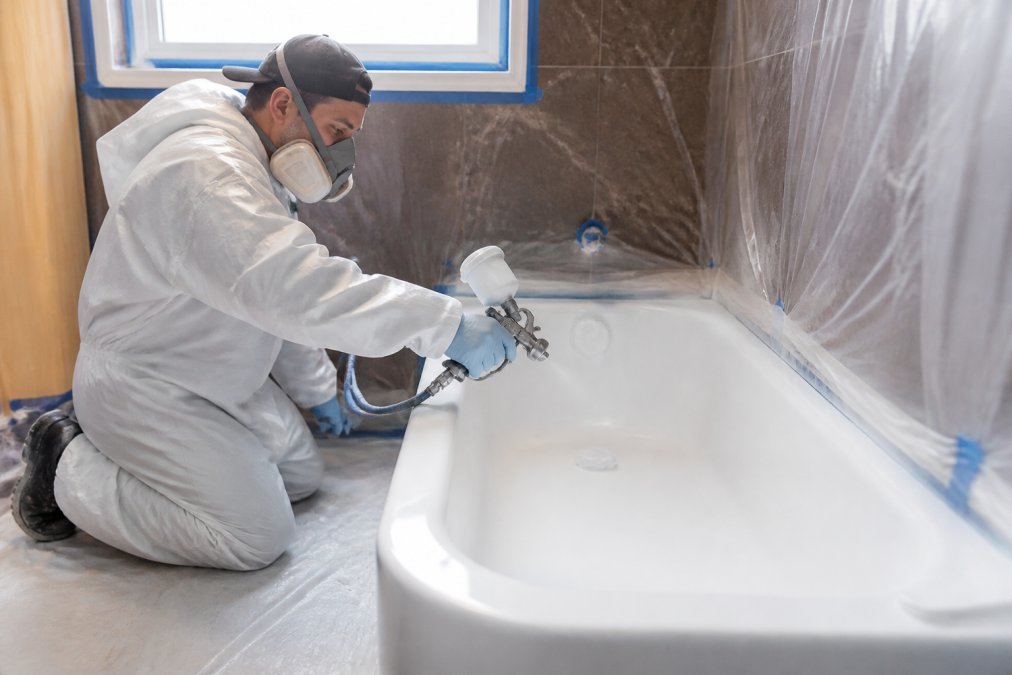
Next comes stripping and cleaning. The old finish is removed using chemical strippers, grinding, or sanding, depending on the substrate and finish type. Once stripped, the surface is cleaned with degreasing agents and rinsed thoroughly. Professional contractors use compressed air to dry the surface completely, then apply acid etching solution.
The etching phase lasts 15-20 minutes. Once the etching time expires, the solution is neutralized with a base solution, then rinsed multiple times to ensure all chemical residue is removed. The surface is inspected under bright light to confirm proper preparation.
The primer is then applied in thin, even coats. Professional primers are typically applied in 2-3 coats, with drying time between each coat (usually 2-4 hours). Finally, the topcoat is applied in 2-3 thin, even coats using spray equipment.
Curing Time and Environmental Control
Curing is where professional reglazing separates from DIY attempts. A properly cured finish is dramatically more durable than one that’s merely dried.
Curing typically takes 48-72 hours for the coating to fully cross-link and reach maximum hardness. During this period, temperature and humidity must be controlled. Professional facilities maintain 18-24°C and 40-60% relative humidity. These conditions allow the coating to cure evenly without trapping moisture or creating stress points.
Your bathroom cannot replicate these conditions. Moisture from showers, humidity spikes, and temperature fluctuations create weak points in the finish. Exposure to moisture during the curing phase causes improper curing, resulting in a softer, more porous coating that fails under normal use.
The single biggest reason professional reglazing lasts longer is environmental control during curing. A finish that cures in a controlled 50% humidity environment will outlast an identical finish that cures in a steamy bathroom by a factor of 5-10 times.
Best Reglazing Materials: Epoxy, Polyurethane, and EP-Acrylic Coatings
The coating material itself determines much of the finish’s durability. Professional contractors have access to commercial-grade formulations that consumer kits don’t offer.
Commercial-Grade vs. Consumer-Grade Coatings
EP-acrylic coatings are the industry standard for professional bathtub reglazing. These hybrid coatings combine epoxy durability with acrylic flexibility, resisting water, chemicals, and temperature changes better than pure acrylic while being less toxic than epoxy.
Epoxy coatings offer maximum hardness and chemical resistance but are brittle and can crack if the substrate shifts. For residential bathtubs, which experience minor flexing from temperature changes and water weight, EP-acrylic is more ideal.
Polyurethane coatings offer excellent flexibility and moisture resistance, commonly used in commercial bathrooms.
Commercial-grade coatings differ from consumer-grade formulations in several ways: Professional coatings contain 50-70% solids by volume versus 20-40% in consumer kits. Professional coatings use higher-quality pigments that resist fading. They include UV stabilizers, mildew inhibitors, and flow agents that improve durability and appearance. Professional coatings also maintain consistent performance over weeks or months of storage, while consumer kits have shorter shelf lives and working times.
Century BathTubs uses an EP-acrylic system specifically formulated for residential bathrooms, providing a three-year hassle-free guarantee.
Factors Affecting Coating Durability and Longevity
Several factors determine how long a reglazed finish will last.
Substrate Type: Porcelain, Fiberglass, and Acrylic
Each substrate type responds differently to reglazing.
Porcelain is the hardest substrate and typically the most durable when reglazed. Porcelain is non-porous, so moisture cannot penetrate the substrate itself. A reglazed porcelain tub typically lasts 12-15 years with proper care.
Fiberglass is porous and more flexible than porcelain. Professional contractors use flexible coatings (typically EP-acrylic or polyurethane) that move with the substrate. A properly reglazed fiberglass tub lasts 10-12 years.
Acrylic is the softest substrate and the most forgiving. Coatings must be extremely flexible to avoid cracking. A reglazed acrylic tub typically lasts 8-12 years, depending on maintenance.
Professional contractors adjust their reglazing approach based on substrate type. The etching intensity, primer selection, and topcoat formulation vary to match the substrate’s properties.
High-Traffic Usage and Moisture Resistance
A bathtub in a family bathroom with daily use experiences different stresses than a guest bathroom used occasionally. High-traffic usage accelerates coating wear.
Daily use exposes the coating to repeated wetting, drying, and temperature changes. A heavily used tub may show wear after 8-10 years. A lightly used tub from the same reglazing job may last 15+ years.
Professional coatings are formulated with moisture barriers that prevent water penetration. The epoxy or polyurethane base creates a non-porous layer that water cannot penetrate.
Care for Reglazed Bathtub: Maintenance Routine to Extend Lifespan
How you maintain your reglazed tub directly impacts its lifespan. Proper care can extend durability by 50% or more.
Cleaning Products and Chemical Compatibility
The biggest threat to a reglazed finish is harsh chemicals. Abrasive cleaners, bleach-based products, and acidic cleaners can etch and weaken the coating.
Abrasive cleaners (scouring powders, steel wool, scrub pads) physically scratch the coating. Use only soft cloths or non-abrasive sponges.
Bleach and chlorine-based cleaners are particularly damaging. Bleach oxidizes the coating and degrades the polymer matrix, weakening the finish.
Acidic cleaners (vinegar, lime removers, rust removers) etch the coating surface. Repeated exposure weakens the finish and increases moisture penetration.
Recommended cleaning approach: Use pH-neutral cleaners specifically designed for reglazed surfaces. A simple mixture of warm water and mild dish soap is often sufficient. For stubborn stains, use a non-abrasive bathroom cleaner that’s pH-neutral. Always rinse thoroughly after cleaning.
Daily Habits That Protect Your Finish
Ventilation after use: Run the exhaust fan during and for 30 minutes after bathing. This removes moisture and prevents humidity from accumulating.
Avoid standing water: Don’t let water pool on the tub surface. Drain the tub completely after use and wipe it dry with a soft cloth.
Temperature moderation: Avoid extremely hot water. High temperatures can soften the coating and accelerate wear.
Avoid heavy impact: Don’t drop heavy objects in the tub. Impact damage can crack or chip the coating, creating entry points for moisture.
Regular inspection: Check your tub monthly for signs of wear, small chips, peeling, or discoloration. Early detection allows you to address problems before they spread.
Keep a small bottle of touch-up coating on hand (your contractor can provide this). If you notice a small chip or scratch, touch it up immediately. A tiny repair prevents moisture from entering the substrate and causing widespread peeling.
Bathtub Reglazing Warranty Canada: What Protection Means
Professional reglazing comes with warranties that protect your investment.
Understanding Three-Year Guarantees and Coverage
Century BathTubs provides a three-year hassle-free guarantee on all reglazing work. This warranty covers peeling, chipping, and coating failure caused by defects in materials or workmanship. If the coating fails within three years under normal use, the contractor will repair or re-coat the tub at no cost.
"Normal use" includes daily bathing and showering, standard cleaning with pH-neutral products, normal moisture exposure, and typical temperature fluctuations.
The warranty does NOT cover damage from abrasive cleaners or bleach, impact or physical abuse, improper ventilation or excessive moisture, or non-standard use.
In Canada, consumer protection regulations vary by province. Ontario’s Consumer Protection Act provides additional protections for home renovation work. Services must be performed with reasonable care and skill, and materials must be fit for their intended purpose. A professional reglazing contractor should meet these standards as a baseline, with their warranty providing additional protection.
Signs of a Failing Finish and When to Seek Support
Early detection of coating failure allows you to address problems before they become extensive.
Peeling or flaking: The coating begins to separate from the substrate in small patches. Contact your contractor immediately.
Discoloration or staining: The coating develops yellow, brown, or gray stains that don’t wash off. This may indicate mold growth under the coating or chemical damage.
Softening or tackiness: The coating feels soft or slightly sticky to the touch. This indicates improper curing or water absorption.
Crazing or fine cracking: Tiny cracks appear in the coating surface. This indicates the coating is under stress and typically progresses to peeling within months.
Bubbling or blistering: Small bubbles or blisters appear in the coating. This indicates moisture trapped between the coating and substrate.
If you notice any of these signs within the warranty period, contact your contractor immediately. Document the issue with photos and maintain records of when you first noticed the problem.
Professional vs. DIY Reglazing: Why Longevity Differs
The gap between professional and DIY reglazing results is enormous.
Common DIY Kit Failures and Peeling Issues
Consumer reglazing kits are widely available and affordable. They’re also almost universally disappointing.
The most common failure mode is peeling. DIY kits skip or abbreviate surface preparation. Without acid etching, the new coating has virtually no adhesion to the old surface. It looks fine for a few months, then begins peeling as moisture seeps underneath.
Another common failure is uneven coverage and brush marks. Consumer kits are designed for brush application, which leaves visible marks and creates uneven thickness. Improper curing is another major issue. DIY reglazing happens in your bathroom, where humidity and temperature fluctuate constantly. When you take a hot shower two days after application, moisture and heat stress the partially cured coating, causing micro-cracks and failure within weeks.
Most DIY reglazing jobs fail within 6-18 months. The initial cost savings evaporate when you have to hire a professional to fix the failed job.
Spray Equipment, Ventilation, and Application Expertise
Professional reglazing uses spray equipment that creates a smooth, uniform finish. Spray application applies the coating in thin, even layers that cure properly and resist peeling.
Spray equipment also allows professionals to apply coatings that are too viscous for brush application. These thicker coatings build durability faster and create stronger finishes.
Ventilation is critical during application and curing. Professional facilities use industrial ventilation that removes VOCs and maintains proper humidity and temperature. Your bathroom exhaust fan cannot replicate this level of ventilation.
Application expertise is the final factor. Professional technicians have years of experience applying coatings. They understand substrate-specific challenges and know how to address them.
Cost-Benefit Analysis: Reglazing vs. Replacement
When faced with a worn bathtub, homeowners often wonder whether reglazing or replacement makes more sense financially.
The cost of professional reglazing is significantly lower than replacement. A full bathtub replacement involves removing the old tub, potentially repairing the surround, installing a new tub, and re-tiling. This process takes several days and often costs several thousand dollars. Professional reglazing takes 1-2 days and costs substantially less.
A reglazed tub lasts 10-15 years with proper care. Over a 15-year period, reglazing is the more cost-effective option for most homeowners. However, reglazing isn’t ideal if the tub has structural damage, deep cracks, holes, or significant rust. Reglazing addresses cosmetic wear and surface degradation, not structural issues.
| Comparison Factor | Reglazing | Full Replacement |
|---|---|---|
| Cost | Pricing depends on quantity, dates, and delivery. | Higher ($3,000-$8,000+) |
| Timeline | 1-2 days | 3-7 days |
| Durability | 10-15 years | 15-20 years |
| Best For | Cosmetic wear, budget-conscious | Structural damage, new features desired |
| Maintenance | Straightforward | Standard tub care |
| Disruption | Minimal | Significant |
A reglazed bathtub delivers years of reliable service when applied professionally. The difference between a finish that fails in months and one that lasts a decade comes down to surface preparation, proper materials, controlled curing, and professional expertise.
If you’re managing a worn bathtub in Toronto or the GTA, professional reglazing from Century BathTubs provides durability, cost-effectiveness, and peace of mind. With over 30 years of experience, licensed and insured technicians, and a three-year hassle-free guarantee, Century BathTubs delivers the professional reglazing your tub deserves. Contact Century BathTubs today for a free inquiry and discover how reglazing can extend the life of your fixtures while saving thousands compared to replacement.
Frequently Asked Questions
How long does professional bathtub reglazing typically last in Canada?
Professional tub reglazing typically lasts 10-15 years or longer with proper maintenance. The actual lifespan depends on surface preparation quality, coating material used, high-traffic usage patterns, and how well you care for the reglazed finish. Commercial-grade coatings applied by licensed professionals often outlast consumer DIY kits, which may fail within 2-5 years due to inadequate bonding and poor curing conditions.
What is the difference in longevity between DIY and professional tub reglazing?
Professional reglazing lasts significantly longer because technicians use acid etching for proper surface preparation, apply primer and bonding agents correctly, use commercial-grade epoxy or polyurethane coatings, control curing time and ventilation, and have spray equipment expertise. DIY kits often skip acid etching, lack proper ventilation, use lower-quality materials, and are applied by untrained hands, resulting in peeling, chipping, and failure within months or a few years.
What factors contribute to the durability of a professionally reglazed tub?
Key durability factors include: substrate type (porcelain, fiberglass, or acrylic), quality of surface preparation and chemical bonding, commercial-grade coating selection (epoxy vs. polyurethane), proper curing time in controlled temperature and humidity, moisture resistance of the final finish, and maintenance practices post-application. High-traffic bathrooms and homes with hard water require more durable coatings and stricter cleaning protocols to extend longevity.
How can I extend the life of my professionally reglazed bathtub?
Follow a consistent maintenance routine: avoid abrasive cleaners and harsh chemicals that degrade the coating, use non-slip surfaces safely, dry the tub after use to minimize moisture exposure, clean with pH-neutral products compatible with epoxy or polyurethane finishes, and avoid high-impact contact. Regular gentle cleaning and prompt attention to any signs of peeling or chipping, reported to your contractor, will help your reglazed finish maintain its durability throughout the warranty period and beyond.
This article was written using GrandRanker