

Table of Contents
- How Long Does Bathtub Refinishing Last: Realistic Lifespan Expectations
- Key Factors That Determine How Long Your Refinished Tub Will Last
- Signs Your Bathtub Needs Refinishing
- How to Clean and Maintain a Refinished Bathtub
- Bathtub Refinishing Warranty Coverage in Canada
- Bathtub Refinishing Cost in Canada: Value vs. Replacement
- Failure Analysis: Why Some Refinished Tubs Don’t Last
- Environmental Impact of Bathtub Refinishing
Last Updated: July 27, 2026
How Long Does Bathtub Refinishing Last: Realistic Lifespan Expectations
Most professionally refinished bathtubs last between 5 and 15 years, depending on material type, application quality, and maintenance. At Century BathTubs, we’ve served Toronto and GTA homeowners since 1995. Our EP-ACRYLIC coating system comes with a three-year hassle-free guarantee and typically performs well beyond that timeframe when cared for properly.
The lifespan of your refinished tub depends on several interconnected factors: professional-grade refinishing on cast iron or acrylic outlasts DIY attempts by years, the coating system matters enormously (epoxy behaves differently than polyurethane), and your daily habits determine whether your tub looks pristine at year seven or shows wear by year three.
Material Type and Coating System
Cast iron tubs refinished with durable epoxy typically last 10-15 years when properly maintained. The dense iron substrate provides excellent foundation for chemical bonding with the new finish. Fiberglass and acrylic tubs, more common in modern homes, typically see 5-10 years of life from professional refinishing. These lighter materials flex more, stressing the coating over time.
The coating system is critical. Epoxy-based finishes offer superior durability and chemical resistance compared to standard acrylic. However, epoxy requires precise application conditions, temperature, humidity, and ventilation all affect bonding. Polyurethane offers a middle ground: easier to apply than epoxy but more durable than basic acrylic. Century BathTubs uses an EP-ACRYLIC system balancing durability with application reliability for Toronto’s moisture-heavy bathroom environment.
Professional Application vs. DIY Results
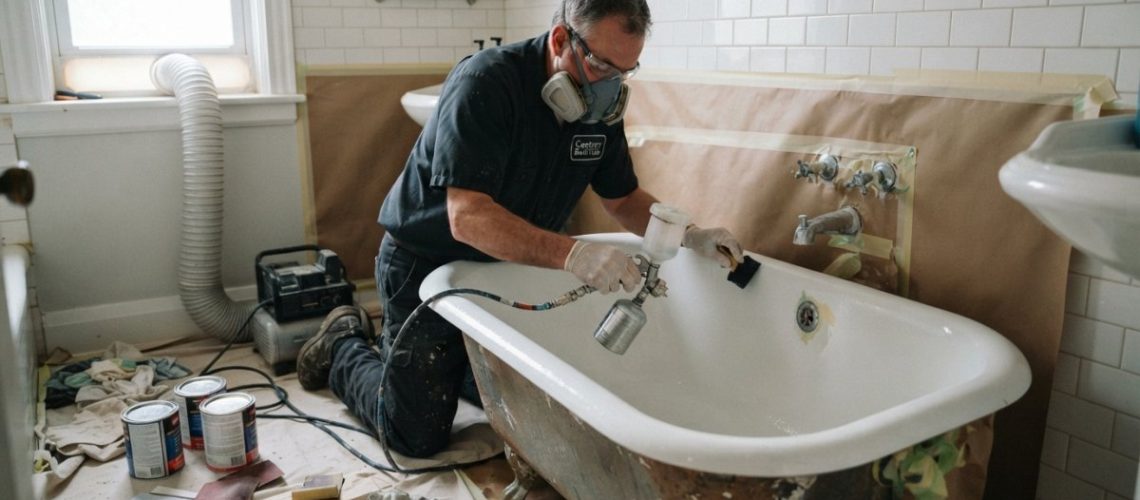
A professionally applied refinish typically lasts 7-15 years. DIY kits often show visible wear, peeling, or chipping within 2-5 years. The difference lies in surface preparation, primer application, curing time, and ventilation control.
Professional contractors spend 40-60% of the job on surface preparation alone: acid etching the existing finish, removing contaminants, and applying primer for proper chemical bonding. DIY kits skip or rush these steps. Most homeowners lack proper ventilation to cure the finish fully, meaning the coating never hardens to full strength. Licensed, insured contractors are accountable for results, driving higher standards.
Key Factors That Determine How Long Your Refinished Tub Will Last
Surface Preparation and Chemical Bonding
Everything hinges on pre-application preparation. If the existing surface isn’t properly prepared, the new coating won’t bond correctly. The old finish must be stripped, sanded, or acid etched to create microscopic texture for primer grip. Any soap residue, mineral deposits, or old sealant creates a barrier between primer and substrate.
Chemical bonding is the adhesive layer preventing peeling. Quality primer contains resins that penetrate the prepared surface and harden, locking the topcoat in place. Poor surface prep means weak bonding and peeling within months. Professional contractors follow strict protocols: testing the surface, applying the right primer for material type, and verifying adhesion before the final coat.
Daily Usage and Maintenance Habits
A guest bathroom used occasionally will see a refinished tub last longer than a master bath used daily by a family. Frequency of use, water temperature, and cleaning habits all matter. Hot water and frequent scrubbing accelerate wear. Abrasive cleaners, scouring powders, steel wool, and harsh chemical scrubbers degrade coating far faster than gentle methods.
Hard water also plays a role. Mineral deposits accumulate, and acidic cleaners used to remove them can compromise finish integrity. Proper maintenance extends lifespan significantly. Homes cleaning refinished tubs with soft cloths and pH-neutral cleaners see the finish last 2-3 years longer than those using aggressive methods.
Water Quality and Bathroom Ventilation
Toronto’s water hardness varies by neighborhood. Hard water leaves mineral buildup that dulls the finish or creates spots. Poor bathroom ventilation traps moisture, preventing full curing and creating conditions for mold and mildew growth. A steamy bathroom degrades your refinished tub faster.
Proper ventilation means running an exhaust fan during and 30 minutes after each shower, opening windows when possible, and keeping humidity below 60%. These directly affect how long your refinished surface performs. A well-ventilated bathroom will see a refinished tub last 3-5 years longer than a poorly ventilated one.
Signs Your Bathtub Needs Refinishing
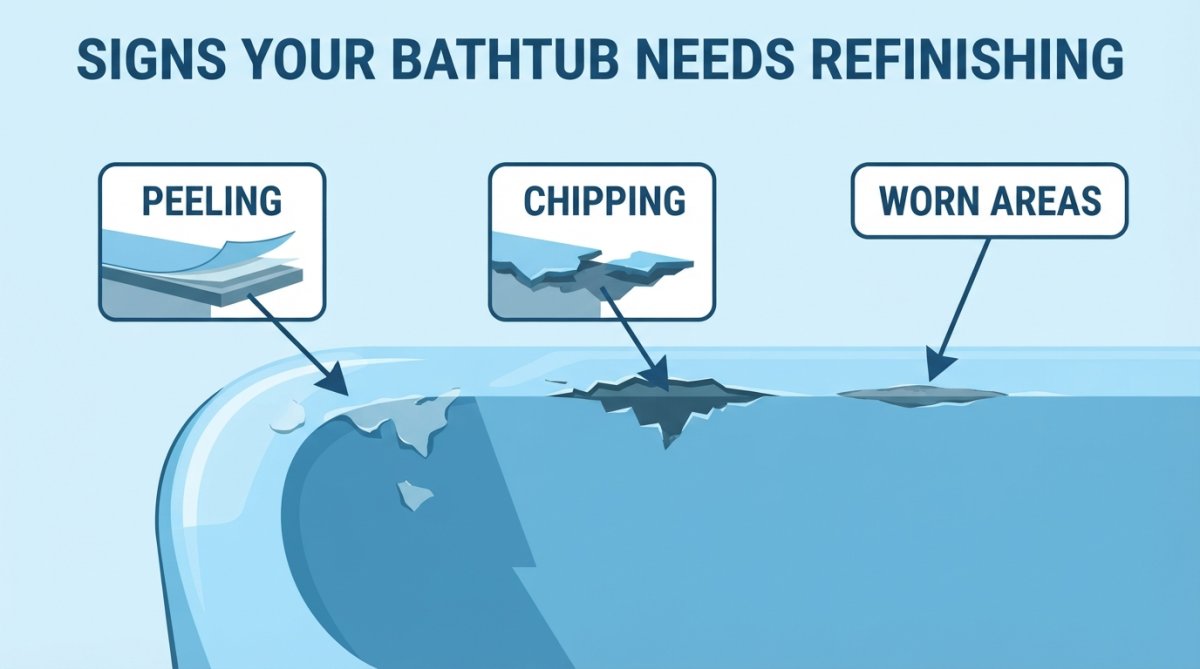
Peeling, Chipping, and Loss of Finish Integrity
The most obvious sign is peeling or chipping. When coating separates from the substrate, it usually starts at edges or high-traffic areas. Chips expose underlying material, which absorbs water and deteriorates further. Once peeling begins, it accelerates as water gets under the coating.
Crazing, tiny hairline cracks resembling a spiderweb, is an earlier warning sign indicating the coating is losing flexibility or the primer bond is weakening. If you see crazing, you still have time to plan refinishing before major peeling occurs. Once chunks are missing, the tub is no longer sanitary or safe.
Discoloration and Surface Degradation
Before peeling, you’ll often see discoloration. The finish may yellow, especially in poorly ventilated bathrooms. Stains that won’t clean, even gently, suggest the finish is breaking down and absorbing water or minerals. A dull, hazy appearance indicates the protective topcoat is wearing away.
These signs don’t mean the tub is unusable, but signal the refinished surface is aging. If your tub is five years old and showing significant discoloration, you’re probably two to three years from needing another refinish.
How to Clean and Maintain a Refinished Bathtub
Your maintenance routine directly determines whether your refinished tub lasts five or fifteen years.
Safe Cleaning Products and Methods
Use only non-abrasive cleaners on a refinished tub. Soft cloths, sponges, and microfiber towels are ideal. Mild dish soap and warm water handle most daily cleaning. For stubborn soap scum or mineral deposits, use white vinegar diluted with water or pH-neutral bathroom cleaner. Baking soda mixed with water forms a gentle paste for tougher spots.
Avoid anything abrasive: no pumice, steel wool, or heavy-duty degreasers. Treat your refinished tub like a car’s clear coat, protectively, not aggressively. Dry the tub after cleaning. Leaving water sitting allows minerals to accumulate and gives mold and mildew a chance to grow. A squeegee or soft towel takes 30 seconds and makes a measurable difference.
What to Avoid: Abrasive Cleaners and Harsh Chemicals
Never use scouring powders, bleach-based cleaners, or acetone on a refinished tub. Avoid leaving rubber mats or bath toys on the surface for extended periods, they trap moisture and cause discoloration. Don’t use vinegar full-strength; always dilute it. Don’t leave standing water overnight.
High-temperature water is also rough on the finish over time. Moderate temperatures are gentler. Avoid pouring harsh drain cleaners directly into the tub; if they splash or sit on the surface, they’ll damage the finish.
Using abrasive cleaners or bleach on a refinished tub can create permanent pitting and discoloration within weeks. The damage is irreversible and requires a complete refinish to repair. Stick to gentle methods and your tub will last years longer.
Bathtub Refinishing Warranty Coverage in Canada
Understanding Warranty Terms and Coverage Limits
Century BathTubs provides a three-year hassle-free guarantee on all refinishing work. If the coating peels, chips, or fails due to defects in our application or materials, we’ll repair or refinish it at no cost. This warranty covers normal residential use.
Most professional refinishing warranties in Canada cover 3-5 years. A one-year warranty signals lower confidence; a five-year warranty indicates quality. Always ask for written warranty and read the fine print before committing.
What Warranty Does Not Cover
Warranties typically exclude damage from misuse or neglect. If you use abrasive cleaners and the finish degrades, that’s user error, not a warranty claim. Damage from heavy impact usually isn’t covered. Discoloration from hard water or mineral buildup isn’t a coating failure; it’s a maintenance issue.
Warranties don’t cover normal wear and tear. A finish lasting seven years then showing age hasn’t "failed", it’s reached the end of its lifespan. The warranty covers defects in application or material, not natural degradation.
Bathtub Refinishing Cost in Canada: Value vs. Replacement
Cost-Effective Alternative to Full Replacement
Replacing a bathtub typically costs $3,000 to $8,000 including removal, new tub, plumbing adjustments, tile work, and labor. Professional refinishing costs $500 to $1,500 depending on tub size and condition. Even refinishing twice costs less than one replacement.
For Toronto and GTA homeowners, refinishing avoids full bathroom renovation disruption. Work typically takes one to two days, with bathroom usable within 24-48 hours. If your tub is structurally sound with no cracks or major damage, refinishing is almost always the smarter economic choice.
Factors That Influence Pricing
Size matters: large soaking tubs cost more than standard tubs. Condition matters too, deep scratches or stains require more surface prep, increasing labor time. Your coating system choice affects price; epoxy costs more than basic acrylic but lasts longer. Location and accessibility matter: second-floor tubs cost more than ground-floor bathrooms.
Century BathTubs provides free inquiries for quotes based on your specific situation. Quality varies significantly among contractors, and price often reflects that quality. A cheaper quote might mean faster work with fewer prep steps, translating to shorter lifespan.
| Factor | Impact on Cost | Impact on Lifespan |
|---|---|---|
| Tub material (cast iron vs. acrylic) | Minor | Major (cast iron lasts longer) |
| Surface preparation quality | Moderate | Major (poor prep = early failure) |
| Coating system (epoxy vs. acrylic) | Moderate | Major (epoxy = 2-5 years longer) |
| Bathroom ventilation | None | Major (poor ventilation reduces life by 30%) |
| Maintenance routine | None | Major (proper care extends life significantly) |
Failure Analysis: Why Some Refinished Tubs Don’t Last
Poor Surface Preparation and Inadequate Primer
Poor surface preparation is the #1 reason refinished tubs fail early. If the old finish isn’t properly removed or etched, primer can’t bond. If primer is applied too thin or in poor conditions, it won’t create a strong adhesive layer. If topcoat is applied before primer fully cures, the entire system fails.
Contractors who rush the job cut corners on prep, betting on luck. Professional contractors spend significant time on surface preparation because skipping this step leads to peeling within a year and unhappy customers.
Insufficient Curing Time and Humidity Issues
The coating needs time and proper conditions to cure. Epoxy finishes require 24-48 hours of low humidity and stable temperature before use. If someone showers before full curing, water interferes with the process and the finish never reaches full hardness.
High humidity during application is also problematic. If the bathroom is steamy or the contractor applies finish in humid conditions, moisture gets trapped in the coating, creating soft spots and weak adhesion. Professional contractors control these variables by scheduling work when humidity is low, ventilating properly, and advising clients on curing time before use.
If you’re having your tub professionally refinished, ask the contractor about their curing protocol. A contractor specifying exact humidity levels, temperature ranges, and post-application care takes the job seriously. This attention to detail separates finishes lasting 5 years from those lasting 15.
Environmental Impact of Bathtub Refinishing
VOC Emissions and Indoor Air Quality
Volatile organic compounds (VOCs) are released during refinishing. These chemicals evaporate into the air and can affect indoor air quality. Epoxy and polyurethane coatings typically have higher VOC content than water-based acrylics. Proper ventilation during and after application minimizes exposure.
Professional contractors manage VOC emissions better than DIY attempts. They use ventilation equipment, apply finishes in well-ventilated spaces, and advise clients on airing out the bathroom afterward. A professional refinishing job, properly ventilated, poses minimal risk.
Sustainable Choice vs. Full Replacement
From an environmental perspective, refinishing beats replacement. Manufacturing and transporting a new bathtub requires significant energy and resources. Refinishing reuses the existing tub, meaning less waste and lower embodied carbon. Even accounting for VOCs released during refinishing, the environmental cost is substantially lower than replacement.
When you refinish instead of replace, you avoid waste from removing and disposing of the old tub. For environmentally conscious homeowners, refinishing is the more responsible choice, and it’s also cheaper and less disruptive.
When deciding whether to refinish your bathtub, lifespan matters, but it’s not the only factor. A professionally applied refinish from Century BathTubs gives you 5-15 years of renewed surface, depending on material and care. Our licensed, insured technicians follow strict protocols for surface preparation, primer application, and curing to ensure your tub looks great for years. We back our work with a three-year hassle-free guarantee and use a durable EP-ACRYLIC coating system proven to outperform standard finishes. Contact Century BathTubs for a free inquiry and learn how much you can save by refinishing instead of replacing.
Frequently Asked Questions
What factors affect how long bathtub refinishing lasts?
Several factors determine durability of refinished bathtubs: the coating system used (epoxy vs. polyurethane), quality of surface preparation and chemical bonding, daily usage intensity, maintenance habits, water quality, and bathroom ventilation. Professional application with proper acid etching and primer application significantly extends lifespan compared to DIY kits. Material compatibility between the original tub (cast iron, fiberglass, or acrylic) and the refinishing product also plays a crucial role in finish integrity and useful life.
Is professional bathtub refinishing better than DIY kits?
Professional refinishing typically delivers superior results and longer-lasting durability. Trained contractors ensure proper surface preparation, adequate curing time, correct primer application, and optimal ventilation during the process. DIY kits often fail because homeowners cannot achieve the same chemical bonding or control VOC emissions effectively. Professional work includes warranty coverage and accountability, whereas DIY failures leave you responsible for repairs or replacement. For most homeowners, the cost difference is justified by the extended fixture longevity and peace of mind.
How should I clean and maintain a refinished bathtub to extend its life?
Use non-abrasive cleaners and soft cloths for daily cleaning, avoid scouring pads and harsh chemicals that degrade the coating. Mild soap and water or pH-neutral bathroom cleaners are ideal. Ensure proper ventilation after each use to prevent moisture buildup and mold. Do not use abrasive cleaners, bleach, or acetone-based products. Dry the tub after bathing to minimize water spots. Regular gentle maintenance prevents peeling and chipping, preserving the non-slip surface and finish integrity for the full lifespan of your refinished fixture.
What does a bathtub refinishing warranty in Canada typically cover?
Most professional warranties in Canada cover defects in materials and workmanship, including peeling, chipping, and loss of adhesion within the warranty period. Century BathTubs offers a three-year hassle-free guarantee on all work. Warranties typically do NOT cover damage from improper maintenance, use of abrasive cleaners, accidents, or natural wear from heavy use. Always review specific warranty terms with your contractor, as coverage limits and exclusions vary. Warranty transparency is critical, confirm what's included before refinishing work begins to avoid disputes later.
This article was written using GrandRanker