

Table of Contents
- Why Does Bathtub Enamel Start Peeling?
- Failed Previous Refinishing or Reglazing
- Worn Factory Enamel and Porcelain Deterioration
- Moisture Penetration and Water Damage
- Thermal Shock and Temperature Fluctuations
- Chemical Damage from Harsh Cleaners and Abrasive Products
- Mechanical Damage: Dropped Objects and Impact
- How to Repair Peeling Bathtub Enamel
Last Updated: July 12, 2026
Why Does Bathtub Enamel Start Peeling?
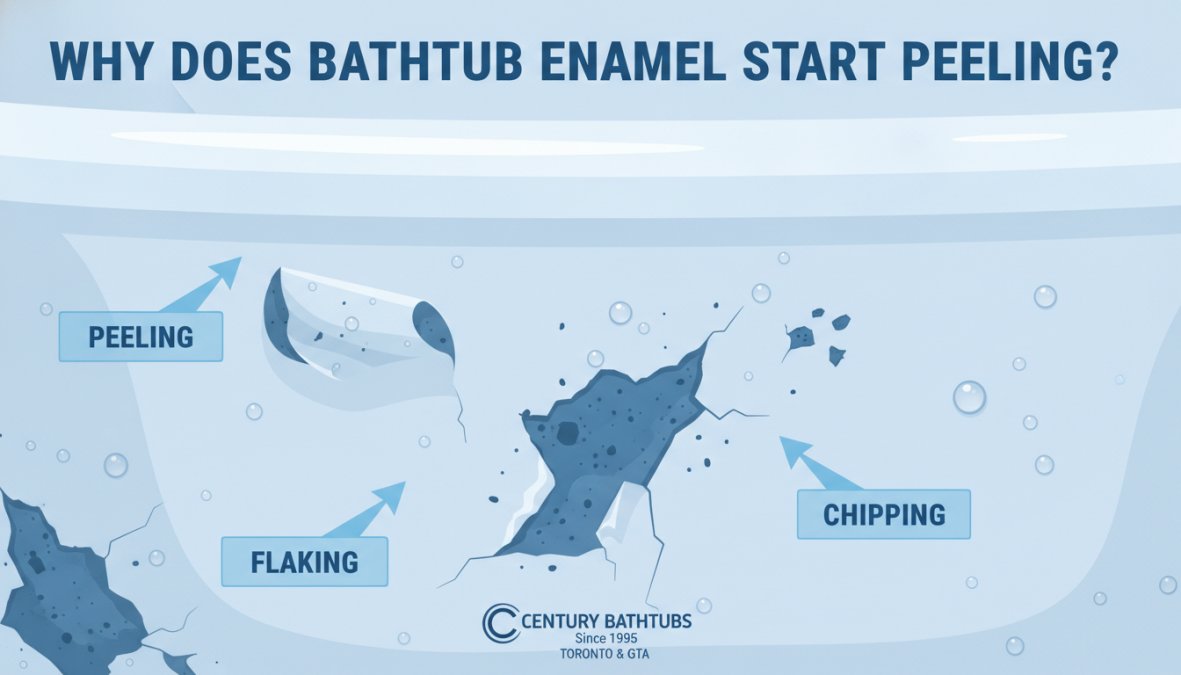
Bathtub enamel peeling occurs due to a combination of factors, some preventable and others inherent to manufacturing and use. At Century BathTubs, we’ve spent over 30 years analyzing the root causes of enamel failure. The process typically begins at the microscopic level: when the protective enamel layer loses its bond with the substrate beneath it, water penetrates the gap, accelerating deterioration. This adhesion failure is the core issue driving most peeling problems.
The Role of Adhesion Failure and Substrate Damage
Adhesion failure occurs when enamel coating separates from the cast iron, steel, or fiberglass base layer underneath. The enamel doesn’t wear away, it delaminates, lifting away in sheets or flakes because the bond between coating and substrate has broken down.
Surface contamination during manufacturing is one culprit. If the factory didn’t properly clean the substrate before applying enamel, dust particles or oils create weak points where the coating can’t grip. Temperature fluctuations during curing can also cause expansion and contraction that stresses the bond. Water infiltration accelerates the problem significantly: once moisture reaches the gap between enamel and substrate, it acts like a wedge, pushing the coating further away. This is why peeling often starts in high-moisture areas around drain holes, faucet penetrations, or corners where water pools.
Check for peeling in areas where your tub experiences the most standing water. These spots reveal where adhesion failure is most advanced.
Failed Previous Refinishing or Reglazing
One of the most common causes of bathtub enamel peeling is improper surface preparation during a previous refinishing or reglazing job. Professional bathtub refinishing requires acid etching to roughen the existing enamel, creating microscopic "teeth" for the new coating to grip. If the previous refinisher skipped this step, the new topcoat will begin peeling within months.
The primer layer is equally critical. A quality bonding agent bridges the gap between old enamel and new coating, but only if the surface is clean and properly prepared. Some budget refinishing operations use thin primers or skip this step entirely to save time and materials, resulting in predictable peeling within the first year.
Century BathTubs uses a multi-step approach with our EP-ACRYLIC coating system: acid etch all surfaces, apply a specialized bonding primer, and allow proper curing time between coats. This process takes longer than shortcuts, but it’s why our three-year guarantee holds up.
If your tub has peeled within two years of refinishing, the previous contractor likely skipped surface preparation steps. Professional resurfacing is worth the investment because it’s done right the first time.
Worn Factory Enamel and Porcelain Deterioration
Factory-applied enamel and porcelain aren’t designed to last forever. They typically remain intact for 15-25 years with normal use, longer with careful maintenance.
Factory enamel deteriorates as UV light, temperature swings, and water exposure break down the chemical bonds holding it together. Older tubs, especially those manufactured before the 1980s, often have thinner enamel layers more prone to cracking and peeling. Porcelain-coated cast iron tubs are particularly vulnerable because the porcelain layer is a ceramic glaze, rigid and prone to crazing (fine cracks) that eventually lead to flaking.
Cast iron expands and contracts with temperature changes. Over decades, these micro-movements create stress at the enamel-substrate interface until the enamel separates. Fiberglass and acrylic tubs experience different failure modes: the resin binder in fiberglass can degrade when exposed to harsh chemicals or UV light, while acrylic tubs can develop stress cracks if subjected to impact or thermal shock.
Worn factory enamel doesn’t mean you need a new tub. Professional resurfacing restores appearance and functionality while extending the life of your fixture by another 10-15 years.
Moisture Penetration and Water Damage
Water damage is one of the most insidious causes of bathtub enamel peeling because it works silently, often undetected until significant damage has occurred. When water penetrates beneath the enamel coating, it compromises the substrate and accelerates adhesion failure.
Moisture penetration happens through cracks or chips in the enamel, poor caulking around the tub perimeter, or dripping faucets that go unfixed for months. Once water reaches the substrate, the damage accelerates: cast iron begins to rust and expand, pushing the enamel coating away. Fiberglass substrates absorb water, causing the resin to soften and lose structural integrity. Water trapped under the enamel coating can’t evaporate quickly, continuously weakening the bond.
The first sign of moisture damage is often a soft spot in the tub surface or a dull patch where the enamel has lost its shine. Address these immediately before peeling becomes widespread.
Thermal Shock and Temperature Fluctuations
Thermal shock, rapid temperature changes, causes bathtub enamel peeling by creating stress between layers that expand and contract at different rates. When you fill a cold tub with very hot water or drain hot water and immediately refill with cold, the enamel and substrate respond differently, straining their bond.
Cast iron and steel have higher thermal expansion coefficients than porcelain or acrylic coatings. When temperature changes quickly, the substrate expands or contracts faster than the enamel can follow, creating internal stress that weakens adhesion. Fiberglass tubs are particularly sensitive because the resin matrix becomes more flexible when warm and more brittle when cold.
Prevention is straightforward: avoid extreme temperature swings. Let hot water run for a few seconds before entering the tub to allow gradual warming. Drain hot water slowly rather than opening the plug wide and letting cold water immediately follow.
Chemical Damage from Harsh Cleaners and Abrasive Products
Bathtub enamel peeling can result from chemical damage caused by harsh cleaners and abrasive scrubbing products. Many common household cleaners are far more aggressive than people realize, and their repeated use degrades enamel over time.
Acidic cleaners, including some mold and mildew removers and rust removers, etch the enamel surface. While a single application may cause minimal damage, regular use creates a cumulative effect, making the enamel dull, porous, and weak. Abrasive scrubbing powders, scouring pads, and steel wool physically remove enamel. Repeated aggressive scrubbing creates thin spots where water penetrates and accelerates peeling.
Certain chemicals are particularly damaging: bleach when undiluted, caustic drain cleaners, and acetone-based products can soften or degrade the coating.
The key to preventing chemical damage is using pH-neutral or mild alkaline cleaners with soft cloths and gentle scrubbing. For stubborn stains, let a mild cleaner sit for several minutes rather than scrubbing hard.
Never use steel wool, scouring powders, or undiluted bleach on bathtub enamel. Stick to soft cloths and pH-neutral cleaners to preserve your tub’s surface.
Mechanical Damage: Dropped Objects and Impact
Mechanical damage from dropped objects or impacts is a straightforward but often overlooked cause of bathtub enamel peeling. A heavy item dropped into the tub can crack the enamel, creating an entry point for water and accelerated deterioration.
Cast iron tubs are particularly vulnerable because the enamel is brittle. Fiberglass and acrylic are more forgiving, they dent rather than crack, but impacts still compromise surface integrity. Mechanical damage also includes wear from repeated contact: suction cup bath mats can create weak spots, and heavy shower caddies can cause localized stress.
Prevention involves using the tub carefully and using protective measures. Avoid dropping heavy items into the tub. Use rubber-coated or padded fixtures rather than hard plastic or metal. Keep suction cup mats clean and dry. If you notice a chip or crack, address it immediately with a repair kit to prevent water penetration.
How to Repair Peeling Bathtub Enamel
Once bathtub enamel peeling has started, you have two primary repair options: DIY repair kits or professional resurfacing. The choice depends on the extent of damage, your budget, and how long you need the repair to last.
DIY Repair Kits vs. Professional Resurfacing
DIY bathtub repair kits are available at most home improvement stores and typically cost $30-80. They work best on small chips or localized peeling (under 2-3 inches). The process involves sanding the damaged area, cleaning it thoroughly, applying primer, and then applying the topcoat.
Most DIY kits provide repairs lasting 1-3 years before failing again because DIY applications rarely achieve the surface preparation, primer adhesion, and curing conditions that professional work provides. Water often penetrates the edges of the repair, undermining the fix.
Professional bathtub refinishing addresses the entire tub surface. The technician removes all loose enamel, sands the entire surface, applies acid etching for adhesion, applies a bonding primer, and then applies a durable topcoat. This process takes 1-2 days and requires the tub to be out of service during curing.
Professional resurfacing costs $600-1,500 depending on tub size and condition, but results are dramatically superior. A professionally refinished tub can last 10-15 years with proper maintenance. Century BathTubs guarantees our work for three years, and many customers report their tubs remain in excellent condition well beyond that period.
| Repair Method | Cost | Durability | Best For |
|---|---|---|---|
| DIY Repair Kit | $30-80 | 1-3 years | Small chips under 2 inches |
| Professional Resurfacing | $600-1,500 | 10-15 years | Widespread peeling or entire tub restoration |
| Tub Replacement | $2,000-5,000+ | 15-25 years | Severe structural damage or desired style change |
For most homeowners dealing with bathtub enamel peeling, professional resurfacing is the better investment. If you’re simply addressing a small chip to prevent further damage, a DIY kit can buy you time before full professional refinishing becomes necessary.
If you use a DIY repair kit, sand the repair smooth after it cures and apply a clear protective topcoat. This extra step significantly improves durability.
Long-Term Maintenance to Prevent Future Peeling
Preventing bathtub enamel peeling is far easier than repairing it. Clean your tub weekly with mild, pH-neutral cleaners and soft cloths. Wipe down the tub after each use to prevent water from pooling. Inspect your tub monthly for chips, cracks, dull patches, or soft spots. Check caulking around the tub perimeter and re-caulk if you notice gaps or deterioration.
Control bathroom humidity by running the exhaust fan during and for 20-30 minutes after showers. Avoid extreme temperature swings by letting the tub warm gradually before entering with very hot water. Use suction cup mats and fixtures carefully, keeping them clean and dry, and remove them after each use.
If you notice early peeling despite proper maintenance, professional assessment can determine whether a repair kit or full resurfacing is needed. Addressing the issue promptly prevents water damage from spreading to the substrate beneath.
When bathtub enamel peeling becomes widespread or the underlying substrate shows signs of damage, professional refinishing becomes necessary. Century BathTubs specializes in restoring worn or damaged tubs using our durable EP-ACRYLIC coating system, which provides superior adhesion and durability compared to standard refinishing coatings. Our licensed, insured technicians handle the entire process from surface preparation through final curing, ensuring your tub looks and functions like new. With a three-year guarantee and fast turnaround, professional resurfacing costs a fraction of tub replacement while delivering results that last. Contact Century BathTubs for a free assessment and quote.
Frequently Asked Questions
Can you fix peeling bathtub enamel yourself?
Yes, minor peeling can be addressed with DIY bathtub repair kits, which typically include surface preparation materials, bonding agents, and topcoat products. However, extensive peeling or delamination often requires professional reglazing or resurfacing to ensure proper adhesion and durability. Professional contractors use industrial-grade epoxy coatings and proper acid etching techniques that DIY kits cannot match. Assess the damage severity before deciding, small chips may respond to repair kits, but widespread flaking usually needs expert intervention.
How long does bathtub refinishing last after professional reglazing?
Professional bathtub refinishing typically lasts 3-5 years with proper maintenance, though high-quality epoxy coatings can extend this further. Century BathTubs offers a three-year hassle-free guarantee on all refinishing work. Longevity depends on water usage, maintenance habits, and the coating system used. Avoiding abrasive cleaners, using suction cup mats to reduce friction, and maintaining consistent moisture control will maximize the lifespan of your refinished surface.
What is the most common cause of bathtub enamel peeling?
Adhesion failure due to improper surface preparation is the most common cause of bathtub enamel peeling. If the substrate is not properly cleaned, etched, or primed before applying a new topcoat, the coating will not bond effectively. Moisture penetration beneath the enamel and thermal shock from extreme temperature changes also cause widespread peeling. Failed previous refinishing jobs, where old coatings were not fully removed, frequently lead to delamination and flaking.
Is it safe to use a bathtub with peeling enamel?
Using a bathtub with peeling enamel poses several risks. Exposed substrate material can harbor bacteria and mold, and sharp flaking edges may cause cuts or injuries. Additionally, water can penetrate beneath the remaining enamel, accelerating structural damage and corrosion, especially in cast iron tubs. Old porcelain enamel may contain lead, making peeling particularly hazardous in vintage bathtubs. It's advisable to repair or refinish peeling enamel promptly to protect both health and the integrity of your fixture.
This article was written using GrandRanker