

Table of Contents
- What Is Bathtub Reglazing and When Do You Need It?
- 7 Signs Your Bathtub Needs Professional Reglazing
- The Professional Reglazing Process Explained
- How Long Does Bathtub Reglazing Take and Last?
- Benefits of Professional Bathtub Reglazing
- Bathtub Refinishing Cost in Canada: What to Expect
- DIY Bathtub Reglazing Pros and Cons
- Material-Specific Reglazing: What Works for Your Tub
Last Updated: July 28, 2026
What Is Bathtub Reglazing and When Do You Need It?
Bathtub reglazing restores a worn, damaged, or discolored tub by applying a new protective coating over the existing surface. At Century BathTubs, we’ve spent over three decades helping homeowners in Toronto and the Greater Toronto Area recognize when their tubs need professional attention. The coating creates a seamless, glossy finish that looks brand-new without the cost of replacement.
The process involves surface preparation, acid etching for adhesion, application of a bonding agent, and a durable topcoat. Professional reglazing extends your tub’s life by years and differs fundamentally from DIY kits in equipment, materials, and expertise.
The difference between reglazing, refinishing, and resurfacing
Reglazing and refinishing are essentially the same process: applying a new coating to restore the surface. Resurfacing can refer to the same coating application or addressing deeper structural issues. All three restore your existing tub rather than replacing it, making them cost-effective alternatives to full renovation.
Understanding these terms helps you communicate clearly with professionals and compare pricing accurately.
7 Signs Your Bathtub Needs Professional Reglazing
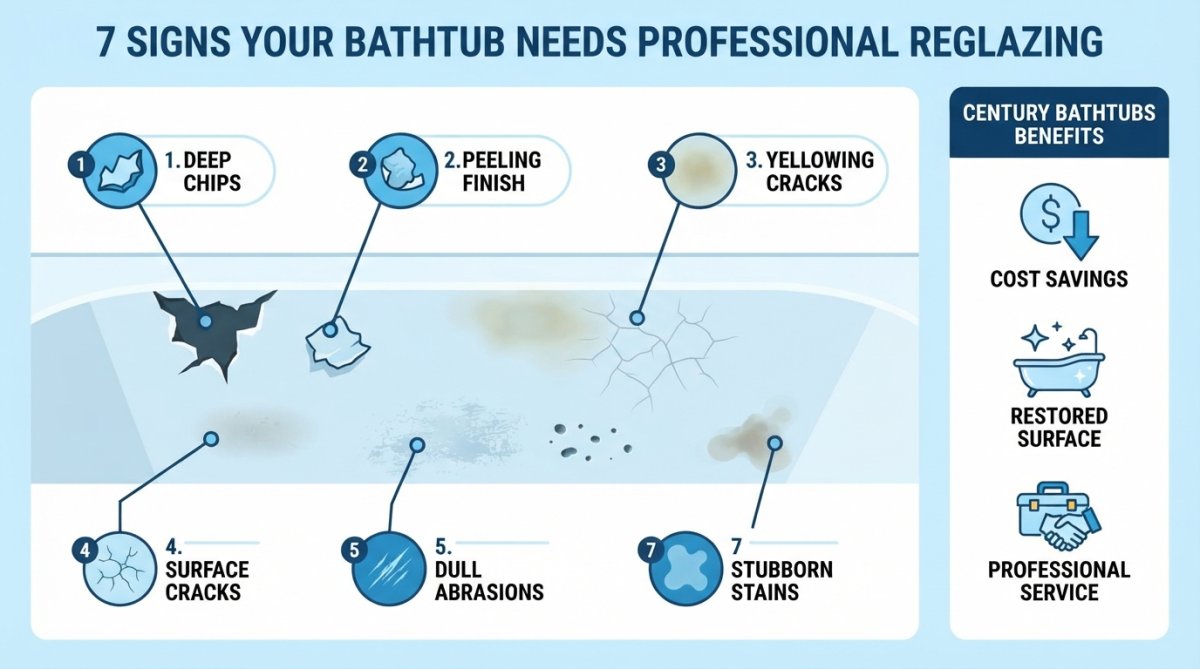
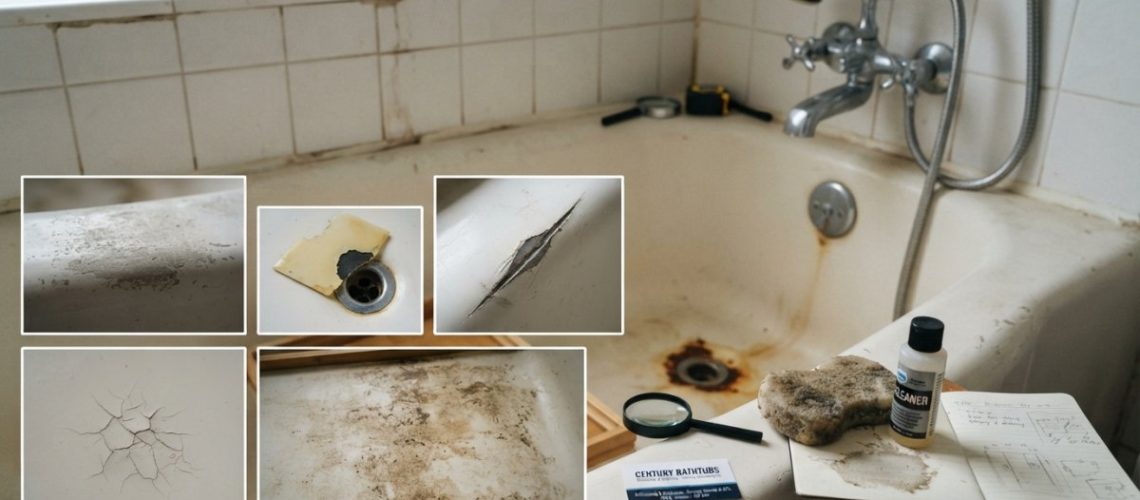
Learning to spot warning signs helps you act before minor damage becomes expensive.
Sign 1: Visible surface chips and hairline cracks
Small chips expose the underlying material to moisture and bacteria. What starts as cosmetic becomes functional when water seeps beneath the damaged coating, causing mold growth or deterioration.
Hairline cracks trap moisture and create pathways for water infiltration. Professional reglazing seals these imperfections under a new protective layer, preventing further damage.
Sign 2: Peeling or flaking finish
When coating peels or flakes, adhesion has failed. This typically happens when original reglazing wasn’t done properly or the coating has reached its lifespan. Flaking is particularly problematic because loose pieces can clog drains or contaminate shower water.
Professional reglazing adheres properly when applied by trained technicians who understand surface preparation.
Sign 3: Persistent yellowing and staining
Yellowing occurs when the protective topcoat oxidizes or mineral deposits accumulate beneath the surface. These discolorations don’t respond to scrubbing because they’re embedded in the compromised coating.
Professional reglazing removes these stains through acid etching and provides a bright, white surface that resists future staining.
Sign 4: Deep cracks or structural damage
Deep cracks that penetrate beyond the surface coating suggest structural compromise. If you can feel a crack with your fingernail or see daylight through it, professional assessment is essential.
Professional reglazing can address many deep cracks if they haven’t compromised the tub’s structural integrity. However, if damage affects the tub’s ability to hold water, replacement may be necessary. Century BathTubs technicians can assess whether your tub is salvageable.
Sign 5: Loss of gloss and dull appearance
A bathtub that once gleamed but now looks flat has lost its protective topcoat’s reflective properties. This dullness develops gradually as the coating oxidizes and accumulates microscopic scratches.
This is an ideal time to schedule reglazing. Catching the tub at this stage, before chips and cracks develop, means straightforward restoration with dramatic results.
Sign 6: Rough or pitted surface texture
Run your hand across your bathtub. If it feels rough or pitted rather than smooth, the surface has deteriorated. Pitting traps bacteria and makes cleaning difficult.
Rough surfaces indicate reglazing should happen soon. Professional reglazing smooths the surface and restores that pleasant, slippery finish.
Sign 7: Mold or mildew that won’t clean
If mold keeps returning despite scrubbing, moisture is trapped beneath the compromised coating. Mold grows in spaces between the damaged finish and underlying material, where surface cleaning can’t reach.
Professional reglazing eliminates these hidden moisture pockets by sealing the surface completely.
The Professional Reglazing Process Explained
Understanding what happens during professional reglazing explains why it costs more than DIY kits but delivers superior results. The process typically takes one to two days.
Surface preparation and why it matters
Surface preparation accounts for 60-70% of a successful reglazing job. Professionals thoroughly clean the tub to remove soap scum, hard water deposits, and loose coating, then sand or grind the existing surface to create texture for the new coating to grip.
This step is critical and where many DIY attempts fail. Without proper preparation, the new coating won’t adhere and will peel within months. The surface is then rinsed thoroughly to remove all dust and debris before drying completely.
Acid etching, bonding agents, and topcoat application
Acid etching chemically prepares the surface for coating adhesion by opening the pores of the material. This step requires ventilation, protective equipment, and precise timing, factors that make professional application safer and more effective than DIY approaches.
The bonding agent creates a chemical bond between the old surface and new topcoat. Century BathTubs uses an EP-ACRYLIC coating system specifically formulated for maximum adhesion and durability.
The topcoat is applied in multiple thin layers rather than one thick coat, preventing drips and ensuring even coverage. Professional application creates a glossy, seamless finish without visible brush marks.
How Long Does Bathtub Reglazing Take and Last?
Curing time and when you can use your tub again
The actual reglazing work typically takes 4-6 hours. However, the topcoat requires 24-48 hours of curing before the tub can be used. Full cure, where the coating reaches maximum hardness, takes about 7 days. During this period, avoid abrasive cleaners and harsh scrubbing.
Durability and long-term value of professional refinishing
Professional reglazing lasts 10-15 years or longer with proper maintenance. The EP-ACRYLIC coating system used by Century BathTubs comes with a three-year hassle-free guarantee. This lifespan makes reglazing significantly more cost-effective than replacement.
Maintenance extends the life of your reglazing. Use non-abrasive cleaners, avoid dropping hard objects in the tub, and dry the tub after use to prevent mineral buildup.
Benefits of Professional Bathtub Reglazing
Cost-effective alternative to full replacement
Replacing a bathtub costs significantly more than reglazing. Full replacement involves removing the old tub, which often requires cutting through tile and drywall, disconnecting plumbing, and repairing surrounding areas. Labor alone can be substantial, and structural issues discovered during removal escalate costs quickly.
Reglazing avoids these complications. The tub stays in place, plumbing remains untouched, and surrounding areas don’t require repair. For homeowners in Toronto, reglazing delivers dramatic visual improvement at a fraction of replacement cost.
Health and safety advantages over DIY kits
DIY reglazing kits expose you to strong chemical fumes, epoxy compounds, and materials requiring careful handling. Some kits contain volatile organic compounds (VOCs) that pose health risks, particularly for people with respiratory sensitivities, young children, or pregnant individuals.
Professional contractors have commercial-grade ventilation equipment and protective gear. They use professional-grade materials that are often safer and more effective than consumer kits and apply coating evenly and correctly, reducing premature failure risk.
Environmental impact and sustainability
Reglazing is inherently more sustainable than replacement. It extends the life of existing fixtures, reducing demand for new manufacturing and the environmental cost of producing, packaging, and transporting new tubs.
Professional reglazing also uses controlled application methods that minimize waste.
Bathtub Refinishing Cost in Canada: What to Expect
Factors that affect your final price
Several factors influence reglazing cost. The size of your tub matters, a standard 5-foot bathtub costs less than a larger soaking tub. The current condition affects pricing, as tubs with extensive damage require more preparation time and materials.
Your location within the Greater Toronto Area may influence pricing. The specific coating system used also matters. Professional-grade EP-ACRYLIC systems cost more than basic coatings but last longer and come with better warranties.
Century BathTubs provides free inquiries and quotes. Contact them to discuss your specific project and receive accurate pricing.
Why professional reglazing costs less than replacement
A new bathtub, installed professionally, costs substantially more than reglazing. Installation labor includes removing the old tub, which often requires cutting through tile and drywall, disconnecting plumbing, and addressing structural issues. Reinstalling tile, drywall, and fixtures adds further cost.
Reglazing eliminates most expenses. The tub stays in place, plumbing isn’t touched, and surrounding areas don’t require repair. The service completes in 1-2 days rather than days or weeks.
| Aspect | Reglazing | Full Replacement |
|---|---|---|
| Material Cost | Lower | Higher (new tub + fixtures) |
| Labor Time | 1-2 days | 3-7 days |
| Disruption | Minimal | Significant (demolition, reconstruction) |
| Plumbing Work | None | Required |
| Surrounding Area Impact | None | Tile/drywall damage likely |
| Total Cost | Lower | Substantially higher |
DIY Bathtub Reglazing Pros and Cons
When DIY kits might work (and when they won’t)
DIY reglazing kits can work for minor cosmetic touch-ups on tubs in relatively good condition. If your tub has lost its gloss but has no chips, cracks, or deep damage, a DIY kit might provide acceptable results. However, DIY results rarely match professional work.
DIY kits won’t work well for tubs with significant damage. Chips, cracks, and peeling finish require proper surface preparation that DIY tools typically can’t achieve. Success depends heavily on following instructions precisely; most failures result from inadequate surface preparation or incorrect application.
Chemical fumes, ventilation, and health risks
DIY reglazing kits emit strong chemical fumes containing volatile organic compounds that can cause headaches, dizziness, respiratory irritation, and nausea. Pregnant individuals and people with asthma face elevated health risks.
Proper ventilation is essential but often challenging in bathrooms. Professional contractors have commercial ventilation equipment that removes fumes much more effectively than standard bathroom ventilation.
If you proceed with a DIY kit, wear a respirator mask rated for organic vapors, ensure continuous ventilation, and keep children and pets out of the area.
Material-specific suitability for porcelain, fiberglass, acrylic, and cast iron
Different tub materials require different preparation and coating approaches. Porcelain and ceramic are relatively forgiving if properly prepared. Fiberglass and acrylic are trickier because they expand and contract with temperature changes, requiring flexible coatings.
Cast iron tubs require careful surface preparation. Old cast iron tubs sometimes contain lead in the original glaze, creating additional safety concerns. Professional contractors know how to handle lead-containing surfaces safely.
DIY kits often claim compatibility with "all tub materials," but this oversimplifies reality. Professionals understand material-specific requirements and select appropriate coatings.
Material-Specific Reglazing: What Works for Your Tub
Porcelain and ceramic tubs
Porcelain and ceramic are traditional bathtub materials common in older Toronto homes. These materials are hard and durable but can chip and crack. The glazed surface accepts new coatings well.
Professional reglazing on porcelain tubs typically produces excellent results lasting 10+ years. The acid etching process opens the pores of the porcelain, allowing strong adhesion. Porcelain’s thermal properties work well with professional coatings.
Fiberglass and acrylic surfaces
Fiberglass and acrylic are modern materials, lighter and more affordable than porcelain but more prone to surface damage. Reglazing requires careful surface preparation because these materials are less porous than porcelain.
The topcoat must be flexible enough to accommodate thermal expansion. Professional EP-ACRYLIC coatings are formulated for this flexibility.
Cast iron tubs and lead concerns
Cast iron tubs are extremely durable and can last indefinitely with proper care. Reglazing is attractive because replacement is difficult. However, cast iron tubs manufactured before the 1980s may have glaze containing lead, posing health risks if the surface is disturbed.
Professional contractors are trained to identify and safely handle lead-containing surfaces. Professional reglazing can seal lead safely under a new coating, preventing it from leaching into bathwater.
If your bathtub shows signs it needs professional reglazing, waiting typically makes the problem worse. Water infiltration beneath compromised coating leads to mold, structural damage, and costlier repairs. Century BathTubs has helped Toronto-area homeowners restore their tubs for over 30 years using a durable EP-ACRYLIC coating system backed by a three-year hassle-free guarantee. Professional reglazing saves thousands compared to replacement while delivering results that look and feel brand-new. Contact Century BathTubs for a free inquiry and discover how affordable bathroom restoration can be.
Frequently Asked Questions
What is bathtub reglazing and how does it differ from refinishing?
Bathtub reglazing and refinishing are often used interchangeably and refer to the same process: applying a new protective coating (typically epoxy acrylic or urethane) over your existing tub surface. Resurfacing is a broader term that includes reglazing. The process involves surface preparation, acid etching, bonding agent application, and a topcoat to create a seamless appearance. Professional reglazing restores worn, stained, or damaged tubs without full replacement.
How long does bathtub reglazing take, and when can I use my tub again?
The actual application typically takes 2-4 hours, but curing time is critical. Most professional reglazing requires 24-48 hours before you can safely use the tub, though full curing may take 3-7 days depending on the coating system used. During curing, avoid contact with water, abrasive cleaners, and harsh chemicals. Your professional contractor will provide specific post-care instructions to ensure durability and long-term value of your refinishing.
What are the main benefits of professional bathtub reglazing over DIY kits?
Professional reglazing offers superior results because trained technicians control surface preparation, chemical application, ventilation, and curing conditions, reducing health risks from chemical fumes. DIY kits carry significant safety concerns, including inadequate ventilation exposure and improper surface etching. Professionals apply thicker, more durable coatings with better adhesion, ensuring a seamless appearance and longer-lasting finish. Professional work also protects against lead in old cast iron tubs and provides warranties that DIY cannot.
Can all types of bathtubs be professionally reglazed?
Most common tub materials, porcelain, ceramic, fiberglass, acrylic, and cast iron, can be professionally reglazed. However, the specific approach varies by material. Cast iron and porcelain require careful acid etching and bonding agent application. Fiberglass and acrylic need gentler surface preparation to avoid damage. Old cast iron tubs may contain lead, which professional contractors can safely address. Your contractor should assess your specific tub material and condition before confirming suitability for reglazing.
How much does bathtub refinishing cost in Canada, and is it worth the investment?
Professional reglazing costs significantly less than full bathtub replacement, making it a cost-effective bathroom renovation option. Pricing depends on tub size, material, damage severity, and your location. For accurate pricing, contact a licensed professional contractor for a free quote. Reglazing extends the life of your existing fixture, avoids demolition costs and time, and typically comes with a warranty. When compared to replacement costs, professional reglazing delivers exceptional long-term value.
This article was written using GrandRanker